
Return on Investment (ROI) in Egyptian real estate is defined as the total profit generated from rental income and property appreciation, measured against the full capital invested. Egypt real estate ROI explained properly means going beyond gross rental yield to account for taxes, vacancy, maintenance, and transaction costs. The Egyptian market offers compelling returns, with annual returns of 10 to 15% in favorable conditions, outpacing comparable markets in Dubai and the UK. Understanding how ROI is calculated, what drives it, and how 2026 tax amendments affect it gives you a real edge when investing in Egypt real estate.
How is ROI calculated for Egyptian real estate investments?
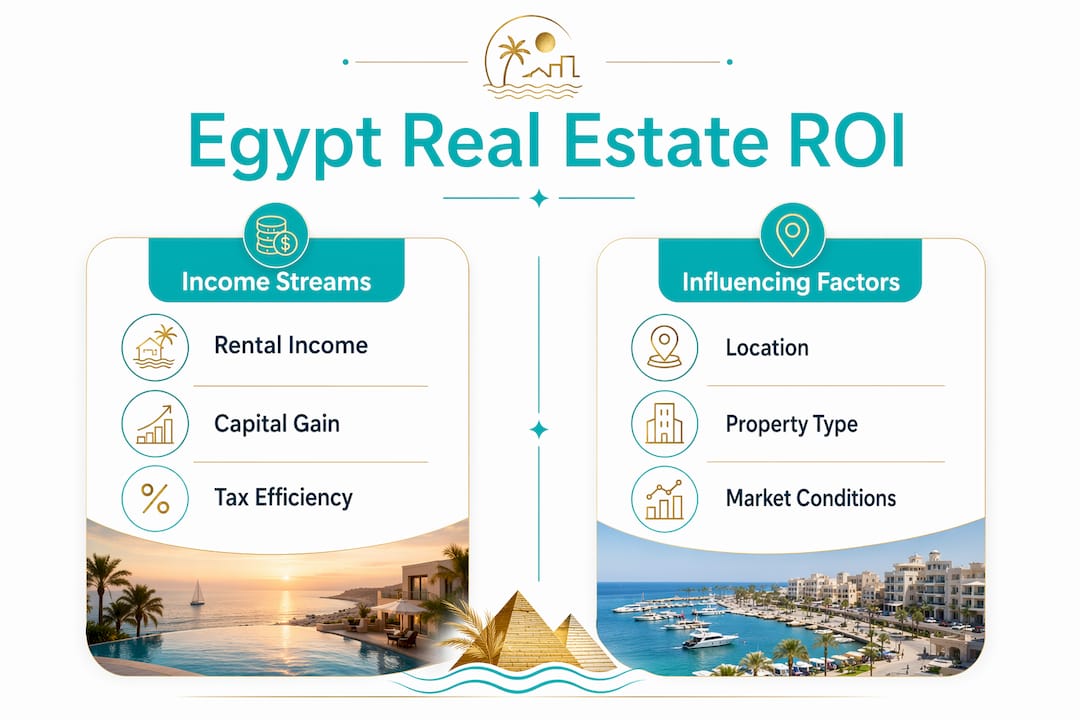
ROI in Egyptian real estate combines two income streams: net rental income over the holding period and the capital gain realized on sale. The standard formula is: ROI = (Net Rental Income + Capital Gain) / Total Capital Invested × 100. ROI incorporates income and appreciation for a comprehensive profit picture, which is why using it alongside other metrics gives you a fuller view of any deal.
Key metrics that complement ROI
Several related metrics serve distinct purposes in Egypt real estate market analysis:
- Cap rate measures annual net income divided by property value, independent of financing. It tells you how efficiently a property generates income regardless of how you paid for it.
- Gross yield is annual rent divided by purchase price, before any deductions. It is a quick screening tool, not a final decision metric.
- Net yield deducts taxes, vacancy, and operating costs from gross rent. Net yields run roughly 1.5 to 2 points below gross yields in Egypt, meaning a property advertised at 7% gross typically delivers around 5 to 5.5% net.
- Fiscal yield accounts for tax treatment on income, which matters significantly given Egypt's rental income tax structure.
- Yield on cost uses your actual all-in purchase cost rather than market value, making it more accurate for investors who buy below market or add value through renovation.
Using these metrics together provides a fuller picture than any single number alone.
Sample ROI calculation
Here is a practical example using realistic Egyptian market figures:
| Component | Amount (EGP) |
|---|---|
| Purchase price | 1,500,000 |
| Annual gross rent | 120,000 |
| Annual costs (tax, maintenance, vacancy) | 30,000 |
| Net annual income | 90,000 |
| Capital gain after 5 years | 720,000 |
| Total profit (5 years) | 1,170,000 |
| ROI over 5 years | 78% |
This example reflects a mid-range Cairo apartment with a 5-year hold. The capital gain component, driven by Egypt's strong price appreciation, contributes more than half of total ROI in this scenario.
Pro Tip: Never compare a gross yield figure from one property with a net ROI figure from another. Always apply the same deductions consistently before making any comparison. This is the single most common error investors make when evaluating Egyptian properties.
What factors influence ROI across different Egyptian property sectors?
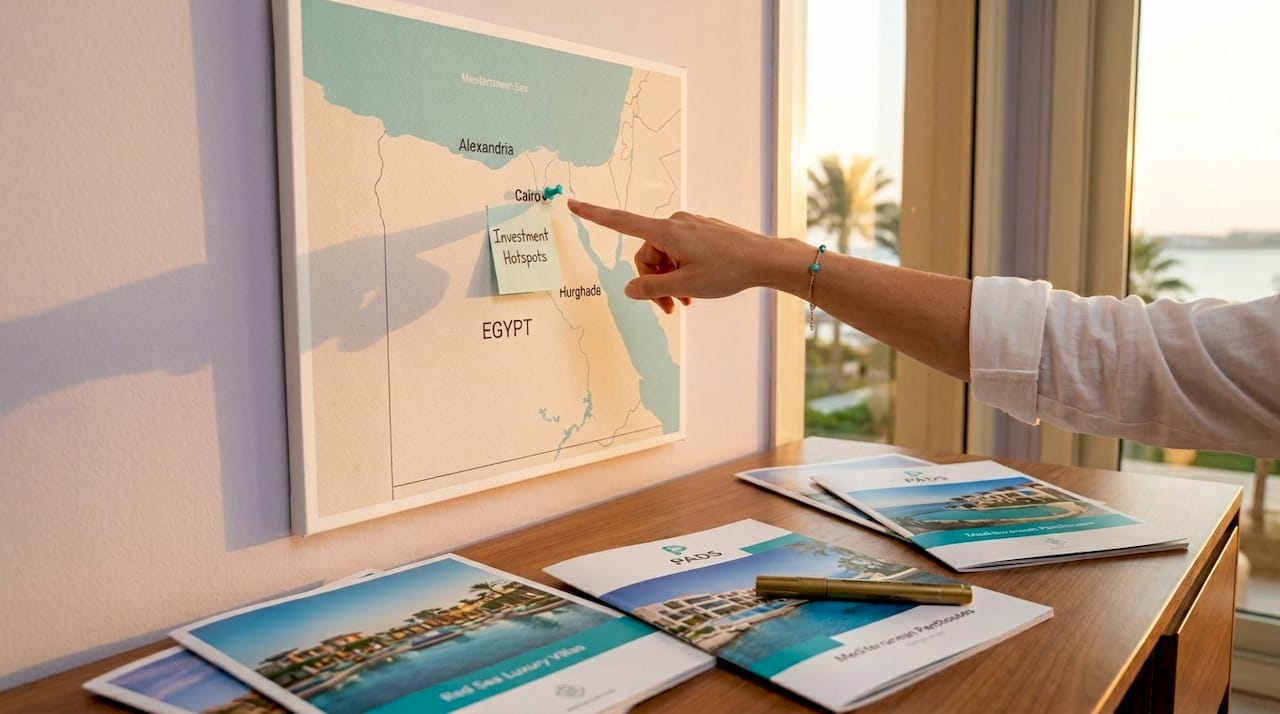
Location and property type are the two biggest variables in ROI on Egyptian properties. The differences between Cairo, Alexandria, and Red Sea coastal markets like Hurghada or Sahl Hasheesh are significant, and understanding them prevents costly misallocations.
Residential vs. commercial yields
Residential apartments, particularly one and two-bedroom units, consistently outperform larger apartments and commercial properties on yield. Alexandria apartment rental yields average 6 to 8% gross for smaller units, with net yields around 5 to 6%. Alexandria also recorded approximately 48% price appreciation over five years, adding substantial capital gain to total ROI. Commercial properties in Greater Cairo can offer higher absolute rents but come with longer vacancy periods and higher fit-out costs that compress net returns.
Short-term rentals through platforms targeting tourists in Red Sea destinations like Hurghada, El Gouna, and Soma Bay can push gross yields above 10%, but they require active management. Long-term residential leases offer more predictable income with lower management intensity. The right choice depends on your capacity to manage the property or your budget for a local management company.
How renovation affects rental income and ROI
Strategic upgrades have a direct and measurable impact on returns. Adding air conditioning or a modern kitchen can increase monthly rent by EGP 1,000 to 8,000 per unit. On a property generating EGP 90,000 annually, an extra EGP 4,000 per month adds EGP 48,000 to annual income. That is a 53% increase in rental income from a targeted renovation. Net yield differences often come down to operational management quality, and renovation is one of the most direct ways to improve it.
- Smaller units (1-2 bedrooms) deliver higher yields than larger apartments in most Egyptian cities
- Short-term rentals in tourist areas offer higher gross yields but require active management
- Renovations targeting tenant comfort (AC, modern kitchens, updated bathrooms) produce the strongest rent increases
- Well-located properties in Greater Cairo carry vacancy rates of approximately 5 to 8%, which is manageable with good tenant screening
What are the tax implications and costs affecting ROI on Egyptian properties?
Tax and transaction costs are where many investors lose accuracy in their ROI modeling. Egypt's tax structure is relatively investor-friendly compared to Western markets, but it has specific rules that affect net returns directly.
Transaction and annual property taxes
Egypt applies a 2.5% tax on real estate sales transactions. This functions as a transfer tax rather than a capital gains tax, which is a meaningful distinction. Egypt does not levy a classic capital gains tax on residential property sales, making exit costs lower than in many comparable markets.
The annual real estate tax is calculated on the assessed rental value of the property. The 2026 tax amendment raised the exemption threshold for private homes from LE 24,000 to LE 100,000 in annual rental value. A 25% discount applies for timely payment. This change meaningfully improves net ROI for investors holding mid-range residential properties, as many will now fall below the taxable threshold entirely.
Pro Tip: When modeling ROI, use the assessed rental value, not the market rent, for tax calculations. Egypt's tax authority uses its own valuation, which often differs from actual market rents. Confirm the assessed value before purchase to avoid surprises in your net yield projections.
Operating costs that reduce net returns
Beyond taxes, three cost categories consistently affect real estate returns in Egypt:
- Maintenance: Annual costs average EGP 15,000 to 40,000 depending on property age, size, and condition
- Vacancy: Well-located properties in Greater Cairo carry vacancy rates of roughly 5 to 8%, representing a direct reduction in annual rental income
- Management fees: Professional property management typically costs 8 to 12% of collected rent, a necessary expense for overseas investors who cannot manage properties directly
VAT applies to new property purchases from developers, adding to the initial capital outlay and therefore reducing ROI if not factored into the purchase price negotiation.
How does Egypt's ROI compare to other real estate markets?
Egypt's property investment returns are competitive on a global scale, particularly when adjusted for entry costs and tax treatment.
| Market | Typical Gross Yield | Typical Net Yield | Capital Gains Tax |
|---|---|---|---|
| Egypt | 8 to 15% | 5 to 8% | None (2.5% transfer tax) |
| Dubai | 5 to 8% | 4 to 6% | None |
| United Kingdom | 4 to 7% | 3 to 5% | Up to 28% |
| United States | 4 to 8% | 3 to 6% | Up to 20% |
Egypt's higher annual returns of 10 to 15% are driven by three factors: a favorable tax regime with no capital gains tax on residential sales, strong underlying housing demand from a growing population, and a market that is still in a growth phase relative to more mature markets. This combination is rare globally.
Currency risk is a real consideration. The Egyptian pound has experienced significant devaluation in recent years, which reduces USD or GBP-denominated returns when repatriating profits. Investors who reinvest locally or who hold for long periods tend to absorb this risk more effectively. Pricing properties in USD, as is common in Red Sea resort markets like Port Ghalib and Marsa Alam, provides a natural hedge for international buyers.
Key takeaways
Egypt's real estate ROI is most accurately calculated by combining net rental income with capital appreciation, then deducting all taxes, vacancy, and operating costs from total invested capital.
| Point | Details |
|---|---|
| ROI definition | Total profit from rent and appreciation divided by full capital invested, not just gross yield. |
| Net vs. gross yield gap | Net yields run 1.5 to 2 points below gross in Egypt; always model the net figure for accurate projections. |
| 2026 tax amendment | The exemption threshold rose to LE 100,000 annual rental value, improving net ROI for mid-range residential investors. |
| Best property type | One and two-bedroom apartments in well-located urban areas deliver the strongest and most consistent yields. |
| Global competitiveness | Egypt offers 10 to 15% gross returns with no capital gains tax, outperforming the UK and US on both metrics. |
Padsabroad's perspective on ROI modeling in Egypt
The most common mistake we see from international investors is treating gross yield as the final answer. A property in Hurghada advertised at 12% gross sounds exceptional, and it can be. But once you apply management fees for an overseas-held asset, factor in seasonal vacancy for a short-term rental, and account for maintenance on a property that sees heavy tourist use, the net figure often lands closer to 7 to 8%. That is still a strong return. The problem is when investors make purchase decisions based on the headline number and then feel misled when the actual income arrives.
The 2026 tax amendment is genuinely good news for investors holding mid-range residential properties. Many apartments in Alexandria and Greater Cairo that previously carried a modest annual tax liability will now fall below the new LE 100,000 exemption threshold. That is a direct improvement to net ROI with no action required from the investor.
Our strongest advice is to prioritize well-located one and two-bedroom apartments in established urban neighborhoods or proven resort markets like El Gouna and Sahl Hasheesh. These properties attract consistent tenant demand, carry lower vacancy risk, and appreciate reliably. Renovation quality matters too. A targeted upgrade to an apartment in a good location will outperform a larger, unrenovated property in a secondary location almost every time. Model your ROI with realistic deductions, watch the tax policy changes, and buy in locations where infrastructure investment is confirmed, not just planned.
— PADSABROAD
Find your next Egypt investment with Padsabroad

Padsabroad specializes in helping international buyers identify and acquire high-ROI properties across Egypt's most active markets, from the Red Sea coast in Hurghada and El Gouna to Alexandria and the North Coast. The team provides detailed ROI modeling, local market analysis, and end-to-end purchase support so you can make decisions based on accurate net figures rather than headline yields. Whether you are buying your first overseas property or expanding an existing portfolio, Padsabroad's property specialists can match you with opportunities that align with your return targets and risk profile. Reach out for a no-obligation consultation and get a clear picture of what your investment can realistically deliver.
FAQ
What is a good ROI for real estate in Egypt?
A net ROI of 5 to 8% annually is considered strong for Egyptian residential properties, with gross yields reaching 10 to 15% in high-demand areas. Red Sea resort markets and well-located urban apartments in Alexandria and Cairo consistently achieve the upper end of this range.
How do I calculate ROI on an Egyptian property?
Add your total net rental income over the holding period to your capital gain on sale, then divide by your total invested capital and multiply by 100. Always deduct taxes, maintenance costs averaging EGP 15,000 to 40,000 annually, vacancy losses, and management fees before calculating net income.
Does Egypt have a capital gains tax on property sales?
Egypt does not apply a classic capital gains tax on residential property sales. Instead, a 2.5% transfer tax applies to the sale transaction value, making exit costs significantly lower than in markets like the UK or the US.
How does the 2026 tax amendment affect property ROI in Egypt?
The 2026 amendment raised the annual rental value exemption from LE 24,000 to LE 100,000 for private homes, with a 25% discount for timely payment. This directly improves net ROI for investors holding mid-range residential properties that now fall below the new threshold.
Which Egyptian cities offer the best rental yields?
Alexandria delivers gross rental yields of 6 to 8% for one and two-bedroom apartments, with approximately 48% price appreciation over five years. Red Sea markets like Hurghada and El Gouna can exceed 10% gross yield for short-term rentals, though active management is required to sustain those returns.