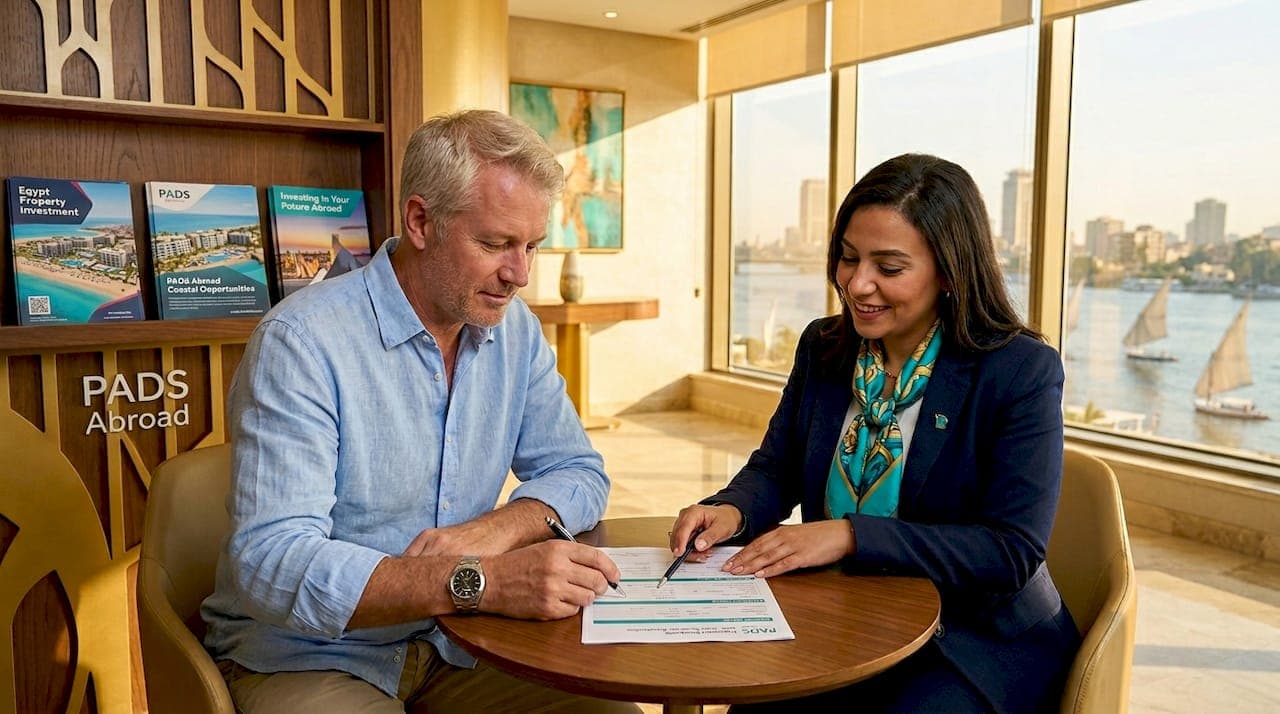
Opening a bank account in Egypt is a defined legal and financial step for any foreign investor completing a real estate purchase in the country. The process, formally known as non-resident or foreign national account opening, gives international buyers a compliant payment channel, a documented transaction trail, and the banking infrastructure needed to register property under Egyptian law. Whether you are buying a Red Sea apartment in Hurghada, a villa in El Gouna, or a resort unit in Sahl Hasheesh, opening a local account before you transfer funds is the single most practical move you can make. This guide covers every requirement, step, and pitfall you need to know.
What documents and requirements do you need to open a bank account in Egypt as a foreign property buyer?
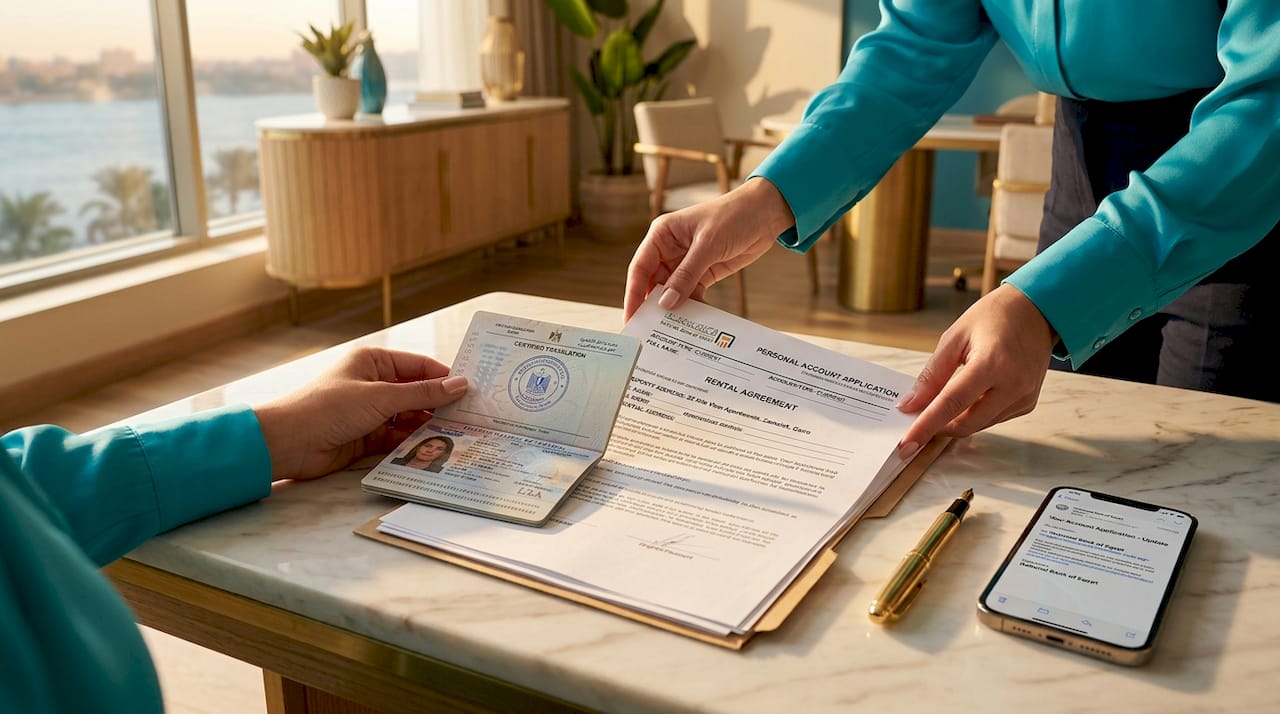
Foreign nationals opening a bank account in Egypt must meet a defined set of documentation and compliance requirements before any account is activated. KYC and residency requirements apply to all applicants, and the process is more thorough than in many Western countries. Preparing a complete, clean document package before you walk into a branch is the fastest way to avoid delays.
Here is what most Egyptian banks require from foreign applicants:
- Original passport with at least six months of validity remaining
- Egyptian residency visa or proof of legal entry status. Non-resident accounts are possible, but the bank must verify your identity and legal presence in the country
- Proof of address, which can be a rental contract, a utility bill, or an official document issued by a recognized authority
- Source of funds documentation, such as a salary statement, business registration, or investment records, to satisfy anti-money laundering (AML) checks
- Completed bank application forms, which vary by institution but typically include personal data, employment status, and the purpose of the account
- Biometric verification, including fingerprints and photo ID scans, required by most banks to comply with AML laws
On account types: Egyptian banks offer foreign currency accounts in USD and EUR alongside standard Egyptian pound accounts. For property buyers transferring funds internationally, a foreign currency account reduces conversion friction and keeps your payment trail cleaner. Minimum deposits range from EGP 500 to 1,000 depending on the bank and account type, though some financial inclusion programs temporarily waive this requirement.
Pro Tip: Bring certified translations of any document not issued in Arabic or English. Many Egyptian bank branches will not accept documents in other languages without an official translation, and this is one of the most common causes of same-day rejections.
Non-resident foreigners can open accounts at Egyptian banks as long as they meet KYC and AML requirements. Under Central Bank of Egypt directives, banks that refuse non-resident accounts without valid compliance reasons risk reputational and regulatory consequences. That said, policies vary between institutions, so choosing a bank with a documented track record of serving foreign investors matters.
How does opening a bank account support the property buying process in Egypt?
A local Egyptian bank account does more than hold your money. It functions as the financial backbone of your entire property transaction, from the initial deposit to the final title registration.
A local account is not strictly mandatory to sign a sale contract, but it is the most practical tool for managing taxes, utility deposits, and maintaining a clear transaction history. Without one, you face repeated international wire transfers for every payment, each carrying currency conversion costs and documentation gaps that can complicate registration later.
The most critical function of a local account is its role in supporting the Green Contract. Egypt's Green Contract is the highest form of registered ownership, proving title through the official registry known as Shahr El-Aqary. To complete this registration, you need documented proof of full payment. Bank transfer records from a local Egyptian account provide exactly that proof in a format the registry accepts without question.
A local account also helps you manage the following:
- Property taxes and registration fees, which must be paid in Egyptian pounds through local channels
- Utility connection deposits for electricity, water, and gas at your new property
- Service charges and maintenance fees if you are buying in a managed resort development like Soma Bay or Port Ghalib
- Mortgage applications, since Egyptian banks that lend to foreign buyers require an active local account as a prerequisite
- Ongoing rental income management if you plan to generate returns from your investment
Egypt has also launched a digital system for property ownership transfers that requires proof of full payment and bank clearance documents for registration. This means your bank records are not just useful. They are required documentation in the official registration process.
What are the step-by-step procedures to open a bank account for buying property in Egypt?
The account opening process follows a predictable sequence. Understanding each stage helps you plan your timeline and avoid last-minute surprises when your property purchase is ready to move forward.
-
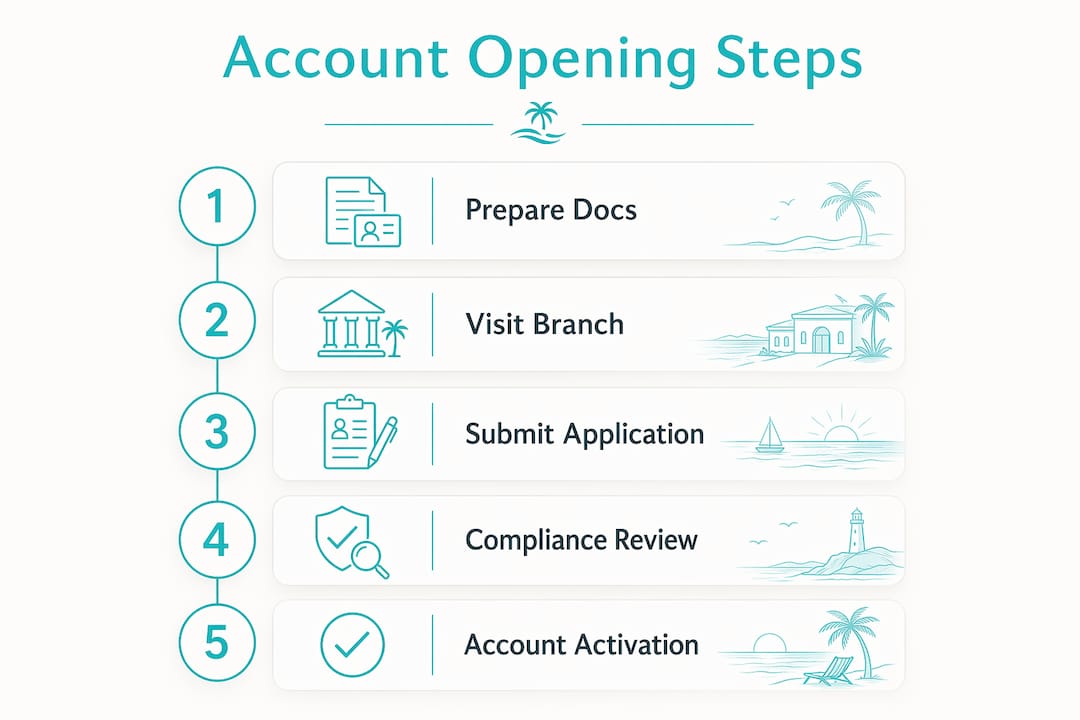
Research Egyptian banks and account types. Major banks serving foreign investors include Banque Misr, National Bank of Egypt, CIB (Commercial International Bank), and HSBC Egypt. Compare their non-resident account policies, foreign currency options, and branch locations near your target property area.
-
Prepare your full document package. Gather your original passport, visa documentation, proof of address, source of funds evidence, and any translated documents. Do not arrive at a branch with incomplete paperwork.
-
Visit a branch in person or use embassy services. Most accounts require an in-person visit for biometric verification. If you are not yet in Egypt, some banks allow account opening through Egyptian embassies or consulates in your home country. Confirm this option directly with the bank before traveling.
-
Submit your application and complete compliance checks. The bank will conduct KYC and AML due diligence. Biometric verification including fingerprints is standard at this stage. This is a compliance exercise, not a formality, so expect thorough questioning about your purpose and source of funds.
-
Make your initial deposit. Deposit the required minimum amount to activate the account. For foreign currency accounts, this may be higher than the standard EGP minimum.
-
Receive your account credentials and cards. Most banks issue a debit card and online banking access within a few days of activation.
| Stage | Typical Timeline |
|---|---|
| Document preparation | 1 to 2 weeks |
| Branch visit and application | 1 to 3 days |
| KYC and compliance review | 3 to 7 business days |
| Account activation | 1 to 2 days after approval |
| Full process from start to finish | 2 to 4 weeks |
Pro Tip: Time your account opening to coincide with your property reservation stage, not after you have signed a contract. Waiting until after signing creates payment delays that can put your deposit at risk if transfer deadlines are missed.
What challenges and common mistakes should international buyers avoid?
Foreign buyers consistently run into the same set of problems when opening a bank account for a property purchase in Egypt. Knowing these pitfalls in advance saves time, money, and stress.
- Residency visa misunderstandings. Some buyers assume a tourist visa is sufficient. Most banks require a residency visa or at minimum a multi-entry visa with documented purpose of stay. Policies differ between banks, so verify before visiting.
- Incomplete proof of address. A hotel booking does not qualify as proof of address. You need a rental contract, a utility bill in your name, or an official document from a recognized authority. Buyers purchasing off-plan sometimes struggle here because they do not yet have a physical address in Egypt.
- Ignoring FATCA obligations. US investors face extra compliance hurdles due to the Foreign Account Tax Compliance Act (FATCA). Opening an Egyptian account triggers cross-border tax reporting obligations, and some Egyptian banks are cautious about onboarding US citizens as a result. US buyers should consult a tax advisor before opening an account.
- Underestimating registration timelines. Official approvals and registrations often take about two months after contract signing. If your bank account is not set up and funded before this process begins, you risk delays in producing the payment proofs required for title registration.
- Assuming you can fix the paperwork later. Foreign investors often believe they can pay now and sort documentation afterward. The payment trail is key to avoiding registration delays, and retroactively proving payments made through informal channels is difficult and sometimes impossible.
"The strength of an Egyptian property purchase lies in obtaining official title registration. Bank transfers and payment proofs directly support this outcome." — AlZayat Law Firm
Working with a qualified Egyptian lawyer and a tax advisor familiar with cross-border transactions is not optional for most international buyers. It is the difference between a clean title and years of administrative complications.
Key takeaways
Opening a bank account in Egypt before completing a property purchase is the most direct way to protect your investment, satisfy registration requirements, and manage ongoing costs.
| Point | Details |
|---|---|
| Documentation is non-negotiable | Bring your original passport, residency visa, proof of address, and source of funds documents to every bank visit. |
| Non-residents can open accounts | Egyptian banks accept non-resident applicants under Central Bank directives, provided KYC and AML requirements are met. |
| Bank records support title registration | The Green Contract registration process requires documented payment proof, which a local account provides automatically. |
| Time your account opening early | Set up your account during the reservation stage, not after signing, to avoid payment deadline pressure. |
| US buyers face additional steps | FATCA compliance creates extra reporting obligations for American investors opening Egyptian bank accounts. |
What Padsabroad has learned from working with international buyers in Egypt
The most common mistake we see is buyers treating the bank account as an afterthought. They find the property, agree on a price, and then realize they have no compliant payment channel in place. At that point, they are racing against contract deadlines while simultaneously trying to satisfy a bank's compliance team. It is a stressful and avoidable situation.
What actually works is treating the account opening as the first task in your buying checklist, not the last. Before you visit a single property in Hurghada or Marsa Alam, start gathering your documents and researching which Egyptian banks have a track record of working with buyers from your country. CIB and Banque Misr both have experience with international clients, but their non-resident policies are not identical, and the branch you visit can make a real difference in how smoothly the process goes.
We have also seen buyers underestimate how much the account type matters. A foreign currency account in USD or EUR is almost always the right choice for an international buyer making a large property payment. It keeps your funds in a currency you control until the moment of transfer, and it produces a cleaner paper trail for the registry.
The compliance process is thorough, but it is not hostile. Egyptian banks are required to onboard non-residents who meet the requirements. Come prepared, be transparent about your purpose, and the process moves faster than most buyers expect.
— Padsabroad
How Padsabroad can help you buy property and open a bank account in Egypt
Padsabroad works with international buyers at every stage of the Egyptian property purchase process, from choosing the right location along the Red Sea coast to coordinating the banking and legal steps that protect your investment.

If you are considering real estate investment in Egypt and want guidance on the banking process, documentation requirements, or property options in Hurghada, El Gouna, Sahl Hasheesh, or Marsa Alam, the team at Padsabroad is ready to help. The company's experience with non-resident buyers means you get practical, country-specific advice rather than generic guidance. Reach out to Padsabroad directly to discuss your investment goals and get a clear picture of what the buying process looks like for your specific situation.
FAQ
Can a foreigner open a bank account in Egypt without residency?
Yes. Non-resident foreigners can open a bank account in Egypt as long as they satisfy KYC and AML requirements set by the Central Bank of Egypt. Some banks are more accommodating than others, so researching institutions with non-resident experience before applying improves your chances.
Is a local bank account required to buy property in Egypt?
A local account is not legally required to sign a sale contract, but it is the most practical way to produce the payment documentation needed for Green Contract title registration. Without a local account, proving full payment to the official registry becomes significantly more complicated.
What documents do I need to open a bank account in Egypt as a foreign buyer?
You need an original passport, a valid Egyptian visa, proof of address such as a rental contract or utility bill, and source of funds documentation. Most banks also require biometric verification including fingerprints and a photo ID scan during the application process.
How long does it take to open a bank account in Egypt?
The full process from document preparation to account activation typically takes two to four weeks. The compliance review stage alone can take three to seven business days, so starting the process early in your property buying timeline is strongly recommended.
Do US citizens face extra steps when opening a bank account in Egypt?
Yes. US citizens are subject to FATCA, which requires Egyptian banks to report account information to US tax authorities. Some banks are cautious about onboarding American clients as a result, and US buyers should consult a tax advisor before opening an account to understand their reporting obligations.