
Red Sea property is defined by a combination of low land costs, reduced construction expenses, and a cost of living 60–70% lower than Western Europe, making it one of the most accessible coastal real estate markets for international buyers today. Locations like Hurghada, Sahl Hasheesh, El Gouna, Soma Bay, and Marsa Alam offer a rare mix of affordability and lifestyle quality that comparable Mediterranean or Gulf destinations simply cannot match at the same price point. For buyers asking why Red Sea property is affordable, the answer goes beyond headline prices. It comes down to land classification, developer dynamics, infrastructure investment, and a market that is still in its growth phase. Understanding these factors is what separates a smart purchase from a costly mistake.
Why Red Sea property prices are lower than other coastal regions
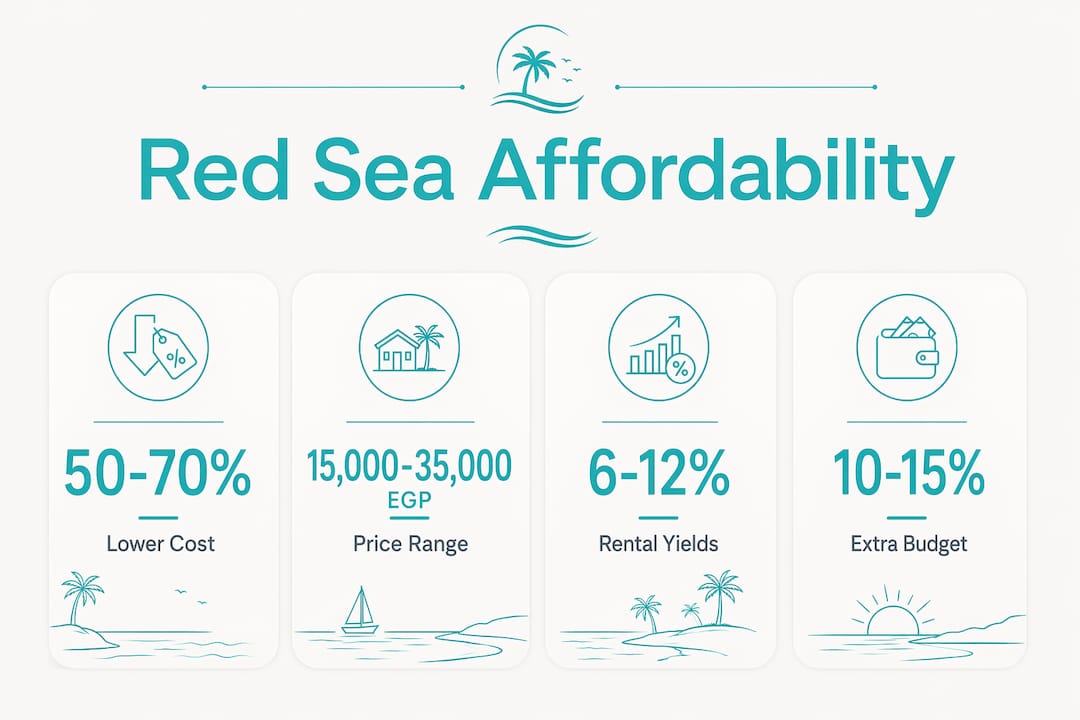
Red Sea coastal real estate, the industry term for property along Egypt's eastern shoreline, sits at a structural price advantage compared to other sun-and-sea markets. Hurghada and Red Sea properties are 50–70% cheaper than comparable Mediterranean coastal destinations while delivering year-round sunshine and strong rental demand. That gap is not a temporary anomaly. It reflects genuine differences in land costs, labor rates, and market maturity.
Key pricing factors that keep Red Sea property affordable include:
- Lower land acquisition costs: Egypt's land market, particularly in emerging resort zones, is priced far below Spain, Greece, or the UAE.
- Reduced construction costs: Local labor and materials are significantly cheaper than in Western Europe or the Gulf, which translates directly into lower per-unit prices.
- Emerging market status: Infrastructure is improving through government investment, but the market has not yet reached the premium pricing of fully developed resort destinations.
- Currency dynamics: Properties are often priced in Egyptian pounds or US dollars, giving European buyers additional purchasing power.
- Land classification differences: Touristic versus residential land designations create a tiered pricing structure that opens entry points at multiple budget levels.
Properties in Hurghada range from 15,000 to 35,000 EGP per square meter depending on location, with luxury villas starting at 5,000,000 EGP. For international buyers converting from euros or pounds, these figures represent exceptional value compared to what the same budget delivers in Marbella, Mykonos, or Dubai.
How land classification affects affordability and investment returns
Not all affordable Red Sea real estate is equal. Land classification is one of the most important and least understood factors in the market, and it directly affects both what you pay and what you can earn.
Touristic land allows short-term rentals, which leads to higher prices and better return on investment, while residential land imposes rental restrictions that affect income potential and initial pricing. This distinction matters enormously for investors who plan to generate rental income.
| Property Type | Land Classification | Rental Flexibility | Typical Price Point | Best For |
|---|---|---|---|---|
| Resort apartment | Touristic | Short-term allowed | Higher | Rental income investors |
| Residential apartment | Residential | Restricted | Lower | Owner-occupiers, retirees |
| Villa in gated resort | Touristic | Short-term allowed | Premium | High-yield investors |
| Standalone residential villa | Residential | Restricted | Mid-range | Long-term residents |
| Off-plan studio | Mixed (varies) | Depends on developer | Entry-level | First-time buyers |
Sea view properties command higher prices and stronger rental income potential than inland or non-view properties. A sea-facing apartment in Sahl Hasheesh will outperform an identical inland unit on both nightly rate and occupancy. High-density developments tend to suppress long-term values, while low-density resort communities with managed facilities hold their appeal and resale price more reliably.
Developer reputation reduces investment risk by delivering quality on time, whereas cheaper developers may cause delays and construction issues that erode your returns. Buyers who focus only on the lowest price per square meter often end up with projects that stall, deteriorate, or fail to attract renters. Understanding how reputation shapes real estate investment is as relevant in Hurghada as it is in the south of France.
Pro Tip: Always verify the land classification certificate before signing any purchase agreement. Buying on residential land when you intend to rent short-term is a common and expensive mistake for first-time Red Sea buyers.
Why the Red Sea lifestyle makes affordability go further
The financial case for affordable Red Sea real estate is strong on its own. The lifestyle case makes it even more compelling, particularly for retirees and expats who want their money to work harder.
A comfortable retirement in Hurghada costs roughly €600 to €1,200 per month, which is 60–70% lower than a comparable lifestyle in Western European coastal cities. That means a pension or investment income that feels tight in Portugal or southern Spain can fund a genuinely comfortable life on the Red Sea coast.
The lifestyle benefits that compound this affordability include:
- Year-round sunshine: The Red Sea region averages over 300 sunny days per year, eliminating the seasonal lifestyle compromise that affects many European coastal buyers.
- World-class diving and water sports: Hurghada, Marsa Alam, and Port Ghalib sit on some of the world's most biodiverse coral reef systems, delivering a recreational lifestyle that costs a fraction of what it would in the Maldives or Caribbean.
- Growing expat community: Established international communities in El Gouna and Hurghada provide social infrastructure, English-speaking services, and a sense of familiarity for new arrivals.
- Improving amenities: New hospitals, international schools, shopping centers, and road networks are raising quality of life without triggering the sharp price increases seen in more mature markets.
"The real value proposition for retirees is the ability to extend lifestyle quality by leveraging lower living costs and affordable coastal living compared to Europe." — Retire in Hurghada Egypt Expat Guide
This is why the Red Sea retirement lifestyle is affordable in a way that goes beyond property prices. The total cost of living, from groceries and restaurants to utilities and healthcare, is dramatically lower than in comparable European destinations.
What practical costs should buyers plan for beyond the purchase price?
Affordable Red Sea real estate becomes less affordable when buyers ignore the full cost of ownership. The purchase price is the starting point, not the total commitment.
Here is a clear breakdown of what to budget for beyond the headline figure:
- Closing fees and legal registration: Notary fees, registration costs, and legal representation typically add 5–8% to the purchase price. Using a qualified Egyptian property lawyer is not optional for foreign buyers.
- Furnishing and fit-out: Most off-plan and resale properties are sold unfurnished. Furnishing to a rental-ready standard adds a meaningful cost that varies by property size and quality level.
- Total additional budget: Budget an additional 10–15% on top of the purchase price for closing fees, legal work, registration, and furnishing to make the property rent-ready.
- Ongoing management fees: Resort communities charge annual service fees for maintenance, security, and communal facilities. These vary significantly between developments and affect net rental yield.
- Property management costs: If you plan to rent the property while abroad, a professional management company will typically charge 15–25% of rental income. This is worth budgeting from day one.
Cheapest off-plan projects may incur hidden costs such as poor maintenance and lack of common area oversight, which deteriorates resale value over time. The lowest purchase price does not always produce the lowest total cost of ownership.
Pro Tip: Request a full breakdown of annual service charges and management fees before committing to any development. A property with a low purchase price but high annual fees can underperform a slightly more expensive unit with well-managed, lower ongoing costs.
How to assess investment potential in the Red Sea property market
Choosing the right property in the Red Sea market requires looking past the price tag and evaluating a combination of location, land type, developer quality, and rental demand. The market is growing, and the best opportunities reward buyers who do their research.
Sahl Hasheesh offers rental yields of 8–12% with capital appreciation of 15–20% annually, driven by limited supply and luxury positioning. These figures illustrate that affordability and strong returns are not mutually exclusive in the Red Sea market. The key is knowing where to look and what to prioritize.
When evaluating Red Sea investment properties, focus on these factors:
- Location within the region: Hurghada offers the widest range of price points and the strongest tourist footfall. Sahl Hasheesh delivers premium yields with a more exclusive buyer profile. El Gouna attracts long-term expats and high-spending visitors. Marsa Alam and Port Ghalib appeal to eco-tourism and diving markets with strong growth potential.
- Land classification: Confirm touristic land status for any property intended for short-term rental income.
- Sea view and floor level: Direct sea view units consistently outperform inland equivalents on both nightly rate and occupancy.
- Developer track record: Research completed projects, delivery timelines, and after-sales service before committing to off-plan purchases.
- Rental demand data: Look at occupancy rates and average nightly rates in the specific development or area, not just the wider region.
| Location | Typical Yield | Market Profile | Best Buyer Type |
|---|---|---|---|
| Hurghada | 6–10% | Mass tourism, diverse stock | First-time investors, retirees |
| Sahl Hasheesh | 8–12% | Luxury, limited supply | Yield-focused investors |
| El Gouna | 5–8% | Expat community, long-term lets | Lifestyle buyers, expats |
| Marsa Alam | 7–11% | Eco-tourism, diving | Growth investors |
| Port Ghalib | 6–9% | Marina lifestyle, international | Lifestyle and income buyers |
Investors should focus on property features beyond price per square meter, including developer reputation, land type, and sea view proximity, to gauge future resale value. This is the framework that separates buyers who profit from those who simply own.
Key takeaways
Red Sea property is affordable because lower land costs, reduced construction expenses, and a cost of living far below Western Europe combine to create genuine value that outperforms comparable coastal markets in the Mediterranean and Gulf.
| Point | Details |
|---|---|
| Core affordability drivers | Lower land, labor, and living costs make Red Sea property 50–70% cheaper than Mediterranean alternatives. |
| Land classification matters | Touristic land enables short-term rentals and higher yields; always verify before purchase. |
| Budget beyond the price | Add 10–15% to the purchase price for legal fees, registration, and furnishing costs. |
| Location drives returns | Sahl Hasheesh yields 8–12% annually; Hurghada offers the widest entry-level range. |
| Developer quality is non-negotiable | Reputable developers protect resale value and reduce the risk of delays or hidden costs. |
Padsabroad's perspective on Red Sea affordability
The buyers who get the most from the Red Sea market are the ones who understand that affordability is a starting point, not a guarantee. After working with international buyers across Hurghada, El Gouna, Sahl Hasheesh, and Marsa Alam, the pattern is consistent. The buyers who focus exclusively on the lowest price per square meter often end up with properties that underperform, either because the developer cuts corners, the land classification restricts rental income, or the location lacks the tourist footfall to sustain occupancy.
The real opportunity in this market is the combination of genuinely low entry costs and strong income potential in the right locations. Sahl Hasheesh is a clear example. It is not the cheapest area on the Red Sea, but its yields and capital appreciation figures are among the strongest in the region precisely because supply is controlled and quality is maintained.
For retirees and expats, the lifestyle argument is equally compelling. A monthly budget of €800 in Hurghada delivers a quality of life that would cost three times as much in coastal Spain or southern France. That is not a marketing claim. It is a practical reality that Padsabroad sees reflected in the decisions of buyers who return year after year and eventually make the move permanent.
The caution we always share with buyers is this: the cheapest project is rarely the best investment. Spend the time to verify land classification, check the developer's completed projects, and understand the true total cost of ownership. The Red Sea market rewards informed buyers generously.
— PADSABROAD
Find your Red Sea property with Padsabroad
Padsabroad specializes in helping international buyers find affordable Red Sea real estate that delivers on both lifestyle and investment goals. Whether you are looking for a rental-income apartment in Hurghada, a retirement home in El Gouna, or a high-yield villa in Sahl Hasheesh, the team at Padsabroad provides verified listings, honest market guidance, and full support from search through to closing and rental management.
Working with a specialist who knows the Red Sea market means you avoid the most common and costly mistakes, from buying on the wrong land classification to choosing a developer with a poor delivery record. Padsabroad's team is based in both the UK and Egypt, giving buyers direct access to local knowledge and international standards of service. Explore current listings and get expert advice at Padsabroad and take the first step toward owning property on one of the world's most affordable and rewarding coastlines.
FAQ
Why is Red Sea property cheaper than Mediterranean alternatives?
Red Sea property is 50–70% cheaper than comparable Mediterranean coastal destinations because of lower land acquisition costs, reduced construction labor rates, and Egypt's emerging market status. The cost of living in areas like Hurghada is also 60–70% lower than Western European coastal cities.
What is touristic land and why does it matter for buyers?
Touristic land is a legal classification in Egypt that permits short-term holiday rentals, making it the preferred land type for investment buyers. Residential land restricts rental activity, so verifying land classification before purchase is critical for anyone planning to generate rental income.
How much extra should buyers budget beyond the purchase price?
Buyers should budget an additional 10–15% on top of the purchase price to cover closing fees, legal registration, and furnishing costs. This ensures the property is rent-ready and avoids unexpected expenses after completion.
Which Red Sea locations offer the best rental yields?
Sahl Hasheesh delivers rental yields of 8–12% with capital appreciation of 15–20% annually, making it one of the strongest performers in the region. Hurghada offers broader entry-level options with yields typically ranging from 6–10% depending on location and property type.
Is the Red Sea property market still growing?
The Red Sea property market is growing steadily, supported by rising tourist numbers, ongoing government infrastructure investment, and increasing demand from international buyers and retirees. New coastal developments in areas like Marsa Alam and Port Ghalib are expanding the market while prices remain well below comparable global resort destinations.