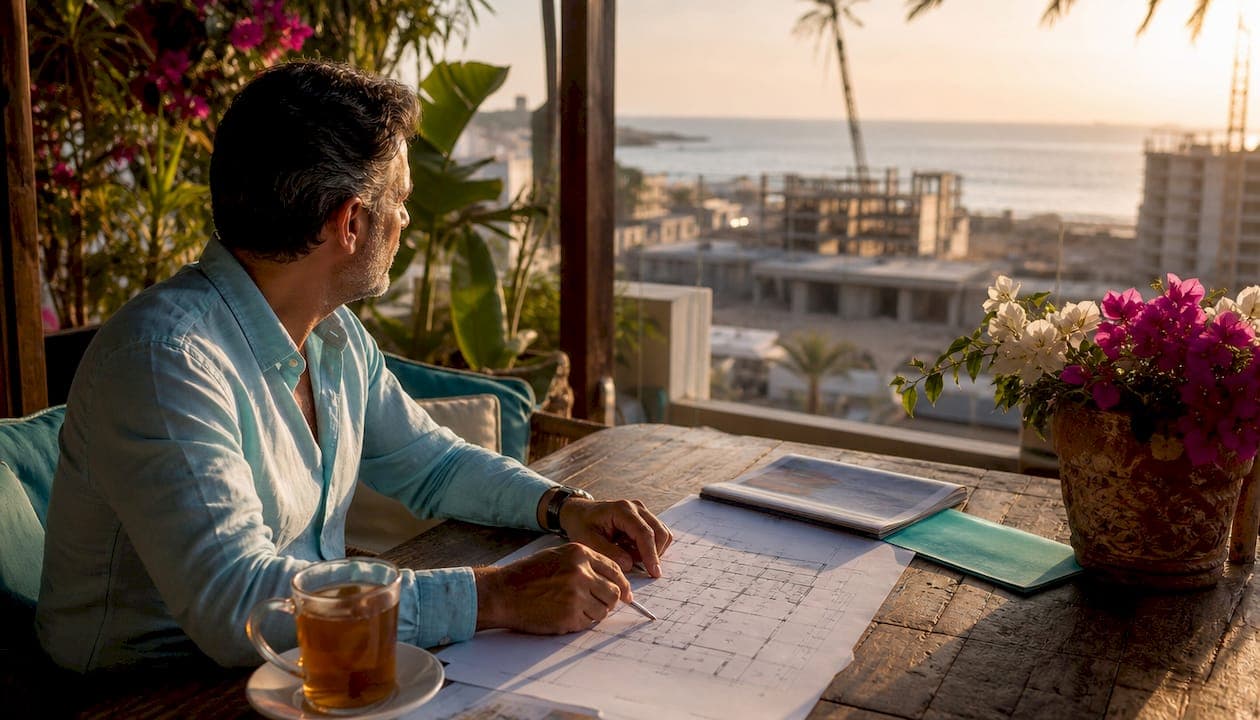
Off-plan investment in Egypt is defined as purchasing a property during its planning or construction phase, before the building is complete. Buyers pay a fraction of the total price upfront and spread the remainder over years of installments. This structure makes investing in Egyptian real estate accessible to a much wider range of international buyers than traditional completed-property purchases. The market has grown significantly, and 2026 brings both new opportunities and updated legal requirements that every investor should understand before signing a contract.
What is off-plan investment in Egypt and why is it attractive?
Off-plan property investment in Egypt offers one of the clearest price advantages in the region. Off-plan properties are priced 20–30% lower than equivalent completed units. That discount creates immediate equity the moment construction finishes and the market catches up to full value.
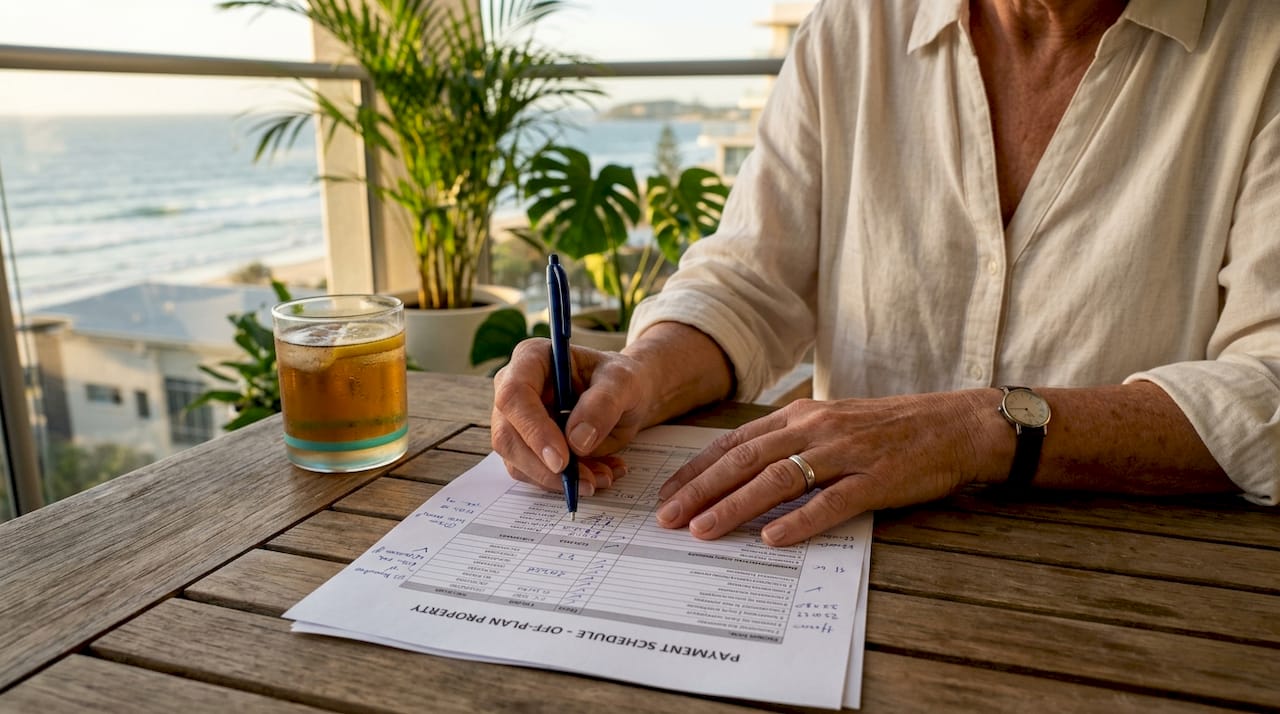
The payment structure is equally compelling. Most Egyptian developers require a down payment of 5–15%, with the balance spread across 7–10 year installment plans. That means a buyer can secure a property worth the equivalent of $100,000 with as little as $5,000 upfront, then pay the rest in manageable monthly amounts. No bank mortgage is needed, which removes a significant barrier for foreign investors.
Capital appreciation is the third driver. Properties in high-demand areas often increase in value substantially between the contract date and delivery. Buyers who sell at or near completion can realize strong returns without ever renting the unit out.
The most active locations for off-plan purchases include:
- New Cairo and the New Administrative Capital: government-backed mega-projects with strong infrastructure investment
- 6th October City: established urban hub with consistent rental demand
- North Coast: seasonal resort market with growing year-round appeal
- Sheikh Zayed: upscale residential demand driven by proximity to Cairo
Rental demand in resort areas like Hurghada, Sahl Hasheesh, and Soma Bay adds another layer of return potential. Buyers who hold through delivery can generate short-term rental income from international tourists and long-term income from expat residents.
Pro Tip: Request a full payment schedule from the developer before signing anything. Compare the total cost across the installment period against the projected market value at delivery. The gap between those two numbers is your real return.
What are the main risks of buying property before completion in Egypt?
Off-plan investment carries real risks, and understanding them upfront protects your capital. Construction delays are the most common challenge, and they directly affect your return timeline. A project delayed by 18 months means 18 months of tied-up capital that cannot be redeployed elsewhere.
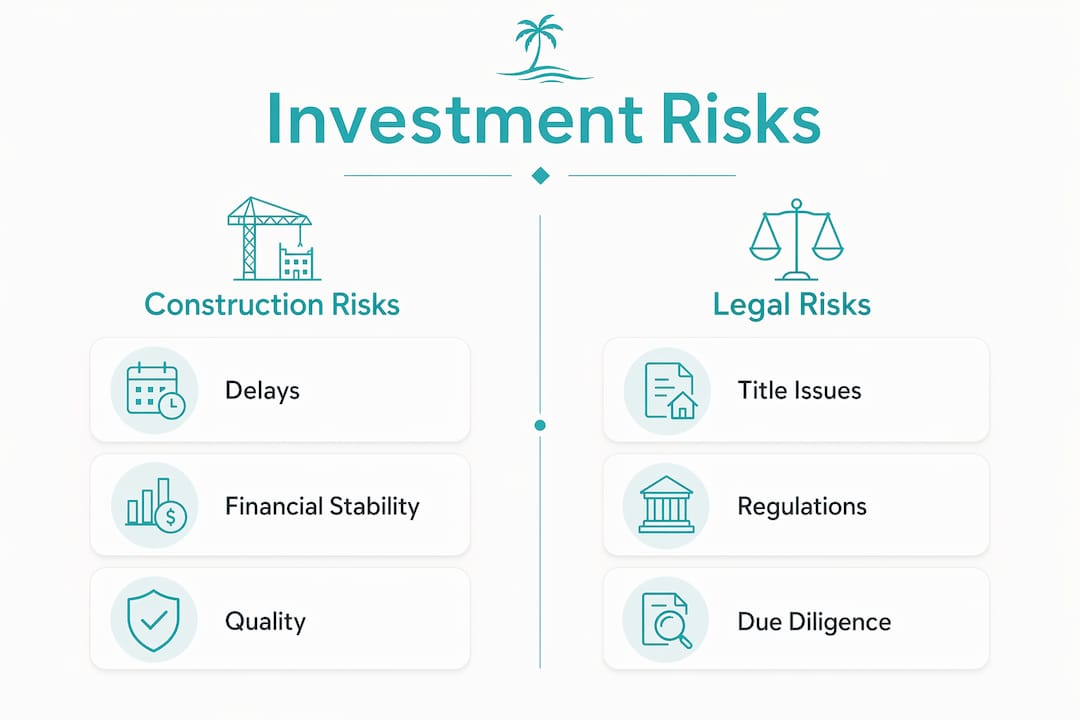
Quality variation is a subtler risk. The marketing materials for an off-plan project often show premium finishes and amenities. The delivered product does not always match that standard. Buyers who do not inspect comparable completed projects by the same developer have no reliable way to predict what they will actually receive.
Market fluctuations also matter. Egypt's real estate market has experienced currency volatility and price corrections in recent years. A property purchased at a projected value may be worth less at delivery if market conditions shift. This risk is real, though it has historically been offset by strong demand in prime locations.
The key risks to monitor before committing:
- Developer financial stability: undercapitalized developers have abandoned projects mid-construction
- Land ownership verification: confirm the developer holds clear title before any payment
- Government approvals: projects without full licensing carry legal exposure for buyers
- Contract terms: vague penalty clauses leave buyers with little recourse for delays
Pro Tip: Never rely solely on a developer's sales team for due diligence. Hire an independent Egyptian property lawyer to review the contract, verify land registration, and confirm all government approvals are in place.
How do legal and financial regulations affect foreign buyers?
Foreign investors face specific legal requirements that did not exist a few years ago. Since march 2024, the Central Bank of Egypt requires all foreign buyers to transfer purchase funds via international SWIFT transfer and retain the bank receipt as proof. Without that documentation, the sale deed cannot be legally registered in the buyer's name. This rule applies to off-plan purchases as well as completed properties.
The practical implication is significant. Buyers who transfer funds informally, through cash or local accounts, cannot complete legal ownership registration. That leaves them holding a developer contract but no registered title. Always transfer funds through a recognized international banking channel and keep every receipt.
Beyond the transfer requirement, foreign buyers should verify the following before signing:
- Land title: confirm the developer holds a registered title deed, not just a usufruct or allocation letter
- Project licensing: request the official building permit and government approval documents
- Payment schedule alignment: contracts should tie payments to construction milestones, not calendar dates alone
- Penalty clauses: the contract must specify financial penalties if the developer misses delivery deadlines
- Refund policy: understand the exact conditions and timeline for refunds if the project is cancelled
| Legal requirement | Why it matters |
|---|---|
| SWIFT transfer proof | Required for sale deed registration under 2024 Central Bank rules |
| Land title verification | Confirms developer has legal right to sell the property |
| Government project approval | Protects buyer if the project faces regulatory challenges |
| Milestone-linked payments | Reduces risk of paying for construction that has not progressed |
| Penalty clause in contract | Gives buyer legal recourse for delays or non-delivery |
Buyers who buy property in Egypt safely follow these steps systematically rather than trusting verbal assurances from sales agents.
What practical steps should investors take before buying off-plan?
A structured approach to due diligence separates profitable off-plan investments from costly mistakes. These steps apply whether you are buying in New Cairo or along the Red Sea coast.
-
Visit completed projects by the same developer. Inspecting finished developments reveals actual build quality, finish standards, and how well the developer maintains common areas. This is the single most reliable indicator of what your off-plan unit will look like at delivery.
-
Verify the developer's track record. Ask for a list of completed projects with delivery dates. Compare promised delivery dates against actual completion. Consistent delays are a red flag.
-
Confirm government platform listings. Projects listed on official government platforms carry a layer of regulatory oversight that unlisted projects do not. Prioritize developers who operate transparently within the official system.
-
Review the contract with a qualified lawyer. Pay particular attention to penalty clauses, refund conditions, and what happens if the developer changes the project specifications after signing.
-
Monitor construction progress at payment milestones. Do not release installment payments without confirming the corresponding construction stage is complete. Request photographic or in-person verification before each payment.
-
Assess location for rental and resale demand. Proximity to airports, beaches, schools, and commercial centers drives both rental yield and resale value. The 2026 investment checklist from Padsabroad covers location scoring in detail.
Pro Tip: Ask the developer for the names and contact details of buyers who have already taken delivery in previous projects. Speaking directly with past buyers gives you unfiltered feedback that no sales brochure will provide.
Key Takeaways
Off-plan investment in Egypt delivers its best returns when buyers combine price discipline, legal compliance, and thorough developer vetting before committing any funds.
| Point | Details |
|---|---|
| Price advantage is real | Off-plan properties are priced 20–30% below completed units, creating built-in equity at delivery. |
| Payment terms are flexible | Down payments of 5–15% with 7–10 year installments make entry accessible without a bank mortgage. |
| Legal compliance is non-negotiable | Foreign buyers must use SWIFT transfers and retain bank receipts to register ownership legally under 2024 rules. |
| Developer vetting protects capital | Visit completed projects and verify government approvals before signing any contract. |
| Location drives long-term returns | New Cairo, 6th October, North Coast, and Red Sea resort areas offer the strongest appreciation and rental demand. |
Padsabroad's perspective on off-plan investment in Egypt
The single biggest mistake we see investors make is treating off-plan purchases as low-effort, passive investments. They see the discounted price, sign quickly, and assume the returns will take care of themselves. They rarely do without active oversight.
Egypt's real estate market rewards patience and punishes shortcuts. The investors who do well are the ones who spend time on the ground, visit completed projects, read contracts carefully, and stay in contact with developers throughout the construction period. The ones who struggle are those who buy remotely based on glossy brochures and never verify anything independently.
The 2024 Central Bank regulations are actually good news for serious buyers. They create a paper trail that protects ownership rights and reduces the risk of fraudulent transactions. Compliance is straightforward if you plan ahead. The buyers who find it burdensome are usually the ones who were not planning to document their funds properly in the first place.
The Red Sea corridor, from Hurghada through Sahl Hasheesh to Soma Bay, continues to attract strong international interest. These locations combine resort lifestyle with genuine rental income potential, which is a combination that holds value even when broader market conditions soften. For investors who want both capital growth and usable lifestyle value, this stretch of coastline remains one of the most compelling off-plan markets in the region.
— Padsabroad
Padsabroad can help you invest off-plan with confidence
Navigating Egypt's off-plan market takes local knowledge, legal awareness, and access to vetted developers. Padsabroad specializes in exactly that for international buyers.

The team at Padsabroad works with buyers across the UK, Europe, and beyond to identify off-plan properties in Egypt that meet strict due diligence standards. Every project goes through developer vetting, title verification, and contract review before it reaches a buyer. For investors who want guidance on the legal steps specific to foreign ownership, the foreign buyer guide covers the full 2026 process in plain language. Contact Padsabroad directly to discuss current listings and get matched with projects that fit your budget, timeline, and return goals.
FAQ
What is off-plan investment in Egypt?
Off-plan investment in Egypt means purchasing a property during its planning or construction phase, before the building is complete. Buyers pay a reduced price upfront and settle the balance through installment plans over several years.
How much deposit do I need for an off-plan property in Egypt?
Most developers require a down payment of 5–15% of the purchase price, with the remainder paid in installments over 7–10 years. No bank mortgage is required, which makes the entry cost significantly lower than in most Western markets.
Can foreigners buy off-plan property in Egypt?
Yes, foreigners can legally purchase off-plan property in Egypt. Since march 2024, the Central Bank of Egypt requires foreign buyers to transfer funds via SWIFT and retain bank receipts to register the sale deed legally.
What are the biggest risks of off-plan investment in Egypt?
Construction delays, developer financial instability, and quality variations between marketed and delivered properties are the primary risks. Thorough developer due diligence and a well-drafted contract with penalty clauses reduce these risks significantly.
Which locations offer the best off-plan investment returns in Egypt?
New Cairo, 6th October City, the North Coast, and the New Administrative Capital are the most active off-plan markets. Red Sea resort areas like Hurghada and Sahl Hasheesh offer strong rental yields alongside capital appreciation potential.