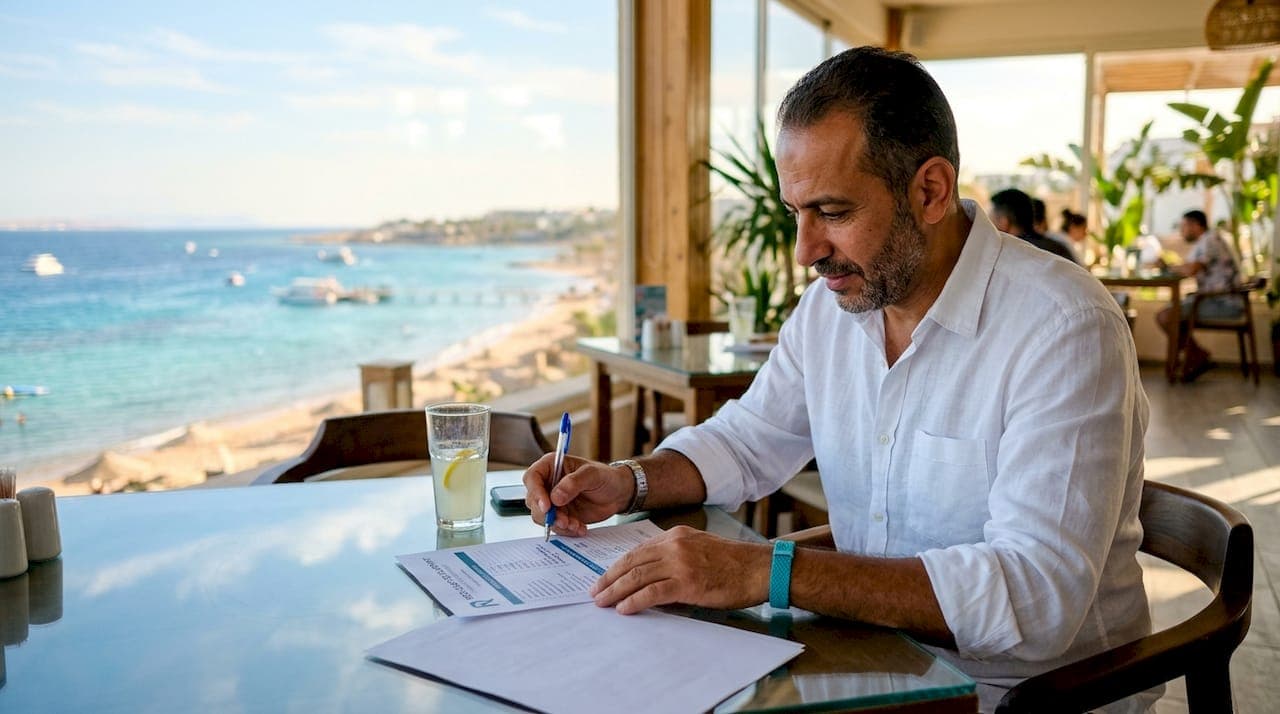
An effective Egypt real estate investment checklist is the single most reliable tool for protecting your capital and securing legal ownership in one of the Middle East's most active property markets. Foreign buyers face a distinct set of requirements: title registration at the Real Estate Publicity Office (Shahr Al-Aqari), mandatory currency transfers under Prime Ministerial Decree No. 41, and ownership limits under Law No. 230 of 1996. Egypt also offers residency and citizenship by investment programs tied directly to property purchases. Getting each step right from the start is what separates a profitable investment from a costly dispute.
1. Verify property ownership and legal title first
Title verification is the most critical step in any Egypt property investment due diligence process. A notarized purchase contract does not equal registered ownership. Notarized contracts and registered title are two separate legal steps, and only registration at Shahr Al-Aqari secures your ownership against third parties.
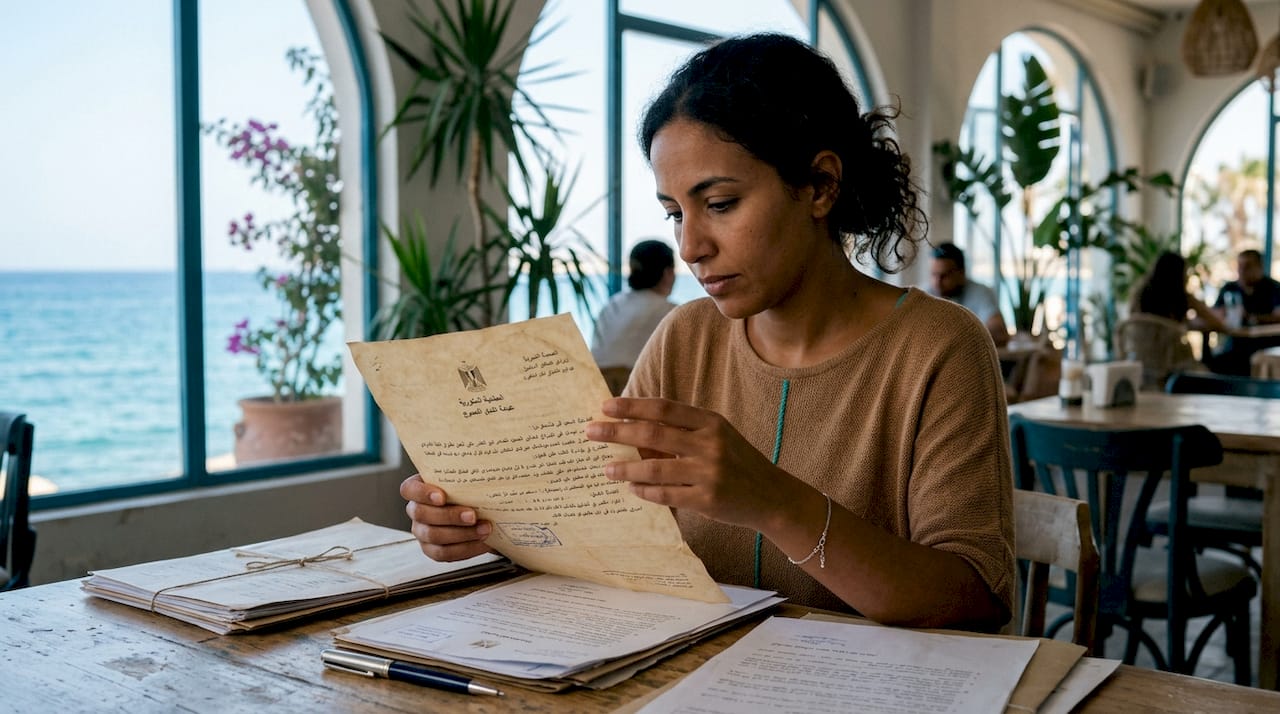
Start by requesting official registry extracts from the Real Estate Publicity Office before signing anything. These extracts show the full chain of title, any liens, and whether the seller has the legal right to transfer ownership. Missing or conflicting documents at this stage are a serious red flag.
Key title verification steps:
- Request a certified extract from Shahr Al-Aqari showing the current registered owner
- Confirm the chain of title goes back at least two prior ownership transfers
- Check for any mortgages, liens, or encumbrances on the property
- Verify that the property boundaries match the registered plot description
- Confirm the property is not subject to any government acquisition orders
Pro Tip: Demand official registry extracts before any payment, deposit, or reservation fee. Sellers who resist this request are a warning sign.
The risk of unregistered properties is real and well documented. Possession contracts, which are common in off-plan or informal sales, give you no enforceable protection if a dispute arises. Always insist on a registrable title path.
2. Assess developer reputation and project legitimacy
Developer credibility is the second pillar of sound Egypt property investment best practices. Developer track record and financial stability directly determine whether your project gets built on time, built at all, or built to the standard you were shown.
Research the developer's delivery history on previous projects. Ask for completed project addresses and visit them in person if possible. A developer who has delivered five projects on schedule is a fundamentally different risk profile from one who is launching their first development.
Check these documents before committing:
- Valid building permit issued by the relevant local authority
- Utility clearance letters confirming water, electricity, and sewage connections
- Proof of land ownership or long-term lease held by the developer
- Official project registration or listing on government-approved platforms
- Sales contract reviewed by an independent Egyptian-licensed attorney
Never accept a promise that key documents will be provided later. Missing permits or clearance letters often signal hidden legal flaws or outstanding debts that can block registration entirely.
Developers with poor delivery records pose high risk, particularly given fluctuating construction costs in Egypt. Verify financial capacity through bank guarantees or escrow arrangements where available.
3. Understand currency transfer and payment compliance
Foreign buyers must follow a specific payment process under Egyptian banking law. Funds must be transferred from an overseas account into an Egyptian bank in foreign currency. This produces a Bank Certificate of Transfer, which is a mandatory document for title deed registration.
Prime Ministerial Decree No. 41, issued in march 2024 and still in force in 2026, governs this requirement. Paying in cash, through local Egyptian pound transfers, or through informal channels disqualifies you from registering the title deed. That means you could own a property with no legal protection.
Follow these payment compliance steps:
- Open an account with a licensed Egyptian bank before transferring any funds
- Transfer the full purchase amount from your overseas account in an accepted foreign currency (USD, EUR, GBP, and other major currencies are accepted)
- Obtain the Bank Certificate of Transfer from your Egyptian bank immediately after the transfer clears
- Keep the original certificate safe. It is required at the title registration stage
- Never split payments across informal channels to avoid banking fees. The entire purchase price must be traceable through the official transfer
Pro Tip: Read the Padsabroad guide on opening an Egyptian bank account before you begin the purchase process. Setting up the account early prevents delays at the payment stage.
4. Know the ownership limits for foreign buyers
Egyptian law places clear limits on foreign property ownership. Law No. 230 of 1996 restricts foreigners to a maximum of two residential properties in Egypt, with a combined area not exceeding 4,000 square meters, and for personal use only.
This limit applies per individual, not per household. If you already own one property in Egypt, factor this into your planning before signing a second purchase agreement. Exceeding the limit creates legal complications that are difficult and expensive to resolve.
The ownership rules also affect your exit strategy. Properties held under possession contracts rather than registered title are harder to resell to foreign buyers, which reduces your pool of potential buyers and can suppress resale value.
5. Navigate residency and citizenship by investment programs
Egypt's residency programs are a genuine advantage for property investors. Minimum investment thresholds are $200,000 for a 3-year renewable residency and $400,000 for a 5-year renewable residency. Citizenship by investment is available at $300,000 in government-approved projects.
These programs add a layer of value beyond the property itself. Residency gives you legal status in Egypt, simplifies future property transactions, and can support business activities in the country. Citizenship by investment is a longer-term option with higher documentation requirements.
Key program details to confirm before investing:
- The project must be on the official government-approved list for residency or citizenship eligibility
- Investment must be made through the compliant banking transfer process described above
- Residency applications are processed through the Ministry of Interior
- Citizenship applications involve the Ministry of Investment and additional background checks
- Renewals require proof that the property is still owned and the investment maintained
Pairing your property purchase with a residency application is a practical approach. It adds legal standing in Egypt and creates a clear paper trail of compliant investment activity.
6. Evaluate property metrics and market factors
Understanding how Egyptian properties are priced and measured prevents overpayment. Net area is typically 20–30% less than gross area because gross figures include shared corridors, lobbies, and building infrastructure. Developers routinely quote prices based on gross area, which inflates the apparent value.
Always request both the gross area and net livable area in writing. Calculate your price per net square meter and compare it against similar completed properties in the same location. This single step can reveal whether you are paying a fair price or a significant premium.
| Metric | What to check |
|---|---|
| Gross area | Total area including common spaces |
| Net livable area | Actual usable space inside your unit |
| Price per net sqm | True cost benchmark for comparison |
| Rental demand | Occupancy rates in the target area |
| Resale liquidity | Volume of comparable sales in past 12 months |
Cairo and coastal markets behave very differently. Cairo vs. coastal property comparisons show that Red Sea destinations like Hurghada, El Gouna, and Sahl Hasheesh carry strong short-term rental demand driven by tourism, while Cairo offers higher long-term rental stability. Your investment goal determines which market fits better.
Pro Tip: Commission an independent structural and boundary inspection from a surveyor registered with the Egyptian Survey Authority. Independent inspections are not standard practice in Egypt, but they catch boundary discrepancies and structural issues that developer brochures never mention.
7. Review the full contract and closing documentation
The purchase contract is where legal protections are either built in or left out. An Egyptian-licensed attorney must review the contract before you sign. Do not rely on the developer's in-house legal team for this review. Their job is to protect the developer, not you.
Key contract clauses to verify:
- Delivery date with penalty clauses for late completion
- Exact property specifications, including net area, finishes, and fixtures
- Payment schedule tied to construction milestones, not arbitrary dates
- Termination rights and refund conditions if the developer defaults
- Confirmation that the Bank Certificate of Transfer will be accepted for title registration
Closing documentation must include the title deed registered at Shahr Al-Aqari, the Bank Certificate of Transfer, utility connection agreements, and a handover inspection report. Missing any of these at closing creates problems that can take years to resolve.
Key takeaways
A verified, stepwise Egypt real estate investment checklist is the most reliable way to protect your capital, secure legal title, and qualify for residency programs in 2026.
| Point | Details |
|---|---|
| Title registration is non-negotiable | Only Shahr Al-Aqari registration secures ownership against third parties. |
| Bank transfer compliance is mandatory | Prime Ministerial Decree No. 41 requires foreign currency transfer through Egyptian banks for title eligibility. |
| Developer verification protects your investment | Check delivery history, building permits, and utility clearances before signing. |
| Net area determines true value | Net livable area runs 20–30% below gross area; always price on net figures. |
| Residency programs add real value | A $200,000 investment qualifies for 3-year residency; $400,000 for 5-year residency. |
What experience in Egypt's market actually teaches you
The most common mistake Padsabroad sees from first-time investors is trusting the seller's narrative over official documents. Sellers tell compelling stories. Registry extracts tell the truth. Every investor who has faced a title dispute in Egypt can trace the problem back to skipping or rushing the official verification step.
The second pattern is underestimating the payment compliance process. Investors who transfer funds informally or through local accounts to save time end up unable to register their title deed. Fixing that error costs far more in legal fees and delays than the original shortcut saved.
Residency programs are consistently underused. Investors who qualify for the $200,000 threshold often don't apply because they don't realize the application runs parallel to the purchase, not after it. Starting the residency process at the same time as the property purchase is the most efficient approach.
Independent inspections feel like an unnecessary expense until you find a boundary discrepancy or a structural issue that the developer's team missed. Padsabroad recommends commissioning one on every purchase, regardless of how reputable the developer appears. The cost is small relative to the protection it provides.
— Padsabroad
How Padsabroad supports your Egypt property investment
Padsabroad specializes in helping international buyers purchase and invest in Egyptian real estate, with particular depth in Red Sea coastal markets including Hurghada, El Gouna, Sahl Hasheesh, Soma Bay, and Marsa Alam.

The team at Padsabroad guides buyers through every stage of the Egypt property purchase process, from title verification and developer assessment to banking compliance and residency applications. Whether you are buying a holiday home, a rental investment, or a long-term residence, Padsabroad provides the local knowledge and legal coordination that international buyers need. Explore the full range of listings and services at padsabroad.info to get started with confidence.
FAQ
What documents do I need to register property title in Egypt?
You need a registered contract from Shahr Al-Aqari, a Bank Certificate of Transfer, and valid building permits. Missing any of these documents blocks title registration.
Can foreigners buy property anywhere in Egypt?
Foreigners can buy in most areas but are limited to two residential properties with a combined area not exceeding 4,000 square meters under Law No. 230 of 1996. Some border and military zones have additional restrictions.
How does the Egypt residency by investment program work?
A minimum investment of $200,000 qualifies for a 3-year renewable residency, and $400,000 qualifies for a 5-year residency. The property must be purchased through compliant banking channels and the project must meet government criteria.
What is the Bank Certificate of Transfer and why does it matter?
The Bank Certificate of Transfer is an official document issued by an Egyptian bank confirming that purchase funds arrived from an overseas foreign currency account. Without it, you cannot register the title deed under Prime Ministerial Decree No. 41.
How do I check if an Egyptian developer is legitimate?
Request building permits, utility clearance letters, and proof of land ownership. Cross-check the developer's completed projects and confirm the development is listed on official government-approved platforms before signing any contract.