You can avoid most property purchase scams in Egypt by doing three things: verify registrable title at the Real Estate Publicity Office (known as the Tabu), hire your own independent Egyptian lawyer, and never transfer large sums in cash or to a private personal account. These three steps alone block the majority of real estate fraud that targets foreign buyers in Hurghada and across the Red Sea coast.
Before you read further, run through this quick checklist on any property you are considering:
- Confirm a registrable title path exists. Ask to see the original Tabu extract, not a photocopy. If the seller cannot produce one, stop there.
- Appoint your own independent lawyer. Do not use a lawyer recommended by the agent or developer. Your lawyer should conduct all registry and power of attorney (POA) checks independently.
- Pay only by traceable bank transfer. Refuse cash payments, personal account transfers, or side agreements labeled as "furniture" or "finishing" fees.
The sections below walk through each of these steps in detail, from spotting common real estate fraud in Egypt to knowing exactly who to call if something goes wrong.
Key Takeaways
Avoiding property scams in Egypt comes down to one consistent discipline: verify the registrable title independently, pay through traceable channels, and never let the selling party control your legal representation.
| Point | Details |
|---|---|
| Registrable title is non-negotiable | Obtain a fresh Tabu extract from the Real Estate Publicity Office before paying any deposit. |
| Use an independent lawyer | Source your own lawyer with no connection to the agent or developer; this is the single most effective fraud prevention step. |
| Traceable payments only | Pay by bank transfer to a registered company account; never use cash or personal accounts. |
| Off-plan requires permit verification | Confirm the building permit reference directly with the issuing authority before committing to any off-plan project. |
| Padsabroad for verified Red Sea purchases | Padsabroad verifies listings, introduces independent lawyers, and guides payment structures for buyers purchasing along Egypt's Red Sea coast. |
Table of Contents
- Is it safe for foreigners to buy property in Egypt?
- Common property scams that target foreign buyers in Egypt
- How to verify the property and the seller before paying anything
- Safe payment structures and contract clauses that protect your title
- Specific checks when buying off-plan or directly from a developer
- What to do immediately if you suspect real estate fraud
- Recent legal changes that strengthen buyer protections (2024–2026)
- Pre-signing checklist: what to confirm before you transfer any funds
- Padsabroad's perspective on what actually goes wrong
- How Padsabroad supports safe purchases along the Red Sea coast
- Sources
Is it safe for foreigners to buy property in Egypt?
Foreigners can legally own property in Egypt, but the process carries real risks that differ from buying in Western markets. Under Law 230 of 1996, non-Egyptians may purchase up to two residential properties, provided the total area does not exceed 4,000 square meters per property. A residence visa is typically required as part of the administrative process, and tax and transfer formalities add steps that catch many buyers off guard.
The most important distinction to understand is the difference between a signed "customary contract" (known locally as an 'orf or 'urfi contract) and a registrable title. A customary contract is a private agreement between buyer and seller. It does not transfer state-recognized ownership. Only a contract registered at the Real Estate Publicity Office creates a title that is enforceable against third parties. Many buyers in Hurghada have signed customary contracts, paid in full, and later discovered the seller had already sold the same property to someone else, or that the property carried an undisclosed mortgage.
Risk levels vary significantly by purchase type:
- In-compound resale with existing Tabu: Lower risk, provided you verify the title extract directly with the registry and confirm no encumbrances.
- Off-plan purchase from a developer: Higher risk. The property does not yet exist, permits may be incomplete, and delivery timelines are often vague. This is where most large-scale fraud occurs in tourist areas.
- Remote purchase without a site visit: Highest risk. Staged photos, inflated valuations, and phantom listings are common when buyers rely entirely on digital presentations.
The World Justice Project's rule-of-law indicators for Egypt underscore why document-level verification matters so much here. Enforcement of civil judgments can be slow and unpredictable, which means prevention is far more effective than litigation after the fact.
Common property scams that target foreign buyers in Egypt
Property scams in Egypt tend to follow recognizable patterns. Knowing the mechanics of each one makes them much easier to spot before money changes hands.
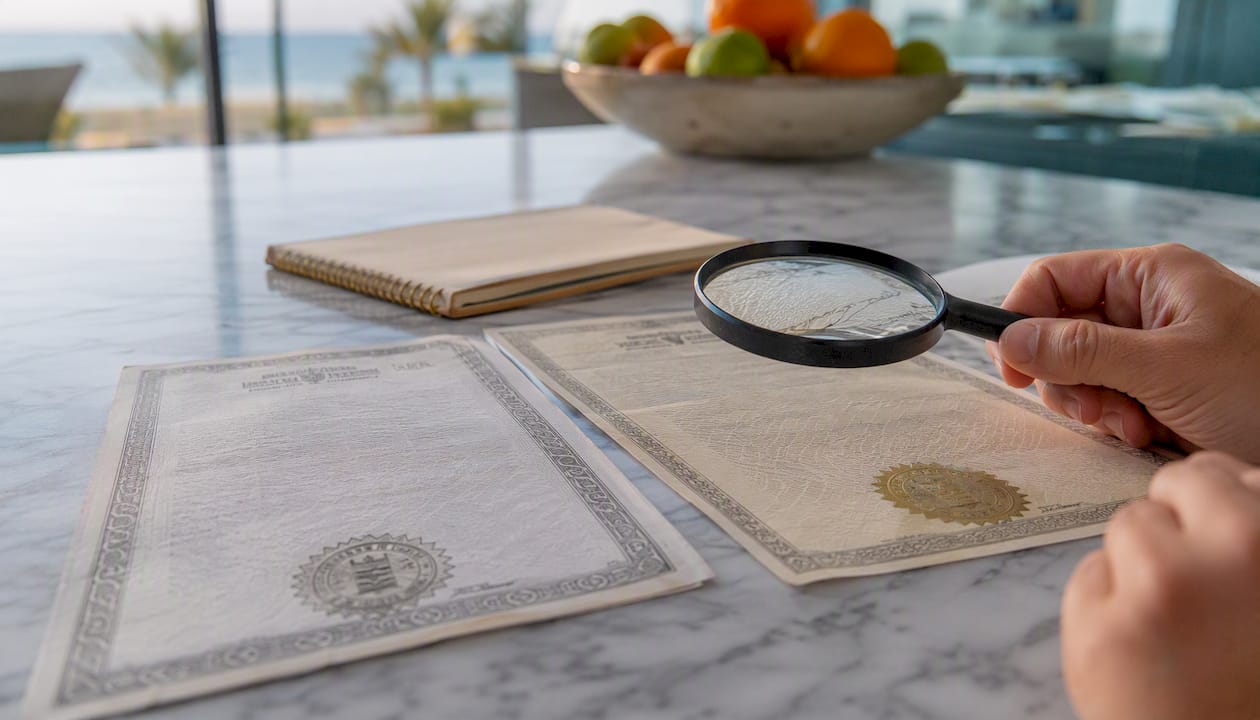
Fake or forged title deeds. Fraudsters produce convincing photocopies of Tabu documents with altered names or property details. In Hurghada, this often involves tourist-facing apartments where the original owner is abroad and unlikely to notice a duplicate sale quickly. The fix is straightforward: your lawyer must obtain a fresh title extract directly from the Real Estate Publicity Office, not accept a copy handed over by the seller.
Double and multiple sales. A seller signs customary contracts with two or more buyers for the same property, collecting deposits from each. Because customary contracts are not registered, none of the buyers has state-recognized priority. This scam pattern is well-documented and is particularly common in resale apartments along the Red Sea coast, where sellers know that foreign buyers are unlikely to cross-check with each other.
Forged powers of attorney. A fraudster presents a POA purportedly signed by the property owner, authorizing them to sell. The POA may be entirely fabricated or may have been revoked. In either case, any sale conducted under it is legally void. Your lawyer must verify that the POA is registered with the relevant notary office and has not been revoked.
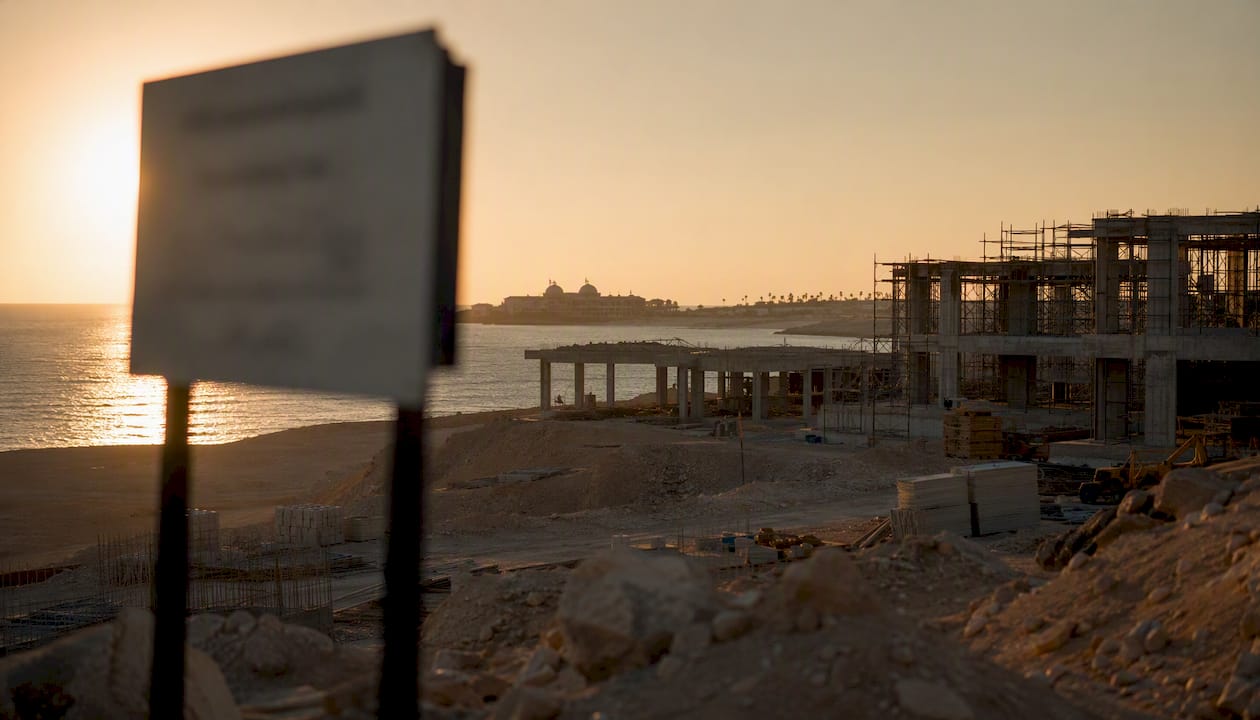
Phantom off-plan projects. Glossy brochures, a show apartment, and a persuasive sales agent are enough to collect deposits for a development that has no valid building permit and may never be built. Several such cases have emerged in the Sahl Hasheesh and Makadi Bay corridors, where tourist-area demand makes buyers willing to commit quickly.
Deposit theft. A seller or agent collects a reservation deposit, then disappears or claims the deal fell through. Without a traceable payment record and a signed preliminary contract, recovery is difficult.
Staged and false listings. Photos of a different, higher-quality property are used to advertise a unit that does not match the description. Buyers who travel to view the property are then pressured to commit on the spot because "another buyer is interested."
Watch for these red flags during any viewing or negotiation:
- Urgency pressure: "Another buyer is coming tomorrow" or "This price is only valid today."
- Cash-only payment requests or requests to pay into a personal bank account.
- Refusal to allow your independent lawyer to review documents before signing.
- Photocopies of the Tabu rather than an original or a fresh registry extract.
- Side agreements for "furniture," "finishing," or "appliances" that represent a portion of the real purchase price.
- A POA that cannot be verified at the notary office where it was supposedly registered.
Pro Tip: If a seller or agent resists your request to involve an independent lawyer, treat that resistance as a disqualifying red flag. Legitimate sellers welcome legal due diligence.
How to verify the property and the seller before paying anything
The single most important verification step is obtaining a fresh title extract from the Real Estate Publicity Office (Tabu) through your independent lawyer. This extract confirms who legally owns the property, whether any mortgage or lien is registered against it, and whether the title chain is clean. No other document substitutes for it.
Here is the verification sequence to follow:
- Request original documents only. Ask for the original Tabu certificate, the seller's national ID or passport, and the original sale deed from the seller's own purchase. Photocopies are not acceptable for verification purposes.
- Obtain a fresh Tabu extract. Your lawyer applies to the Real Estate Publicity Office for a current extract in the property's name. This confirms the registered owner as of today, not at the time the seller bought it.
- Review the chain of ownership. Your lawyer traces the title back through previous owners to confirm there are no gaps, disputed transfers, or unresolved inheritance claims.
- Check for mortgages, leases, and third-party claims. The Tabu extract will show registered encumbrances. An unregistered mortgage is also possible, so ask the seller to provide a written declaration and have your lawyer cross-check with the relevant bank if the seller financed the original purchase.
- Verify any POA at the notary office. If the person selling is not the registered owner, your lawyer must confirm the POA is currently valid, properly registered, and has not been revoked. This check must go directly to the notary office, not rely on a copy provided by the agent.
- Check developer permits and building approvals. For resale properties, confirm the building was constructed with valid permits. For off-plan purchases, this step is covered in detail in the next section.
- Cross-check the agent or developer on the Official Egyptian Real Estate Platform. The platform lists licensed brokers and verified projects tied to the Real Estate Registry. If the agent or project does not appear there, ask why.
The UK government's guidance on buying property in Egypt is explicit on one point: estate agents and brokers in Egypt are not regulated. Using a lawyer recommended by your agent creates a conflict of interest that has preceded many title and registration disputes. Source your lawyer independently, through your embassy's list of local legal professionals or through a trusted referral network.
Pro Tip: For remote purchases, ask your lawyer to provide bilingual notarized translations of all key documents. This protects you if a dispute later requires evidence in a foreign court or before your home country's authorities.
Safe payment structures and contract clauses that protect your title
The safest payment structure for buying property in Egypt uses staged bank transfers tied to verifiable milestones, with each transfer documented and traceable. Never pay in cash, and never transfer money to a personal account rather than a company or escrow account.
A practical high-level payment schedule looks like this:
- Reservation deposit (typically 10%): Paid only after your lawyer has confirmed a registrable title path exists and the preliminary contract is signed. Transfer by bank wire to the developer's or seller's registered company account.
- Staged deposits (typically 20–40% in tranches): Released against specific milestones: completion of foundations, structural work, or other agreed construction stages for off-plan; or against satisfactory completion of due diligence for resale.
- Completion payment: Made only when your lawyer confirms the title transfer documents are ready for registration and all conditions in the contract are met.
At each stage, demand written confirmation of receipt on company letterhead, and keep bank transfer records with reference numbers.
Your contract should include these clauses as a minimum:
- Delivery date with financial penalties for late completion (specify a per-day or per-month penalty amount).
- Completion guarantee stating what happens if the developer fails to deliver: full refund, alternative unit, or arbitration pathway.
- Explicit statement that all agreements are contained in this contract. Any side agreement for furniture, finishing, or appliances that is not in the registered contract is legally unenforceable and may be used to obscure the true purchase price from tax authorities.
- Registration obligation: The contract must specify that the seller or developer will register the title transfer at the Real Estate Publicity Office within a defined timeframe after completion.
Side agreements labeled as "furniture" or "finishing" payments are a common way to move part of the purchase price off the official record. This reduces the declared value for tax purposes, which may seem attractive in the short term, but it leaves that portion of your payment entirely unprotected. If the deal collapses, you have no legal basis to recover money that was never officially part of the transaction.
Law No. 9 of 2022 updated Egypt's property registration procedures and introduced simplified steps for buyers to obtain official extracts. Your lawyer should be familiar with the current registration process under this law and should confirm the registration timeline before you sign.
Specific checks when buying off-plan or directly from a developer
Off-plan purchases carry the highest fraud risk of any property transaction in Egypt. The property does not yet exist, which means you are buying a promise. That promise is only as good as the developer's permits, financial standing, and delivery record.
Before committing any money to an off-plan project, confirm every item on this checklist:
- Valid building permit: Ask for the permit reference number and verify it directly with the relevant local authority (the New Urban Communities Authority or the relevant governorate). Do not accept the developer's word or a photocopy.
- Land allocation documentation: Confirm the developer legally owns or has a registered right to develop the land. Developers in tourist areas sometimes begin marketing before land allocation is finalized.
- Project listing on the Official Egyptian Real Estate Platform: Verified projects appear on this government-backed platform. If the project is not listed, ask the developer to explain why and treat the absence as a warning sign.
- Developer delivery record: Research the developer's previous projects. Have they delivered on time? Are there unresolved complaints from earlier buyers? Ask for references from completed projects and, where possible, speak to existing owners.
- Escrow or payment guarantee arrangements: Some developers hold buyer deposits in a dedicated escrow account rather than using them as operating capital. This is not yet universal in Egypt, but it is worth asking about and negotiating for.
- Completion certificate process: Understand what triggers the handover and what recourse you have if the finished unit differs materially from what was promised (different finishes, smaller area, missing amenities).
Red flags specific to off-plan deals in tourist areas include: vague or sliding completion schedules ("approximately 24 months"), promised amenities that are not specified in the contract, and substitute finishes offered at handover without prior notice or compensation.
A 2026 legal analysis by Habib Al Mulla and Partners documents a significant shift: under Article 15 of Egypt's Consumer Protection Law, developers who market or sell units without valid building permits now face potential criminal exposure, including fines and mandatory publication of judgments. This raises the stakes for developers and gives buyers an additional enforcement lever they did not have before.
What to do immediately if you suspect real estate fraud
Stop all further payments the moment you suspect something is wrong. Do not confront the seller or agent directly before speaking to your lawyer, and do not sign anything new under pressure.
Follow these steps in order:
- Preserve all evidence. Collect every document you have: contracts, receipts, bank transfer records, WhatsApp or email communications, brochures, and any photos of the property or documents. Screenshot digital communications and note the date and time of each message. Store copies in a secure location outside Egypt (cloud storage or email to yourself).
- Notify your independent lawyer immediately. Your lawyer can advise on whether to apply for an urgent injunction to freeze the property at the Real Estate Publicity Office, preventing any further transfer while the dispute is investigated.
- Contact your bank. If a transfer was made recently, ask your bank whether a recall is possible. International wire recalls are time-sensitive, typically within 24–72 hours of the transfer.
- File a complaint with the local police. In Hurghada, this means the local police station. Bring original documents and a written summary of events. A police report creates an official record and is required for most subsequent legal steps.
- File a complaint with the Consumer Protection Agency (CPA). The CPA handles complaints about misleading developer claims and permit violations. This is particularly relevant if the fraud involves an off-plan project or misrepresented permits.
- Contact your embassy or consulate. Your embassy can provide a list of local lawyers, advise on consular assistance, and in serious cases escalate concerns through diplomatic channels. They cannot intervene in legal proceedings, but their involvement adds a layer of official documentation.
- Escalate to the Public Prosecution if criminal conduct is evident. Forged documents, multiple sales of the same property, and fraudulent POAs are criminal offenses under Egyptian law. Your lawyer can file a criminal complaint with the Public Prosecution (النيابة العامة) alongside any civil action.
The U.S. Department of State's scam awareness guidance recommends documenting all communications and transactions from the outset of any foreign property deal, precisely because recovery depends on the quality of evidence available after the fact.
Recent legal changes that strengthen buyer protections (2024–2026)
The enforcement environment for property buyers in Egypt shifted meaningfully after 2024. The most consequential change is the application of the Consumer Protection Law to real estate marketing.
Article 15 of Egypt's Consumer Protection Law now exposes developers to criminal penalties for selling units without valid building permits and for material misrepresentations in marketing materials. Penalties include fines and mandatory public disclosure of judgments, which creates reputational consequences alongside financial ones. This analysis, published by Habib Al Mulla and Partners in 2026, marks a departure from the previous civil-only liability framework and gives buyers a stronger enforcement position when developers misrepresent permits or project status.
This matters practically because it means a buyer who discovers that a developer sold units without permits has a criminal complaint pathway, not just a civil one. The full analysis from Habib Al Mulla and Partners is worth reading before signing any off-plan contract.
The Official Egyptian Real Estate Platform has also improved its transparency tools, linking listings to registry data and restricting access to licensed brokers only. Cross-checking any developer or agent against this platform takes minutes and can surface licensing gaps before you commit.
| Indicator | Detail | Source |
|---|---|---|
| Consumer Protection Law (Article 15) enforcement | Criminal exposure for developers selling without permits, as of 2026 | Habib Al Mulla and Partners |
| Official Real Estate Platform | Government-backed verified listings and licensed broker registry | Official Egyptian Real Estate Platform |
| World Justice Project rule-of-law index | Egypt's indicators highlight the importance of document-level verification and independent counsel | World Justice Project |
| Transparency International CPI 2024 | Egypt's 2024 Corruption Perceptions Index score provides context on systemic risk for buyers | Transparency International |
Taken together, these indicators explain why the practical advice in this guide, specifically independent lawyers, Tabu verification, and traceable payments, is not excessive caution. It reflects the actual enforcement environment buyers are operating in.
Pre-signing checklist: what to confirm before you transfer any funds
Do not sign a contract or transfer any funds until every item below is confirmed. Print this list and work through it with your lawyer.
- Original Tabu extract obtained directly from the Real Estate Publicity Office. If the seller cannot produce a path to a registrable title, do not pay a deposit.
- Seller's national ID or passport verified. The name on the ID must match the name on the Tabu exactly.
- Seller's legal right to sell confirmed. If selling via a POA, the POA must be verified as currently valid and registered at the notary office.
- Mortgage and encumbrance search completed. Your lawyer confirms no registered mortgage, lien, or third-party claim exists against the property.
- Valid building permit confirmed. For off-plan or recently built properties, the permit reference is verified with the issuing authority, not just accepted from the developer.
- Chain of ownership reviewed. No gaps, disputed transfers, or unresolved inheritance claims in the title history.
- Independent lawyer confirmation in writing. Your lawyer provides a written opinion that the title path is clean and the contract is safe to sign.
- Traceable payment route established. Bank transfer details for a registered company or escrow account are confirmed before any money moves.
For a more detailed walkthrough of these trust checks for overseas buyers, Padsabroad has published a dedicated guide covering each step in the context of Hurghada and Red Sea purchases.
Padsabroad's perspective on what actually goes wrong
The most common mistake Padsabroad sees foreign buyers make is not the obvious one. It is not falling for a completely fake listing. It is trusting a lawyer introduced by the same agent selling the property.
When the agent, the developer, and the lawyer are all part of the same referral chain, the buyer has no independent check on anything. The lawyer reviews documents that the agent provided, confirms what the developer wants confirmed, and the buyer signs. This is how buyers end up with customary contracts they believe are title deeds, or with off-plan units where the building permit was never valid.
The safeguards that actually work are simple: source your lawyer independently, demand the Tabu extract from the registry rather than from the seller, and pay only through traceable bank transfers to registered accounts. Padsabroad applies these checks on every transaction it supports, including verifying Tabu documents in person at the registry and introducing buyers to independent legal professionals with no connection to the selling party.
For buyers who want to understand the legal framework for property ownership in Hurghada before they start viewing properties, that foundation makes every subsequent step clearer and safer.
How Padsabroad supports safe purchases along the Red Sea coast
Foreign buyers researching Egypt's Red Sea market often find the verification process confusing, especially from a distance. Padsabroad is built specifically for this situation: a UK and Egypt-based property company that handles the on-the-ground checks that remote buyers cannot easily do themselves.

Every listing Padsabroad presents is cross-checked against the Official Egyptian Real Estate Platform and verified for a registrable title path before it reaches a buyer. The team introduces buyers to independent Egyptian lawyers with no connection to the selling developer or agent, and provides structured payment guidance so funds move through traceable, documented channels. For off-plan purchases, Padsabroad reviews permit documentation and developer track records before recommending any project.
If you are ready to buy safely in Hurghada, El Gouna, Sahl Hasheesh, or elsewhere along the Red Sea coast, start with Padsabroad's safe property buying service or read the first-time buyer guide to Red Sea property investment to understand exactly what the process looks like from inquiry to registered title.
Sources
Use these resources to verify title, check developer permits, or report suspected fraud.
- How to Protect Yourself from Real Estate Fraud - The Official Egyptian Real Estate Platform Blog
- Gov
- Buying property in Egypt: risks, scams and pitfalls (2026) - Sands Of Wealth
- Egypt_2.pdf - World Justice Project
This article is general information, not a substitute for advice from a qualified financial advisor. Consult a qualified financial professional about your own circumstances before acting on anything here.