
Cairo versus coastal Egypt property divides into two distinct investment profiles: Cairo delivers consistent rental income through long-term tenant demand, while coastal Egypt offers exceptional capital growth potential and an evolving lifestyle appeal. The right choice depends on whether you prioritize steady cash flow or price appreciation, and whether you plan to live in the property or rent it out. Both markets carry real advantages, and both carry risks that gross yield figures alone will not reveal. This guide breaks down the numbers, the demand patterns, the tax realities, and the lifestyle factors so you can make a well-informed decision in 2026.
Cairo vs. coastal egypt property: yields and capital growth compared
The single most important number in any investment comparison is net yield, not gross yield. Cairo apartments post an average gross rental yield of approximately 8.3%, sitting above the national average of 6.72%. That is a strong headline figure, but it does not account for taxes, management fees, or vacancy periods.
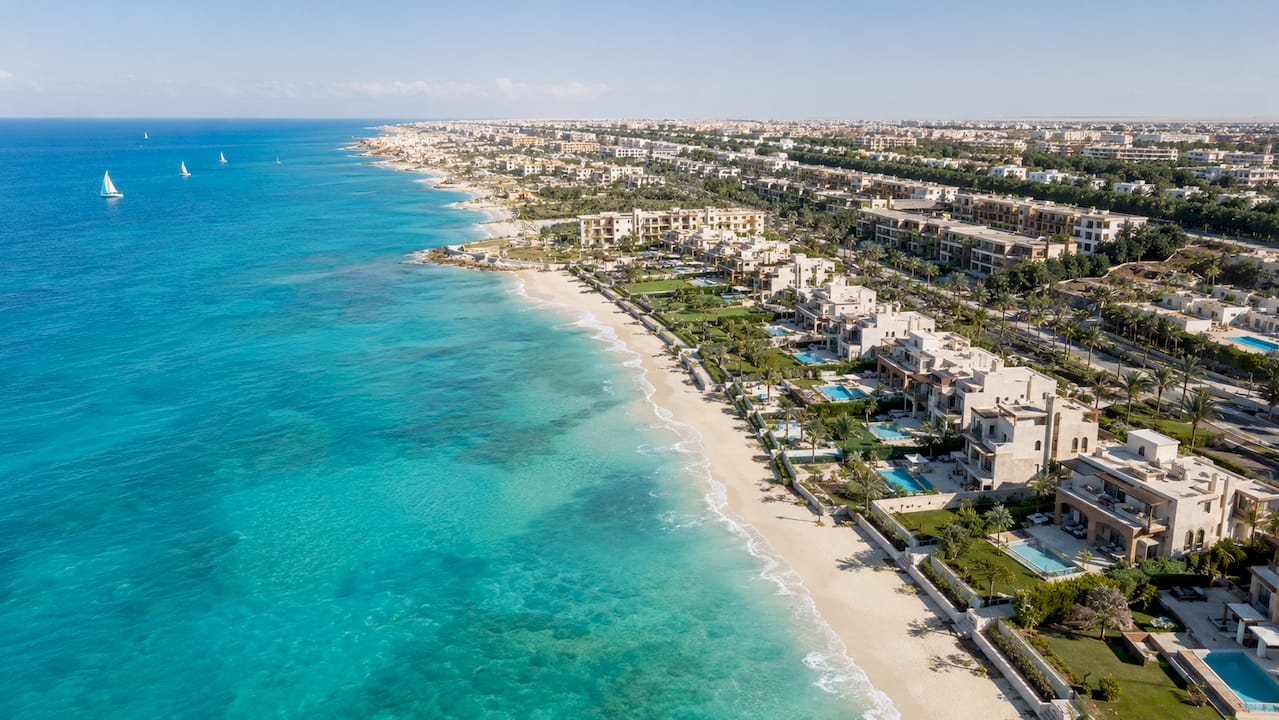
Coastal Egypt tells a different story on the capital growth side. North Coast residential prices surged nearly 390% from 2023 to Q3 2025, according to a JLL report. That kind of price movement is rare in any market and reflects both genuine demand and government-backed infrastructure investment in areas like Ras El Hekma and New Alamein City.
Comparison: cairo vs. coastal egypt property metrics
| Metric | Cairo | Coastal Egypt (North Coast) |
|---|---|---|
| Average gross rental yield | ~8.3% | Lower, varies by location |
| Capital price growth (2023–2025) | 15–20% in premium compounds | ~390% in key hotspots |
| Tenant profile | Long-term, domestic and expat | Seasonal, shifting to year-round |
| Occupancy pattern | Consistent year-round | Peak and shoulder season variation |
| Investment risk type | Income risk (yield compression) | Capital risk (price volatility) |
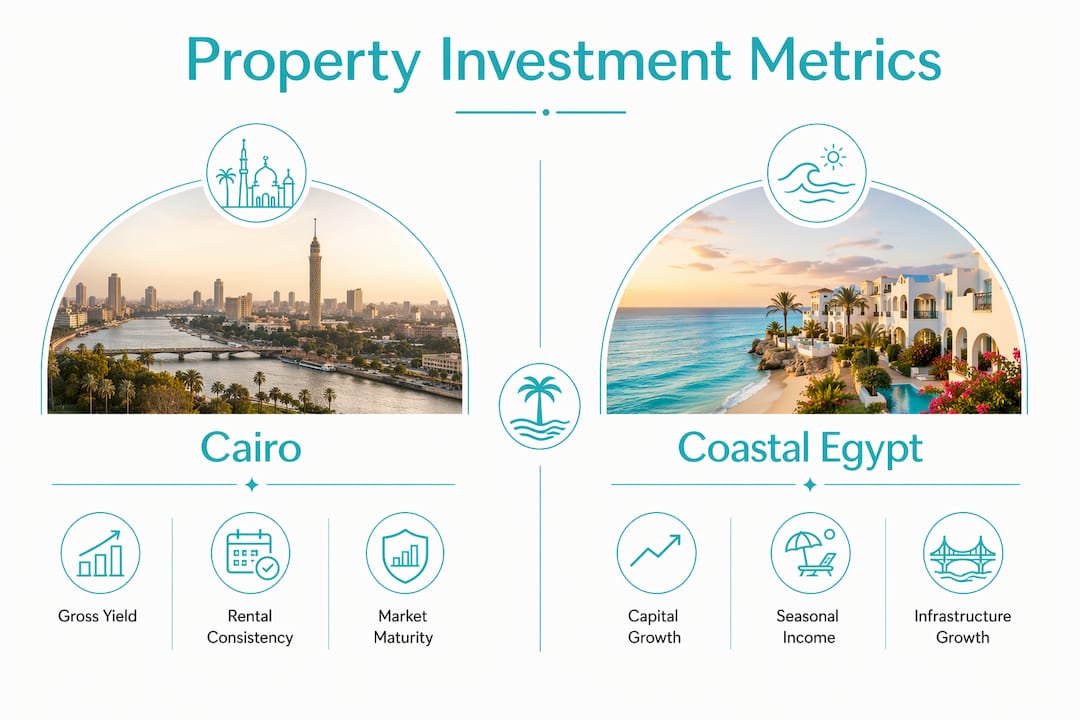
Cairo wins on rental income consistency. Coastal Egypt wins on capital appreciation. The comparison only becomes useful when you layer in taxes and actual occupancy rates, which the sections below address directly.
Pro Tip: When evaluating any Egyptian property, ask the seller or agent for a net yield projection that includes property tax, rental income tax, and a realistic vacancy allowance. Gross yield figures are a starting point, not a decision-making tool.
What drives tenant demand in cairo vs. the coast?
Cairo's rental demand is anchored in permanent, structural factors. The city functions as Egypt's primary business, education, and government hub, which means tenant demand stays long-term and relatively stable across economic cycles. Expatriates working for multinational firms, students attending universities like the American University in Cairo, and domestic professionals form the core tenant base.
Coastal Egypt operates on a different model. The traditional tenant profile is a vacationer or second-home buyer who occupies the property for weeks, not years. That is changing, but the shift is gradual.
Key demand drivers in each market:
- Cairo: Business district proximity (New Cairo, Sheikh Zayed), university catchment areas, diplomatic and expat communities, healthcare access
- North Coast: Summer tourism, second-home ownership, growing hospitality investment, government master planning in New Alamein City and Ras El Hekma
- Red Sea Coast (Hurghada, El Gouna, Sahl Hasheesh): International tourism, retirees, remote workers, year-round mild climate
JLL projects that coastal Egypt is evolving toward permanent destinations through infrastructure investment and master-planned communities. That projection is credible, but it is still a projection. Cairo's demand drivers are already proven. The Cairo hospitality sector added approximately 280 new hotel keys in New Cairo in Q1 2026 alone, bringing the district total to 29,000 keys. That level of accommodation supply signals sustained business travel and rental demand in specific Cairo districts.
For investors who need predictable monthly income, Cairo is the lower-risk choice. For investors who can absorb cash-flow variation in exchange for capital upside, the coast offers a compelling case.
How do taxes affect net returns in cairo vs. coastal egypt?
Egypt's tax framework applies nationally, but its impact on net returns differs significantly depending on property type, location, and how you use the asset. Understanding this framework is non-negotiable before you commit to either market.
Egypt imposes a property tax of approximately 10% on the net annual rental value of a property. Rental income tax then applies on top of that, ranging from 0% to 27.5% depending on income level and applicable deductions. The gap between gross yield and net yield can be substantial.
Tax summary: key rates for egyptian property investors
| Tax Type | Rate | Notes |
|---|---|---|
| Annual property tax | ~10% of net rental value | Applied to assessed rental value |
| Rental income tax | 0–27.5% | After allowable deductions |
| Housing use discount | 25% reduction | Applies when property is used for housing |
| Management and maintenance deductions | Variable | Reduces taxable rental income |
The 25% tax discount for properties used for housing is a meaningful benefit. It reduces the effective tax burden and improves net yield for buy-to-let investors who position their properties correctly. This discount applies in both Cairo and coastal markets, but the practical impact is larger in Cairo where rental income is higher and more consistent.
Pro Tip: Work with a local Egyptian tax advisor before completing any purchase. The difference between a correctly structured ownership arrangement and a poorly structured one can shift your net yield by several percentage points annually.
Directly comparing gross yields between Cairo and the coast without modeling net yields is misleading. A Cairo property yielding 8.3% gross may net 5.5–6% after taxes. A coastal property with lower gross yield but strong capital appreciation may deliver better total returns over a five-year hold. You need both numbers to make a sound decision. For a deeper breakdown of how these figures work in practice, the guide on Egypt real estate ROI is worth reading before you finalize any comparison.
Lifestyle and market maturity: which market fits your goals?
Investment metrics matter, but lifestyle fit and market maturity are equally important for buyers who plan to use the property themselves or hold it long-term. Cairo and coastal Egypt offer genuinely different living experiences, and those differences affect resale value, rental appeal, and your own satisfaction as an owner.
Greater Cairo is Egypt's most developed urban market. It offers:
- Established international schools (British International School Cairo, Cairo American College)
- Private hospitals and specialist medical centers
- Major business districts in New Cairo and Sheikh Zayed
- Retail and dining infrastructure comparable to regional capitals
- Property prices in premium compounds up 15–20% in 2026, with Sheikh Zayed appreciating faster due to infrastructure improvements
Coastal Egypt offers a different quality of life. The Red Sea coast, including Hurghada, El Gouna, Sahl Hasheesh, Soma Bay, and Marsa Alam, provides resort-style living with direct beach access, water sports, and a slower pace. The North Coast, particularly around Ras El Hekma and New Alamein City, is developing rapidly with government-backed master planning that includes universities, hospitals, and commercial zones.
The key distinction is market maturity. Cairo's infrastructure is proven. Coastal Egypt's infrastructure is improving quickly, but some areas are still catching up. Buyers who need reliable year-round services today will find Cairo more suitable. Buyers who are comfortable with a five-to-ten year development horizon may find coastal Egypt's growth trajectory more rewarding. For buyers considering coastal living as a retirement option, the Egypt retirement property guide provides useful cost benchmarks for both regions.
District-level variations within Cairo also matter. New Cairo, West Cairo, and Heliopolis each attract different tenant profiles and deliver different yields. Treating Cairo as a single homogeneous market leads to poor investment decisions. The same principle applies on the coast: El Gouna and Sahl Hasheesh attract international buyers and command premium prices, while Marsa Alam and Port Ghalib offer lower entry points with longer growth runways.
Key takeaways
Cairo delivers stronger, more predictable rental income, while coastal Egypt offers superior capital growth potential, and the best choice depends on your investment horizon and lifestyle priorities.
| Point | Details |
|---|---|
| Cairo rental yield advantage | Cairo averages ~8.3% gross yield, above the national average of 6.72%. |
| Coastal capital growth | North Coast prices rose ~390% from 2023 to Q3 2025, driven by infrastructure and master planning. |
| Tax impact on net returns | Property tax (~10%) and rental income tax (0–27.5%) can significantly reduce gross yield figures. |
| Demand profile differences | Cairo offers consistent long-term tenants; coastal Egypt is seasonal but shifting toward year-round. |
| District-level analysis required | Cairo and coastal markets both contain micro-markets with very different yield and growth profiles. |
Padsabroad's take on the cairo vs. coast decision
The question we hear most often from international buyers is: "Which market is safer?" The honest answer is that neither market is universally safer. They carry different types of risk.
Cairo's risk is yield compression. As more supply enters premium districts like New Cairo, rental rates face downward pressure. The demand base is solid, but investors who overpay on entry price will find it hard to maintain strong net yields over time. The district-level analysis matters enormously here. Sheikh Zayed and New Cairo are not the same market, even though both sit within Greater Cairo.
Coastal Egypt's risk is cash-flow variance. Even with the North Coast's extraordinary price growth, peak months still dominate rental income in most coastal properties. Buyers who model their returns on peak-season occupancy rates will be disappointed by annual cash flow. Model conservatively, using shoulder-season occupancy as your baseline, and treat peak-season income as upside.
What we tell our clients at Padsabroad is this: if you need income now, prioritize Cairo with a focus on specific districts. If you have a five-year-plus horizon and can absorb short-term cash-flow variation, coastal Egypt's capital growth story is genuinely compelling. The North Coast's development is driven by government infrastructure and master planning, not just tourism demand. That makes it a long-term proposition with real structural support.
Always model net yield. Always check the infrastructure timeline for coastal developments. And always get local legal and tax advice before signing anything.
— Padsabroad
Find your ideal egypt property with Padsabroad
Padsabroad specializes in helping international buyers purchase and invest in Egyptian real estate, from Cairo's established districts to the Red Sea and North Coast markets.

Whether you are comparing a New Cairo apartment against a Sahl Hasheesh villa, or weighing El Gouna against Sheikh Zayed for long-term rental income, Padsabroad provides the local expertise and due diligence support you need. The team handles sourcing, legal checks, tax structuring guidance, and transaction management for buyers across the UK, Europe, and beyond. Visit Padsabroad to explore current listings and speak with a specialist who knows both markets in depth. You can also review the overseas property ownership guide for a clear overview of the legal and financial steps involved in buying Egyptian property as a foreign national.
FAQ
What is the average rental yield in cairo vs. coastal egypt?
Cairo averages approximately 8.3% gross rental yield, above the national average of 6.72%. Coastal Egypt typically delivers lower gross yields but significantly stronger capital appreciation, particularly on the North Coast.
How much have north coast property prices increased?
North Coast residential prices rose by nearly 390% from 2023 to Q3 2025, according to a JLL report. Key hotspots driving this growth include Ras El Hekma, Sidi Abdel Rahman, and New Alamein City.
Is coastal egypt property suitable for year-round rental income?
Coastal Egypt is shifting toward year-round occupancy, but peak months still dominate rental income. Investors should model cash flow using conservative shoulder-season occupancy rates rather than peak-season figures.
What taxes apply to rental property in egypt?
Egypt applies approximately 10% property tax on net annual rental value, plus rental income tax ranging from 0% to 27.5% after deductions. A 25% discount applies to properties used for housing, which reduces the effective tax burden.
Should i buy in cairo or on the coast as a foreign investor?
Cairo suits investors who need consistent rental income and lower occupancy risk. Coastal Egypt suits investors with a longer horizon who can accept cash-flow variation in exchange for strong capital growth potential.