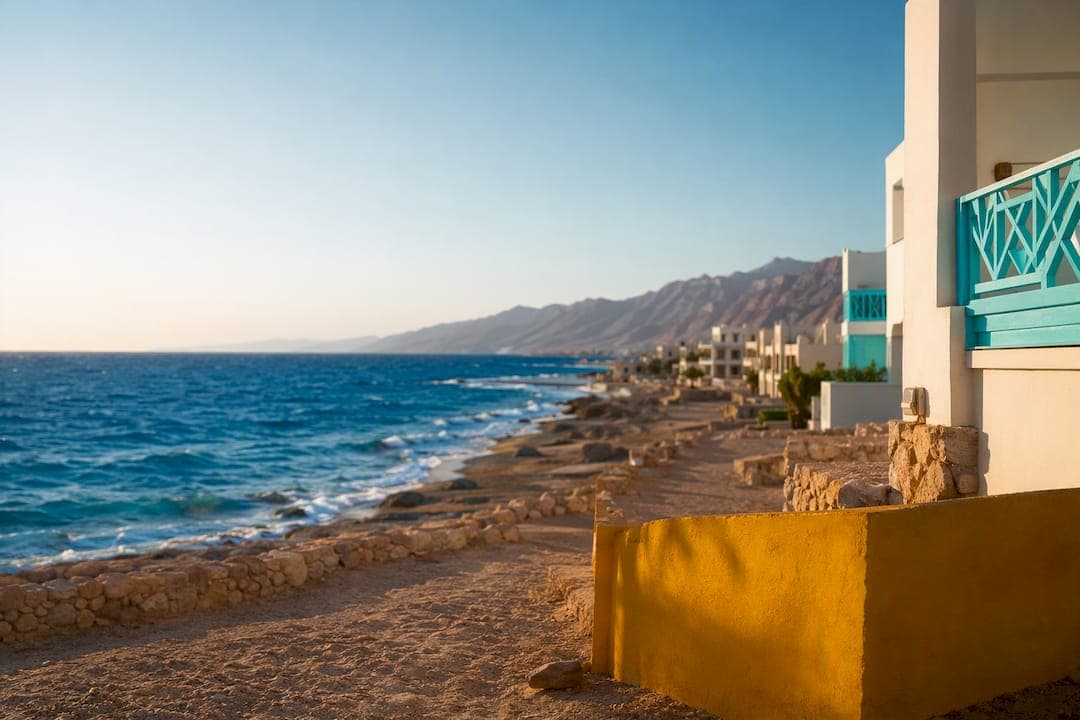
Foreigners can legally own coastal residential property across most of Egypt, but the right comes with hard limits: two properties per person, each capped at 4,000 m², under Law No. 230/1996. Sinai and select strategic coastal zones work differently, typically requiring a long-term lease or usufruct instead of freehold. Get the ownership model wrong before you sign, and you risk buying rights you didn't actually get.
TL;DR:
- Foreign buyers are limited to two properties each, with a maximum of 4,000 m² per property, and must obtain official approval before purchase.
- Freehold ownership is common in Red Sea resort towns and the North Coast but generally requires long-term leaseholds or usufructs in Sinai.
- Confirm ownership, permits, and legal authority through independent legal and surveyor checks before paying a deposit or completing registration.
- Expect higher ongoing costs for coastal property, including community fees, higher insurance premiums, and maintenance budgets to counter salt and humidity corrosion.
- Approaching the purchase without proper legal due diligence can lead to delays, disputes, or loss of rights, emphasizing the importance of professional guidance.
Table of Contents
- What Egyptian Law Actually Says About Coastal Property Ownership in Egypt
- Where You Can Buy Freehold and Where You Can't
- How to Buy Coastal Property in Egypt, Step by Step
- What Coastal Property Ownership in Egypt Actually Costs
- Coastal Risks and Long-Term Maintenance Planning
- Due Diligence Checklist: Documents and Red Flags Before You Sign
- How Padsabroad Supports Coastal Buyers Through the Legal Process
- Why Local Guidance Changes the Outcome
- Get Expert Help Buying Coastal Property in Egypt
- Where to Verify These Rules Yourself
- Sources
What Egyptian Law Actually Says About Coastal Property Ownership in Egypt
Coastal property ownership in Egypt for non-Egyptians rests on three legal pillars, and knowing them by name helps you push back when an agent glosses over details. The foundational statute is Law No. 230/1996, which permits foreign nationals to own up to two properties for private residential use nationwide, provided each transaction clears the required official approvals.
Law No. 143/1981 governs desert land specifically, and it matters more than most buyers realize because much of Egypt's Red Sea and North Coast development sits on reclaimed desert terrain. This law restricts foreign ownership of raw desert or agricultural land more tightly than it restricts built residential units, which is one reason most coastal deals for foreigners involve finished apartments, villas, or units within approved resort developments rather than undeveloped plots.
Ministerial decrees and the Council of Ministers adds a layer on top of both statutes. Under guidance tied to ownership rules for non-Egyptians, tourist areas and officially designated new communities can be treated similarly to standard Egyptian ownership, but only once security authorities and the Cabinet sign off. Buyers who purchase vacant land in these zones often face a five-year build obligation, meaning you can't simply sit on an undeveloped plot indefinitely.
A few practical rules worth confirming with a lawyer before you commit:
- The two-property cap applies per person, not per household, so married couples can sometimes structure ownership across both names.
- Resale before the property is registered in your name can trigger complications, since Egyptian law treats registration, not the sales contract, as the definitive transfer of title.
- Some tourist-zone exceptions carry conditions that don't apply elsewhere, so the same rule doesn't automatically transfer from one resort town to the next.
The core numbers to remember: under Law No. 230/1996, foreign buyers are limited to two residential properties, with a maximum area of 4,000 m² each, subject to official approval before the purchase is finalized.
Where You Can Buy Freehold and Where You Can't
Ownership models are not uniform across Egypt's coastline, and this is the single most common source of confusion for first-time buyers. The Red Sea resort towns and the North Coast generally allow full freehold ownership for foreigners within the national limits, while Sinai typically requires a different structure entirely.
Here's how the major coastal destinations tend to break down:
- Hurghada, El Gouna, Sahl Hasheesh, Soma Bay, Marsa Alam, and Port Ghalib: these Red Sea locations commonly permit standard freehold ownership for foreign buyers, subject to the usual approval process.
- North Coast, including Ras El Hekma: freehold ownership is widely available here too, and the area has drawn growing investment attention tied to tourism recovery and new infrastructure.
- Sharm El Sheikh and the wider Sinai Peninsula: ownership here typically defaults to long-term lease or usufruct arrangements running 50 to 99 years rather than outright freehold, a distinction buyers frequently discover only after negotiations are underway.
The practical fallout of this split shows up in financing, resale, and developer relationships. A leasehold in Sinai can still be a sound investment, but mortgage lenders often treat it differently than freehold title, and resale buyers may ask harder questions about the years remaining on the lease. Confirm the exact ownership structure in writing with the developer before you pay a deposit, not after.
How to Buy Coastal Property in Egypt, Step by Step
Buying coastal property in Egypt follows a fairly predictable sequence, but skipping a step, or rushing one, is where most foreign buyers run into trouble.
- Verify the title and permits before making an offer. Confirm the seller's registered ownership, check that building permits match the actual structure, and review whether the property falls inside any coastal setback or protected zone.
- Commission an independent survey. A local survey catches boundary disputes, structural issues, and zoning mismatches that a glossy brochure won't mention.
- Negotiate the contract terms. Insist on clear deposit and escrow arrangements, and specify payment currency and method in the contract itself, since informal cash instructions are a recurring red flag in the Egyptian market.
- Submit for security and administrative approval. Non-Egyptian buyers need clearance from the relevant authority before the sale finalizes; this step commonly takes several weeks to a few months, and delays are common enough that you shouldn't plan a move-in date around the fastest-case scenario.
- Complete notarization and state registration. This is the step that actually transfers legal ownership. A signed developer contract is not the same as registration, and treating the contract as final is one of the most common and costly mistakes foreign buyers make.
Working with an independent lawyer, not one supplied solely by the seller or developer, protects you at every stage above. If you can't be in Egypt for the registration process, a properly drafted power of attorney lets your lawyer act on your behalf without you flying back and forth. For a fuller walkthrough of the process, Padsabroad's guide to buying property in Egypt covers the paperwork sequence in more detail.
Pro Tip: Ask the developer for a written warranty on structural elements and finishes before you sign. Coastal humidity accelerates wear on cheap materials, and a warranty gives you recourse if problems show up within the first few years.
What Coastal Property Ownership in Egypt Actually Costs
Buying coastal residential property in Egypt involves more than the sticker price. Upfront transaction costs typically include a property transfer fee, notary charges, land registry fees, and an agency commission if you're working through a broker.
Ongoing costs deserve just as much attention, especially for coastal units:
- Community and service charges cover shared pools, landscaping, and security in resort-style developments.
- Insurance premiums tend to run higher for sea-facing buildings, since insurers price in salt exposure and storm risk.
- Maintenance budgets should assume a higher annual percentage than you'd set aside for an inland property, given the corrosive effect of salt air on exterior finishes and metal fixtures.
- Rental levies may apply if you plan to let the property short-term to tourists, so check local requirements before listing it.
A useful benchmark: under Law No. 230/1996, the two-property, 4,000 m² cap also shapes how buyers structure larger portfolios, since exceeding it means restructuring ownership through a company or other legal entity rather than personal title.
Coastal Risks and Long-Term Maintenance Planning
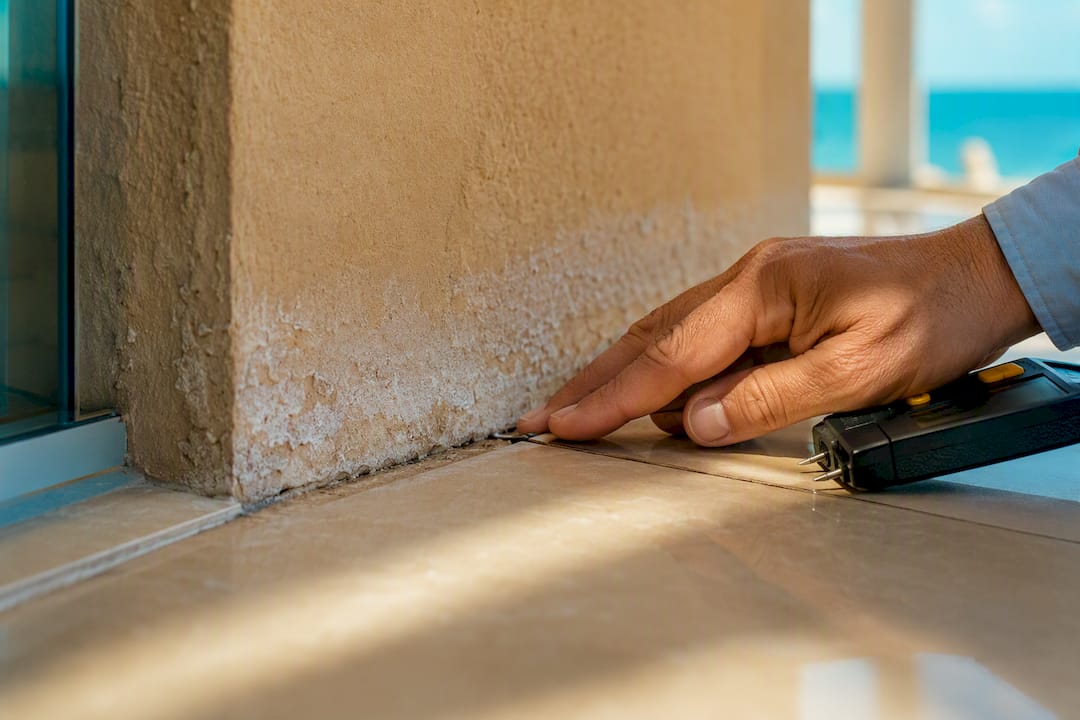
Owning beachfront land in Egypt means budgeting for the coastline itself, not just the building on it. Salt corrosion attacks metal railings, window frames, and rebar inside concrete faster near the water than it does even a few streets inland. Humidity accelerates mold growth in poorly ventilated units, and erosion or storm surge can affect properties sitting closer to the shoreline than local setback rules would now allow for new construction.
A few maintenance habits pay for themselves over time:
- Schedule an exterior inspection annually, focused on railings, window seals, and any exposed metal.
- Choose marine-grade finishes and coated fixtures during any renovation, since standard materials degrade faster in salt air.
- Ask about coastal setback regulations before buying land close to the water, since future zoning changes could limit what you're allowed to build or rebuild.
Pro Tip: Hire a surveyor with specific coastal experience, not just a general property inspector. Someone who has assessed dozens of beachfront buildings will catch corrosion and drainage issues that a generalist might miss entirely.
Due Diligence Checklist: Documents and Red Flags Before You Sign
Before you transfer a single dollar, insist on seeing the paperwork that proves the seller can actually deliver what they're selling.
- Confirm clean title. Check the registry entry directly rather than relying on the seller's word, and rule out unresolved inheritance claims, which are a common source of disputed ownership in Egypt.
- Verify the seller's authority to sell. If the seller isn't the registered owner, get documented proof of their legal authority to transfer the property on the owner's behalf.
- Check building permits against the actual structure. A unit that deviates from its approved plans, or sits inside a coastal setback zone, can create problems securing your own registration later.
- Watch for missing registry entries. A contract alone, without a corresponding state registration, is not proof of ownership.
- Flag developer financial trouble early. Delayed handovers, incomplete common areas, or unusual payment requests routed outside normal banking channels are all signals to pause and investigate.
An independent lawyer and a coastal-experienced surveyor should sign off before you move past the deposit stage. If either one raises a concern you can't resolve, walk away rather than hope it sorts itself out after the sale. Padsabroad's guide on buying property safely in Egypt walks through these checks in more depth for overseas buyers coordinating from abroad.
How Padsabroad Supports Coastal Buyers Through the Legal Process
Padsabroad specializes in Egypt's Red Sea coast, with a presence in both the UK and Egypt that lets the team coordinate legal steps on the ground while you're still overseas. For buyers looking specifically at Hurghada and the wider Red Sea region, the Hurghada legal ownership guide breaks down area-specific rules in plain language.
When you engage Padsabroad, you typically receive a market brief for your target area, a shortlist of properties matching your budget and ownership goals, and coordination support through title checks and the security-approval process. The team also assists after the sale closes, including practical matters like local services access that many first-time buyers overlook until they've already moved in.
Why Local Guidance Changes the Outcome
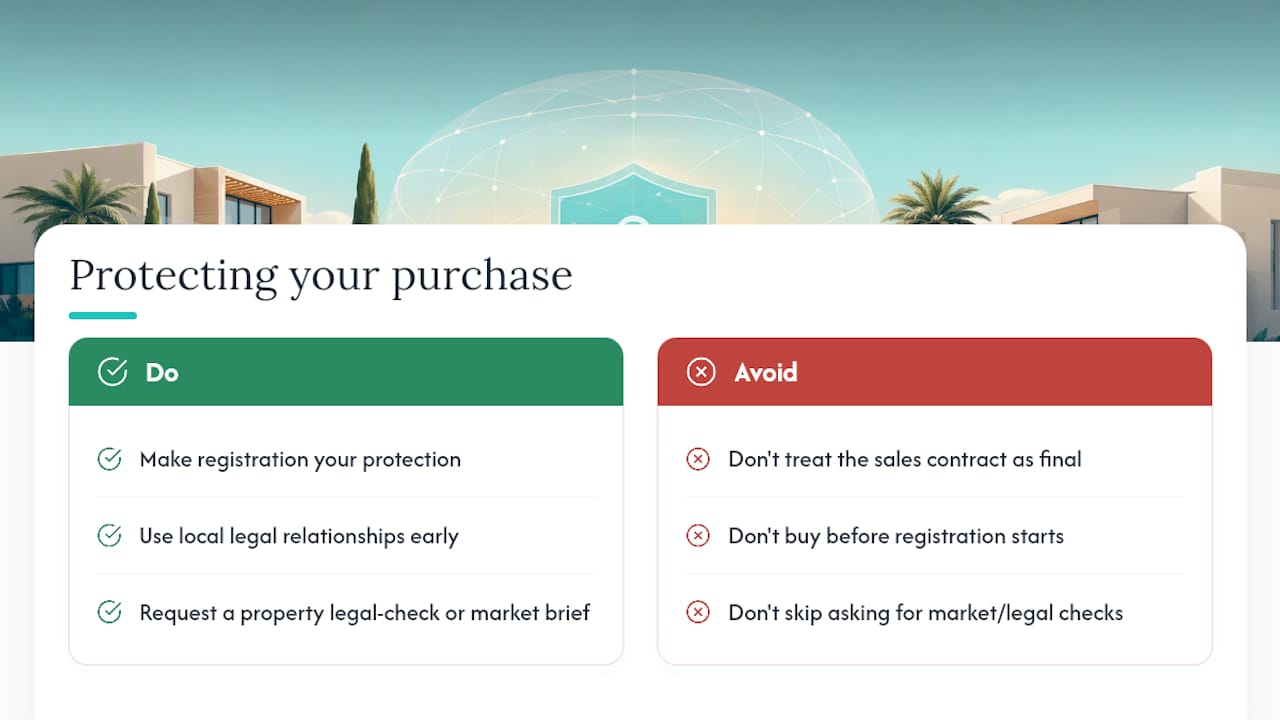
The buyers who run into trouble almost always share one habit: they treat the developer's sales contract as the finish line instead of the starting point. Registration is what actually protects you, and the gap between signing and registering is exactly where disputes, delays, and double-sold units tend to surface.
Local relationships shorten that gap. A team that already knows which notary offices move quickly, which developers deliver on time, and which security approvals tend to stall, saves you months of guesswork you'd otherwise spend learning the hard way. If you're serious about a coastal purchase, request a property legal-check or a market brief before you fall in love with a specific unit. It costs you nothing to ask, and it can save you from a contract you'd regret signing.
— PADSABROAD
Get Expert Help Buying Coastal Property in Egypt
Padsabroad replaces guesswork with a structured path: a local team that knows which Red Sea developments have clean titles, which approvals move fast, and which contracts protect you instead of just the seller.
If you're weighing your first purchase, the First-Time Buyer Guide to Egypt Red Sea Property Investment walks through financing, area selection, and legal steps in one place, built specifically for buyers who haven't done this before. Padsabroad's team typically responds within a business day to guide inquiries, whether you're after a shortlist of available listings across Hurghada and the Red Sea or a straight answer on whether a specific development allows full freehold ownership. Reach out with your target budget and location, and expect a market brief tailored to your situation rather than a generic property list.
Where to Verify These Rules Yourself
Before finalizing any purchase, confirm the current rules directly with primary sources and share them with your lawyer:
- Legal Guide For Foreigners Buying Property in Egypt (Official Real Estate Platform)
- Ownership of Real Property for Private Residential Purposes by Non-Egyptians (Invest in Egypt)
- For general coastal-buying best practices beyond Egypt's borders, the Coastal Area Guide offers useful cross-reference material on maintenance and materials.
Sources
- Legal Guide For Foreigners Buying Property in Egypt — Official Egyptian Real Estate Platform Blog
- Ownership of Real Property for Private Residential Purposes by Non-Egyptians (Invest in Egypt PDF)