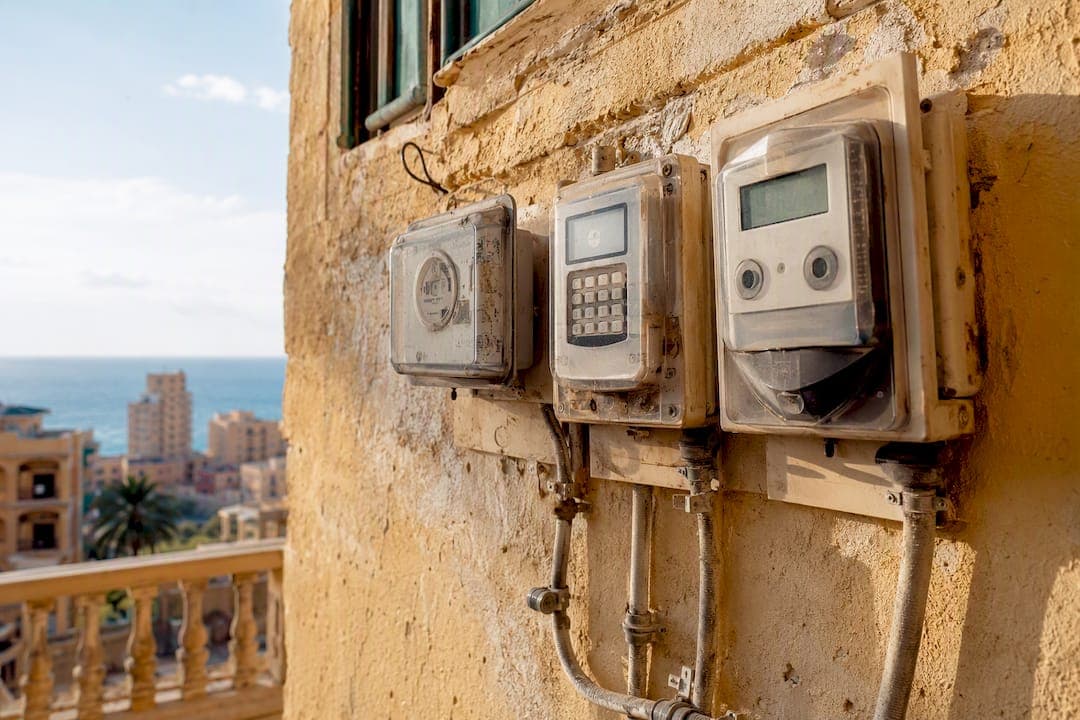
Most Egyptian homes use one of four meter types: mechanical, digital postpaid, Kodak prepaid, or smart/AMI. If you own or plan to buy property in Egypt, your first move is simple: confirm which type sits on your wall, write down the meter number, and check who currently holds registration, the developer or the utility itself. From there, contact the regional distribution company under the Egyptian Electricity Holding Company (EEHC) to register or transfer the meter into your name.
For newer units, Telecom Egypt's smart-meter service may already be handling readings automatically. And if you manage more than one property, an app like Addady can save you from estimated-billing headaches down the road.
Here's what to do right now:
- Photograph the meter face and record the serial number.
- Confirm whether the meter is registered to the developer, a previous owner, or nobody at all.
- Ask your property manager or the regional distribution company which documents you need to register or transfer it.
- Note the tariff tier you're likely to fall into, covered in detail below.
Key Takeaways
Registering your meter correctly and understanding Egypt's tiered tariff system are the two factors that most affect your monthly electricity costs and prevent billing disputes.
| Point | Details |
|---|---|
| Identify your meter type | Mechanical, digital postpaid, Kodak prepaid, and smart/AMI meters each affect how you pay and read usage. |
| Register before disputes arise | Confirm ownership and submit documents through the regional distribution company or developer early. |
| Budget realistic installation costs | Single-phase runs EGP 500 to EGP 2,000 in fees; three-phase runs EGP 8,000 to EGP 25,000. |
| Use apps for multi-property tracking | Tools like Addady reduce estimated-billing errors across several units. |
| Get expert help for handover | Padsabroad confirms meter ownership and manages registration for overseas buyers. |
Table of Contents
- What Types of Utility Meters Will You Find on an Egyptian Property?
- How Do You Register or Transfer an Electricity Meter in Egypt?
- What Do Meter Installation and Electricity Tariffs Cost in 2026?
- How Do You Read Your Meter and Spot a Problem Early?
- Are Smart Meters and Submetering Common in Egyptian Compounds?
- What Should Owners and Overseas Buyers Check Before Handover?
- Publisher Perspective: Why Meter Clarity Protects Your Investment
- Let Padsabroad Handle Your Meter Setup and Utility Handover
- Sources
What Types of Utility Meters Will You Find on an Egyptian Property?
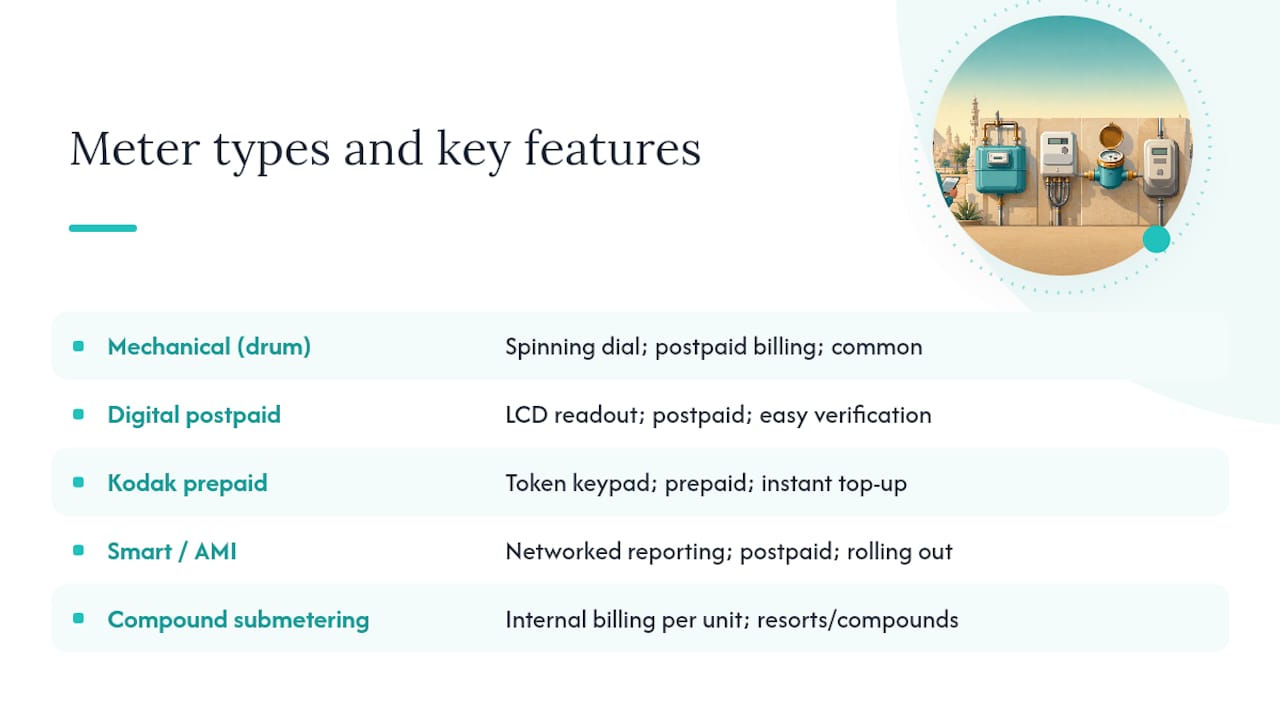
Egyptian properties run on four main meter types, and knowing which one you have changes how you pay, how you read it, and how quickly problems get fixed.
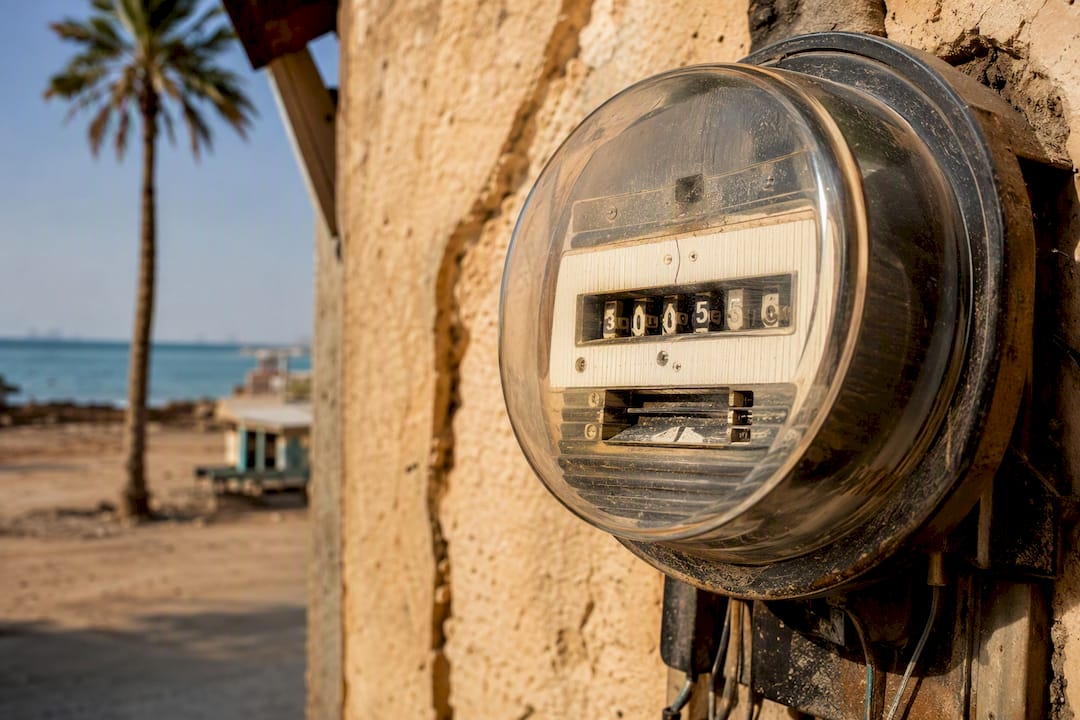
Mechanical (drum) meters are the oldest style still in wide use. A spinning dial tracks consumption, and a meter reader from the regional distribution company visits periodically to log the number. Billing lags behind actual usage by weeks, which explains a lot of the "why is this bill so high" disputes.
Digital postpaid meters show consumption on an LCD screen that cycles through kWh totals, voltage, and current. You still get billed after the fact, but the readout is easier to verify against your own numbers.
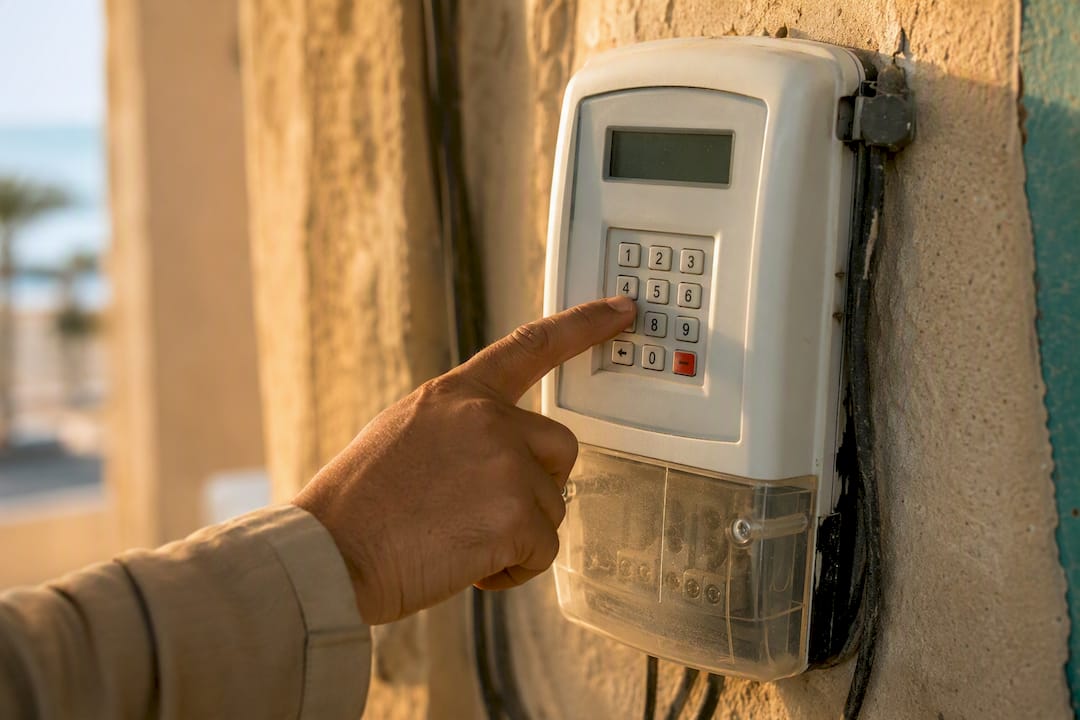
Kodak prepaid (token) meters run on a pay-as-you-go model. You buy a recharge code from an authorized outlet or kiosk, punch it into the keypad, and the balance loads instantly. Most units carry a small emergency credit buffer so you're not cut off mid-evening if you forget to top up.
Smart/AMI meters send consumption data automatically over the network, no meter reader required. They're rolling out fastest in new developments and commercial buildings, per Telecom Egypt.
Compounds and resorts along the Red Sea often add another layer: submetering, where the compound bills residents internally rather than each unit connecting straight to the grid.
Pro Tip: If you're buying a resale unit, ask to see the last three bills before closing. A sudden jump in usage can signal a meter fault or unauthorized connection nobody has flagged yet.
How Do You Register or Transfer an Electricity Meter in Egypt?
Registering a meter under your own name protects you from disputes later, and the process follows a fairly consistent path.
- Gather your documents. You'll typically need the ownership contract or lease, an internal wiring completion certificate, your ID or passport (for overseas buyers), and sometimes an electrical drawing if the distribution company requests one.
- Choose your route. Apply directly at the regional distribution company office, or let the developer or property manager handle it on your behalf. Many overseas buyers use the second option simply because they aren't in the country to queue at an office.
- Settle any outstanding balance. If you're buying a resale property, the seller's account needs to be cleared before transfer can proceed.
- Submit the transfer request and wait for inspection. A technician confirms the wiring and meter condition before final registration goes through.
- Get written confirmation. Keep a copy of the registration certificate. It's your proof of ownership if a billing dispute ever comes up.
Timing varies by region, but budget several weeks rather than days. If you're not physically in Egypt, delegating this paperwork to a trusted local agent or the developer avoids the back-and-forth that comes with remote applications.
What Do Meter Installation and Electricity Tariffs Cost in 2026?
Installing a new meter costs different amounts depending on the phase type and how far the cable has to run.
Single-phase meters, the standard for most apartments, carry official fees between EGP 500 and EGP 2,000, plus separate cable and labor costs depending on distance from the main supply.
Three-phase (380V) meters, used for villas, workshops, or larger units, run considerably higher: EGP 8,000 to EGP 25,000, with location and cable length driving most of the variation.
Egypt's tariff structure is tiered, meaning you pay a low rate for the first block of kWh, then progressively more as usage climbs. Here are the estimated 2026 tiers referenced by Ases Kahraba's meter guide:
| Consumption Tier (kWh/month) | Estimated Rate |
|---|---|
| — | Lowest bracket |
| — | Second bracket |
| — | Third bracket |
| — | Fourth bracket |
| — | Fifth bracket |
| — | Highest bracket |
Billing is cumulative across tiers, not flat. If you use 300 kWh, you pay the low rate on the first 50, a higher rate on the next 50, and so forth up the ladder, not the top rate on the whole 300.
Statistic Callout: A typical three-bedroom apartment on the Red Sea coast uses roughly 400 to 600 kWh a month during summer, largely driven by air conditioning. That puts most households well into the fourth or fifth tier during peak months.
Official rates shift periodically, and recent reporting on Egypt's electricity billing disputes shows how fast policy can move. Always confirm current figures with your regional distribution company before budgeting.
How Do You Read Your Meter and Spot a Problem Early?
Reading your meter correctly takes under a minute once you know the layout, and it's the fastest way to catch billing errors before they compound.
- Mechanical meters: read the digits left to right, ignoring the final red digit, which represents a fraction of a kWh.
- Digital postpaid meters: press the display button and cycle through until you see the cumulative kWh reading, separate from voltage and current figures.
- Kodak prepaid meters: the meter number sits on the front panel, needed whenever you buy a recharge token or report a fault.
- Home accuracy test: switch off every breaker in the property and watch the meter for five minutes. If the numbers keep climbing with everything off, you likely have a fault or an unauthorized connection.
If your home test confirms a problem, request an official accuracy check through your regional distribution company rather than assuming the worst. Common status alerts include tamper flags, disconnection for low balance, and emergency credit warnings on prepaid units. If the utility confirms the meter was faulty, expect a replacement and a billing adjustment under official EEHC procedures.
Pro Tip: Write your reading down on the same day each month. Even a basic notebook entry gives you leverage if a bill ever looks inflated.
Are Smart Meters and Submetering Common in Egyptian Compounds?
Smart meters are becoming standard in new developments, and for good reason. Telecom Egypt's smart-meter technology records usage at frequent intervals and transmits it over 4G daily, cutting out manual reader visits and reducing the estimated-billing disputes that plague older mechanical setups.
Submetering works differently. Many Red Sea compounds and resorts run their own internal billing system rather than connecting each unit directly to the national grid, which shifts pricing control to the compound operator.
- Ask whether the property uses direct EEHC billing or compound-level submetering.
- Request the compound's tariff schedule and maintenance agreement in writing before you buy.
- Confirm who covers cable runs from the main supply, a cost that catches many first-time buyers off guard.
- Ask who manages prepaid top-ups if the system runs on tokens.
Local vendors including Light Power supply and install prepaid and smart metering systems for compounds and resorts, often bundling long-term maintenance into the contract. If a submetering agreement isn't in writing, treat that as a warning sign rather than an oversight.
What Should Owners and Overseas Buyers Check Before Handover?
A quick checklist protects you from the utility surprises that trip up new owners most often.
- Confirm whether the meter is registered to you, the developer, or a previous owner.
- Photograph the meter and record its serial number for your own files.
- Secure the internal wiring completion certificate before applying for registration.
- Register the meter with the regional distribution company or through your developer.
- Set up a payment or top-up method, prepaid token, digital account, or standing arrangement.
- Log your baseline reading on the day you take possession.
If you own more than one unit, an app such as Addady lets you submit readings across multiple meters and reduces the estimated-billing errors that come with irregular reader visits.
Pro Tip: Watch for locked meter numbers, vague "compound fee covers utilities" language, or unexplained developer charges at handover. Each one is a sign the meter situation hasn't been formally settled.
Publisher Perspective: Why Meter Clarity Protects Your Investment
Confusing meter ownership costs owners money long after closing, not just at handover. A holiday rental with an unregistered or submetered connection can face billing disputes that eat into occupancy income, and guests notice when air conditioning cuts out over a balance dispute.
Padsabroad works directly with overseas buyers to confirm meter status before contracts close, and to handle registration or transfer paperwork so clients aren't chasing distribution offices from another country. Recent reporting on Egypt's electricity billing standoffs makes clear how much confusion still exists around registration files, which is exactly why this gets checked early, not fixed later.
— PADSABROAD
Let Padsabroad Handle Your Meter Setup and Utility Handover
Padsabroad is the practical alternative to chasing paperwork yourself from overseas. Rather than leaving meter registration, developer liaison, or top-up management to guesswork after you've already signed, Padsabroad confirms meter ownership before closing and coordinates directly with developers and regional distribution offices on your behalf.

That includes registration assistance, sorting out transfer documents for resale units, and ongoing property management that covers meter monitoring and top-up handling for owners who aren't in Egypt year round. If you're planning a purchase along the Red Sea coast, the First-Time Buyer Guide to Egypt Red Sea Property Investment walks through exactly what to confirm before you commit, utilities included. Reach out to get a clear picture of what your specific property will need before handover day arrives.
Sources
- Egypt Electricity Meter: Complete Guide — Types, Reading, Prepaid Token & Tariff — Ases Kahraba
- Smart Meters | Automated 4G Energy Monitoring for Business | Telecom Egypt - TE Business
- Light Power for Energy | Reliable Smart Metering & Energy Solutions
- Egyptian Electricity Holding Company - Frequently Asked Questions