
What is property management abroad, and why does it matter?
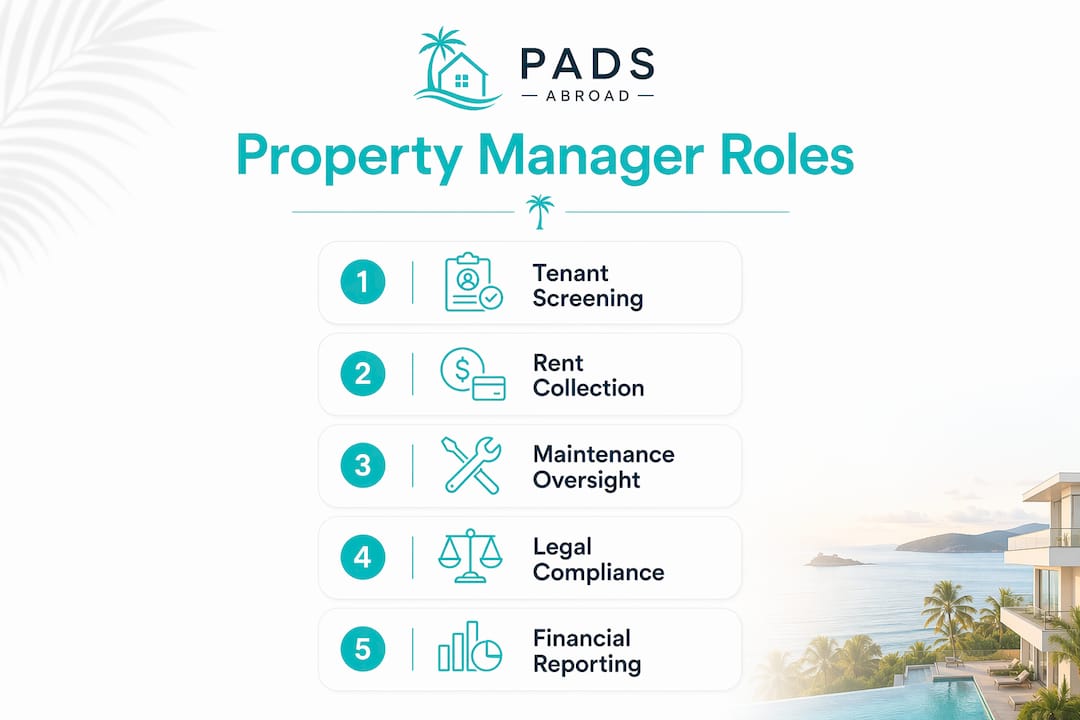
Property management abroad is the professional oversight of a real estate investment located in a foreign country, covering tenant relations, maintenance, financial reporting, and legal compliance on behalf of a remote owner. For U.S. investors, this goes well beyond collecting rent. It means navigating foreign landlord-tenant laws, meeting IRS reporting obligations, and keeping a property productive from thousands of miles away.
A qualified property manager handles the daily tasks that would otherwise fall on you:
- Tenant screening and lease execution
- Rent collection and financial record-keeping
- Maintenance scheduling and emergency repairs
- Legal compliance with local housing regulations
- Communication with local authorities and vendors
Padsabroad works with foreign owners investing in Egypt's Red Sea coast, providing exactly this kind of on-the-ground support so investors can hold property confidently without being present.
Table of Contents
- Key roles and responsibilities of property managers abroad
- Legal and tax considerations for U.S. investors with overseas properties
- Challenges and risks in managing property abroad
- Why hiring experienced local property managers benefits U.S. investors
- What do property management fees look like abroad?
- Best practices for tenant screening and lease management in foreign jurisdictions
- Insurance requirements for overseas properties
- How to manage currency risk and international payments
- Key Takeaways
Key roles and responsibilities of property managers abroad
Property managers abroad act as the owner's legal and operational representative, ensuring lease agreements conform to local laws and reducing landlord liability. That representative role is what separates professional management from occasional check-ins.
Their core responsibilities include:
- Tenant screening: Verifying income, checking references, and complying with fair housing laws that prohibit discrimination
- Rent collection: Enforcing payment terms, chasing arrears, and maintaining clean financial records
- Maintenance coordination: Managing a network of licensed contractors for routine and emergency repairs
- Financial reporting: Providing monthly statements, expense summaries, and documentation usable for tax filings
- Owner portals: Giving investors 24/7 access to financial summaries, maintenance updates, and lease documents
Management fees for long-term residential properties typically run 8–12% of monthly rent. That cost often pays for itself through faster tenant placement, lower vacancy rates, and vendor pricing that individual owners cannot negotiate independently.
Legal and tax considerations for U.S. investors with overseas properties

U.S. investors face a layered compliance picture that catches many off guard. Rental income must be reported to the IRS, typically using Form 1040NR for individuals, and an Individual Taxpayer Identification Number (ITIN) is required for tax filings. Failure to comply carries real penalties.
Key obligations to understand:
- FBAR filing: If combined foreign financial accounts exceed $10,000, U.S. persons must file a Foreign Bank Account Report with FinCEN
- FIRPTA: The Foreign Investment in Real Property Tax Act governs tax withholding on U.S. property sales by foreign persons, and U.S. investors selling abroad face equivalent rules in many jurisdictions
- Tax treaties: Many countries have agreements with the U.S. to prevent double taxation; professional guidance is usually needed to apply them correctly
- Ownership structure: Holding property under a U.S.-based LLC can offer liability protection and potential tax advantages compared to personal ownership
- Dual-use properties: Properties used partly for personal stays and partly as rentals have distinct regulatory requirements; noncompliance can result in penalties or loss of rental rights
For a full breakdown of U.S. tax obligations tied to overseas real estate, Padsabroad's guide on property abroad tax implications covers the key IRS rules in plain terms.
Challenges and risks in managing property abroad
Time zone differences complicate repairs, inspections, and routine communication, turning minor issues into expensive problems when no one is available to respond locally. That is the most common frustration U.S. investors describe after their first year of remote ownership.
Other risks include:
- Fraud or mismanagement when there is no trusted local oversight
- Language and cultural barriers affecting tenant relations and vendor coordination
- Hidden costs of DIY management, including emergency repair coordination, compliance filings, and tax paperwork, that often exceed professional fees
- Regulatory violations from missing local licensing or permit renewals
Pro Tip: Integrate a local attorney and a tax advisor familiar with cross-border real estate before you sign a management contract. Coordinating legal, financial, and operational oversight from the start prevents the costly corrections that come from building the structure after problems arise.
Vetting a property manager thoroughly before hiring is the single most effective risk control. Ask specifically for references from other overseas clients, not just domestic landlords. The experience of managing for a remote owner is genuinely different, and a manager without that track record will show it quickly.
Why hiring experienced local property managers benefits U.S. investors
Hiring a manager experienced with international clients is critical to avoiding costly legal errors and keeping overseas operations running without constant owner involvement. The alternative, handling everything remotely yourself, works for properties within driving distance. For a property in another country, it almost never does.
Top five benefits of hiring a qualified local property manager:
- Local market knowledge: Accurate rental pricing based on neighborhood trends and seasonal demand
- Vendor networks: Established relationships with licensed contractors for faster, more affordable repairs
- Legal representation: Lease drafting, eviction management, and dispute resolution within local jurisdictional rules
- Financial transparency: Real-time reporting through owner portals so you always know where your investment stands
- Time savings: Hands-off management that lets you treat the property as a genuine passive income asset
Padsabroad provides property management services in Egypt specifically designed for foreign owners, covering tenant placement, rent collection, maintenance coordination, and compliance support along the Red Sea coast.
What do property management fees look like abroad?
Fee structures vary by market and service scope, so understanding what you are paying for matters as much as the percentage itself.
Long-term residential management typically costs 8–15% of rental income in most international markets. Short-let or vacation rental management runs higher, often 20–35%, reflecting the additional labor of guest turnover, cleaning, and platform management.
Beyond the headline percentage, watch for these additional charges:
- Leasing or placement fees: Often one month's rent for finding and placing a new tenant
- Maintenance markups: Some managers add a percentage on top of contractor invoices
- Setup fees: One-time onboarding costs when the management relationship begins
- Accounting or tax prep support: Sometimes bundled, sometimes billed separately
A reputable manager will outline all fees clearly in a written agreement before you sign. If the fee structure is vague or verbal, that is a warning sign worth taking seriously.
Best practices for tenant screening and lease management in foreign jurisdictions
Tenant screening abroad follows the same logic as in the U.S., but the legal framework and documentation standards differ by country. A local property manager who understands those differences protects you from lease terms that are unenforceable under local law.
Effective screening covers income verification, rental history, and identity checks appropriate to the jurisdiction. In many markets, landlords can also require rental guarantee instruments, such as security deposits, guarantors, or rental guarantee insurance, to reduce default risk.
Lease agreements should always be drafted or reviewed by a local attorney, not adapted from a generic template. Local tenancy laws govern notice periods, rent increase limits, and eviction procedures, and a lease that does not reflect those rules can leave you without legal recourse. Reviewing the role of a property agent abroad can help you understand what to expect from a qualified local representative during this process.
Insurance requirements for overseas properties
Standard U.S. homeowner policies do not cover properties located in foreign countries. You need a landlord insurance policy specific to the country where the property sits, and that policy must explicitly cover commercial letting activity.
Core coverage to look for:
- Property damage: Structural damage from fire, flooding, or other events
- Liability coverage: Protection if a tenant or visitor is injured on the property
- Rent protection: Coverage for lost rental income during periods when the property is uninhabitable
- Legal expenses: Coverage for tenant disputes, eviction proceedings, or regulatory actions
Your property manager should maintain a compliance calendar that tracks policy renewal dates alongside safety certifications for gas, electrical, and structural inspections. Letting any of these lapse creates both legal exposure and insurance gaps.
How to manage currency risk and international payments
Currency fluctuation affects the real value of rental income when it is converted back to U.S. dollars. A property generating a consistent local currency return can still deliver variable USD income depending on exchange rate movements.
Practical approaches to reduce that exposure:
- Price rents in a stable currency where local market norms allow it, such as USD or EUR in markets where those currencies are commonly used for real estate transactions
- Time conversions strategically: Converting rental income when exchange rates are favorable, rather than automatically each month, can improve returns over time
- Use forward contracts or rate alerts through international payment platforms to lock in rates for predictable income periods
- Work with a financial advisor familiar with cross-border real estate strategies to build a currency plan that fits your overall portfolio
Keeping rental income in a local account managed by your property manager, then converting on a planned schedule, is often more practical than attempting to move funds immediately after each payment. Understanding smart investment approaches for international property can also help you frame currency management as part of a broader asset strategy.
Key Takeaways
Effective property management abroad requires local expertise, legal compliance, and integrated financial oversight to protect and grow a U.S. investor's international real estate asset.
| Point | Details |
|---|---|
| Professional fees are predictable | Long-term management typically costs 8–15% of rental income; short-let management runs 20–35%. |
| IRS compliance is mandatory | U.S. investors must file rental income using Form 1040NR and obtain an ITIN; FBAR applies when foreign accounts exceed $10,000. |
| Local managers reduce legal risk | They act as the owner's legal representative, ensuring leases and evictions comply with local law. |
| DIY management has hidden costs | Emergency repairs, compliance filings, and tax paperwork often exceed professional management fees. |
| Currency risk needs a plan | Pricing rents in stable currencies and timing conversions strategically protects USD returns from exchange rate swings. |
Padsabroad helps U.S. and international investors purchase and manage property along Egypt's Red Sea coast, from Hurghada to Marsa Alam. If you are considering your first overseas property or want to understand what managed ownership looks like in practice, the first-time buyer guide is a practical starting point, and the team at Padsabroad is available to walk you through the process.