
Investing in property abroad is defined as purchasing real estate in a foreign market to generate rental income, capital growth, or both. This approach to building wealth consistently outperforms traditional savings accounts, and the gap is widening in 2026. Overseas gross rental yields in high-performing markets run between 5% and 9%, while UK and European domestic yields sit at 3%–4%. Savings accounts rarely keep pace with inflation, which currently runs at 4%–6% in many economies, meaning real returns on cash deposits are near zero or negative. Understanding why property abroad beats savings requires looking at four core advantages: higher income yields, inflation protection, leverage through mortgages, and geographic diversification.
Why property abroad beats savings on returns
The most direct comparison between foreign real estate and savings is yield. A savings account paying 3%–5% annual interest sounds reasonable until you subtract inflation. Real returns on savings are negative or near zero when inflation runs at 4%–6%, meaning your purchasing power shrinks every year you hold cash.
Overseas property tells a different story. Prime markets like Dubai, Portugal, and Greece deliver gross rental yields well above what any high-street savings account offers. Capital appreciation adds another layer of return on top of rental income, compounding the advantage over time.

The table below shows how the numbers compare across three return categories:
| Return type | Savings account | UK domestic property | Prime overseas property |
|---|---|---|---|
| Gross rental yield | N/A | 3%–4% | 5%–9% |
| Capital appreciation | 0% | Moderate | High in growth markets |
| Inflation-adjusted return | Negative to flat | Low to moderate | Positive in most markets |
The combined effect of rental income plus price appreciation in markets like Dubai or Egypt's Red Sea coast creates a total return profile that savings accounts cannot replicate. Egypt, for example, offers attractive property yields driven by strong tourism demand and a growing expat population along the Red Sea.
Pro Tip: Research local demand drivers before committing to a market. A coastal resort town with year-round tourism will sustain higher yields than an inland city with seasonal demand.
How does inflation affect savings vs. property?
Inflation is the silent tax on cash. When inflation runs at 4%–6% and your savings account pays 3%–5%, you are losing real purchasing power every month. That gap compounds over five or ten years into a significant wealth erosion.
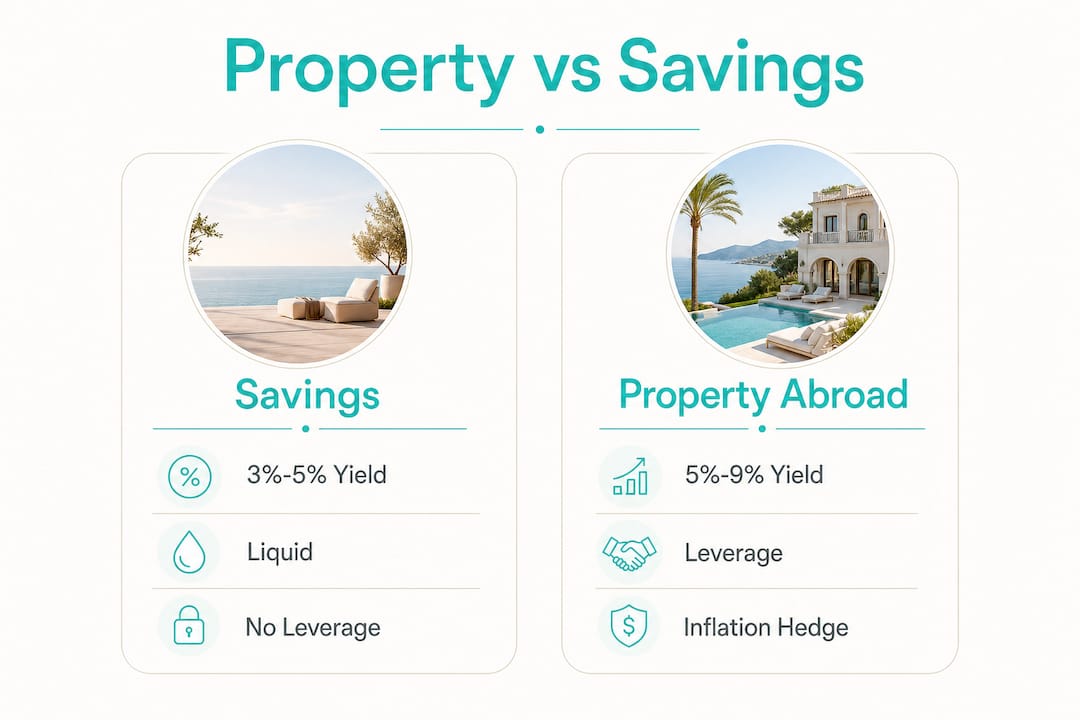
Property responds to inflation differently. Rents tend to rise alongside the cost of living, which means your rental income keeps pace with or exceeds inflation. Property values in supply-constrained markets also tend to increase during inflationary periods, as construction costs rise and demand for existing stock grows.
Consider the practical difference. A UK investor holding £50,000 in a savings account earning 4% in a 5% inflation environment loses roughly 1% of real value per year. The same £50,000 used as a deposit on a foreign property generating 7% gross yield gains real purchasing power, even after accounting for management costs.
- Rent increases track inflation in most established overseas markets
- Property values in tourist and expat destinations tend to hold or grow during inflationary periods
- Savings balances lose real value when interest rates trail inflation
- Real estate tangible benefits include legacy wealth transfer and reduced temptation for impulsive withdrawals
Pro Tip: Factor inflation into your return projections from day one. A 7% gross yield in a 5% inflation environment still delivers a meaningful real return. A 4% savings rate in the same environment does not.
Leverage and diversification: the advantages savings cannot offer
Leverage is the defining structural advantage of property over savings. A mortgage allows you to control a £200,000 asset with a £50,000 deposit. Savings accounts offer 1:1 exposure, meaning your £50,000 earns interest only on £50,000. A leveraged property investment earns returns on the full asset value, amplifying your effective yield on the capital you actually deployed.
Diversification adds a second layer of advantage. Holding property in a foreign market separates your wealth from the risks tied to your home economy. A UK investor whose domestic property market stagnates still benefits if their Egyptian or Portuguese asset appreciates. Geographic and currency diversification provides a genuine hedge against home market risk and currency depreciation.
The benefits of combining leverage with geographic diversification include:
- Control of larger assets with a fraction of the total purchase price
- Returns calculated on the full asset value, not just your deposit
- Exposure to faster-growing economies and currencies
- Potential residency or citizenship pathways in markets like Portugal and Greece
- A financial safety net independent of your home country's economic cycle
- Tax advantages in markets like Dubai, where rental income carries zero income tax, and Portugal, where the Non-Habitual Resident scheme offers flat tax rates
Savings accounts offer none of these structural benefits. They are liquid and secure, but they do not build wealth at the pace that a leveraged, income-generating asset can. Overseas property mortgage options vary by market, and understanding your financing choices before you commit is a practical first step.
What are the real costs of buying property abroad?
The financial advantages of foreign real estate are real, but so are the costs. Transaction fees abroad typically total 8%–15% of the purchase price, covering taxes, legal fees, and registration charges. That compares to roughly 2%–3% for domestic UK transactions. You need to factor these costs into your return calculations from the start.
Property management fees consume 10%–20% of gross rental income. A property generating 7% gross yield may net 5%–6% after management, maintenance, and local charges. That is still well above savings rates, but the gross figure is not the number that matters.
Currency risk is the third cost that catches investors off guard. Foreign exchange fluctuations can shift the value of a €300,000 purchase by thousands of pounds between offer and completion. A 5%–10% swing in exchange rates can significantly alter your effective purchase price and ongoing returns.
Liquidity is the final consideration. Savings accounts are instantly accessible. Selling a foreign property takes months and carries transaction costs. This means overseas property works best as a medium to long-term holding, not a short-term cash alternative.
Pro Tip: Use a specialist currency broker and set up a forward contract once your preliminary purchase agreement is signed. Locking in exchange rates with forward contracts protects your budget from rate movements between signing and completion.
How to get started with investing in foreign real estate
Getting started with overseas property investment follows a clear sequence. Skipping steps, especially legal due diligence, is the most common and costly mistake UK and European buyers make.
- Research target markets. Focus on markets with documented yield data, stable legal frameworks, and strong tourism or expat demand. Egypt's Red Sea coast, Dubai, Portugal, and Greece each offer different risk and return profiles. Review overseas property market types before narrowing your choice.
- Engage local legal counsel. Hire an independent lawyer in the target country before signing any contract. Legal systems, ownership rights, and title registration processes vary significantly between markets.
- Plan your financing. Decide whether you are buying with cash or using mortgage leverage. Overseas mortgage products exist in many markets, but terms differ from UK products. Understand your loan-to-value options and interest rate exposure.
- Manage currency exposure early. Open an account with a specialist currency broker as soon as you identify a property. Do not rely on your high-street bank for international transfers.
- Budget for total costs. Include transaction fees of 8%–15%, management fees of 10%–20% of rent, and a maintenance reserve. Model your net yield, not just the gross figure.
- Work with a specialist. An overseas property specialist with on-the-ground knowledge reduces risk significantly. Use the Egypt investment checklist as a practical starting framework if Egypt is your target market.
Key Takeaways
Overseas property investment outperforms savings accounts by combining higher gross yields, inflation protection, leverage, and geographic diversification that cash deposits cannot replicate.
| Point | Details |
|---|---|
| Yield advantage | Overseas gross rental yields of 5%–9% far exceed savings rates of 3%–5%. |
| Inflation protection | Property rents and values rise with inflation; savings lose real value when interest trails inflation. |
| Leverage amplifies returns | Mortgages let you earn returns on the full asset value, not just your deposit. |
| Transaction costs matter | Budget 8%–15% in transaction fees and 10%–20% of rent for management costs. |
| Currency risk is manageable | Forward contracts with specialist brokers lock in exchange rates and protect your budget. |
Padsabroad's view: property abroad is a long-term wealth decision, not a quick win
After working with UK and European buyers across Egypt's Red Sea coast for years, the pattern is consistent. Investors who treat overseas property as a long-term wealth-building vehicle do well. Those who expect it to behave like a savings account with better interest get frustrated.
The leverage and yield advantages are real. A well-chosen property in Hurghada or Sahl Hasheesh generating 6%–8% net yield, held for ten years with modest capital appreciation, builds wealth that no savings account can match. But the costs are also real. Transaction fees, management demands, and currency exposure require active attention, not passive holding.
The most practical approach is to keep a liquid savings buffer for emergencies and deploy surplus capital into overseas property for growth. These two instruments serve different functions. Savings and property serve different roles in a portfolio, and the investors who understand that distinction make better decisions than those who treat them as interchangeable.
The 2026 environment, with inflation still elevated and savings rates failing to compensate, makes the case for overseas property stronger than it has been in years. The key is entering with clear cost projections, local legal support, and a realistic five to ten year horizon.
— Padsabroad
Padsabroad: your guide to overseas property investment
Padsabroad specializes in helping UK and European buyers purchase property along Egypt's Red Sea coast, covering Hurghada, El Gouna, Sahl Hasheesh, Soma Bay, Marsa Alam, and Port Ghalib. The team provides on-the-ground market knowledge, vetted listings, and practical buying support for investors at every stage.

Whether you are comparing your first overseas purchase or adding to an existing portfolio, Padsabroad's first-time buyer guide covers the full process from market selection to completion. For buyers ready to review listings, all Red Sea properties are available with current pricing and yield data. The team at Padsabroad is also available directly through the Hurghada real estate contact page for personalized guidance on any specific market or property type.
FAQ
Why does property abroad outperform savings accounts?
Overseas property delivers gross rental yields of 5%–9% in prime markets, compared to savings interest of 3%–5%, while also offering capital appreciation and inflation protection that cash deposits cannot provide.
What are the main costs of buying property abroad?
Transaction fees typically total 8%–15% of the purchase price, and property management fees consume 10%–20% of gross rental income, so budgeting for net yield rather than gross yield is critical.
How does currency risk affect overseas property returns?
Exchange rate movements of 5%–10% can significantly change your effective purchase price and ongoing returns. Using forward contracts with a specialist currency broker locks in rates and removes most of this exposure.
Is property abroad better than savings for inflation protection?
Property rents and values tend to rise with inflation, preserving purchasing power. Savings accounts paying 3%–5% in a 4%–6% inflation environment deliver negative real returns, eroding wealth over time.
How much deposit do I need to buy property abroad?
Deposit requirements vary by market and lender, but overseas mortgage products typically require a larger deposit than UK domestic mortgages. Consulting a specialist before committing to a market gives you accurate financing parameters for your target location.