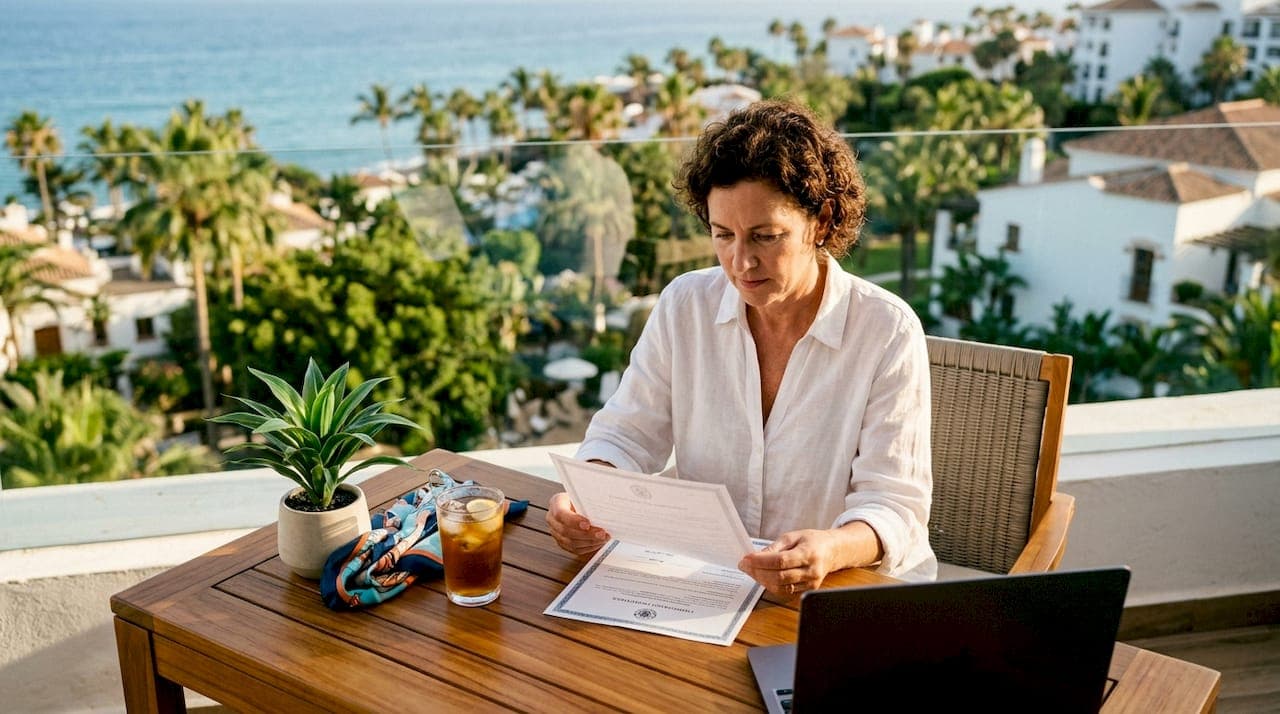
An ownership certificate is the official government-issued document that legally confirms your title to property in a foreign country, and without it, your purchase has no binding legal standing. When you buy property abroad, the ownership certificate, known formally as a title deed or registered title, is the single document that separates a legally protected asset from a costly misunderstanding. Countries like Turkey issue the TAPU, Morocco issues the Certificat de Propriété, and Brazil records ownership through the matricula. Each system is different, but the principle is identical: registration at the official land registry is what makes you the legal owner. This guide explains exactly what these documents are, how to obtain them, and how to verify they are genuine before you commit.
What is a buy property abroad ownership certificate?
An ownership certificate is the official record of your legal title, registered with a government land registry, that proves you own a specific property. It is not the same as a purchase contract, a reservation agreement, or a receipt of payment. Those documents record a transaction. The ownership certificate records a legal status.
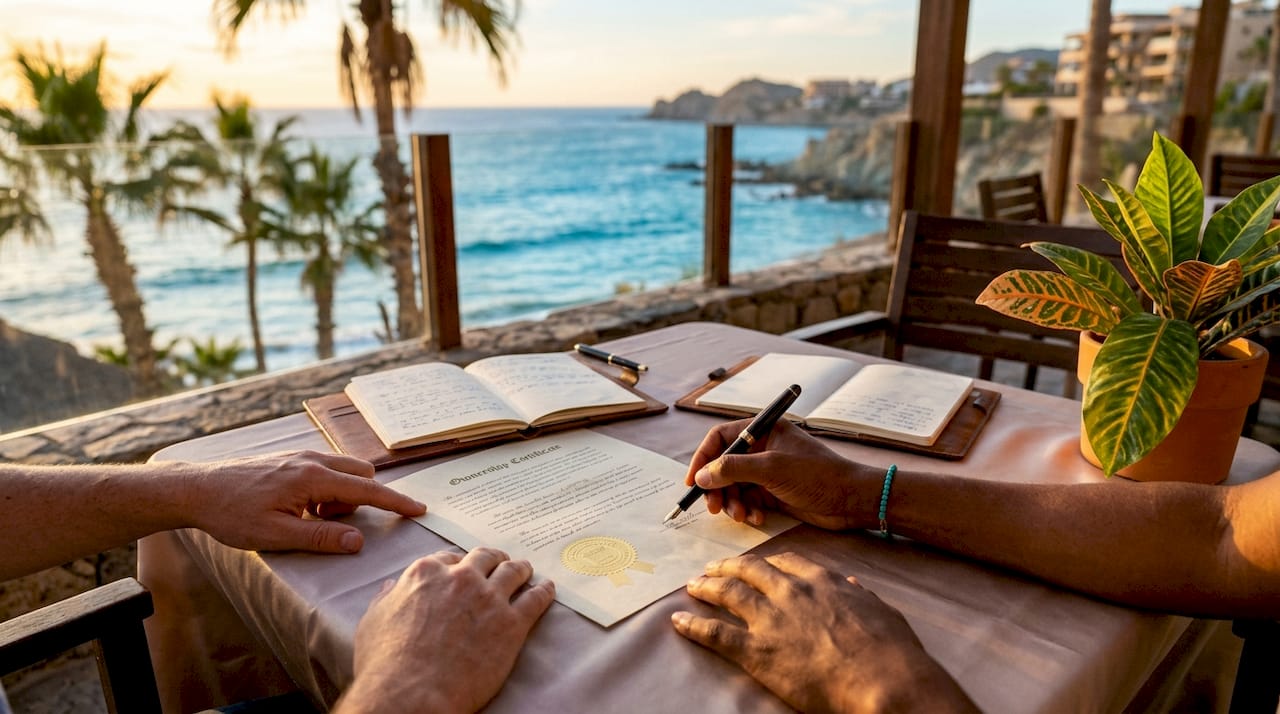
Signed purchase agreements alone do not create ownership. Only registration in the state land registry and issuance of an official title deed provides legally binding ownership. This distinction catches many first-time international buyers off guard. They sign a contract, pay a deposit, and assume they own the property. They do not, not until the registry records their name.
The practical risks of relying on a contract alone are serious:
- A seller could resell the same property to another buyer before registration completes.
- Undisclosed liens or mortgages attached to the property remain your problem after purchase.
- In the event of a legal dispute, courts recognize the registered owner, not the contract holder.
- Inheritance and tax authorities in most countries only recognize the registered title holder.
Pro Tip: Ask your lawyer to confirm the exact date your name will appear in the official land registry, not just the date you sign the purchase contract. These two dates can be weeks or months apart.
The ownership certificate also serves a practical function beyond legal protection. Banks require it for mortgage applications. Utility companies use it to transfer accounts. Rental income is taxed against the registered owner. Every downstream financial and legal action tied to your property flows from this one document.
How to obtain and verify ownership certificates by country
The process for securing a foreign property title deed varies by country, but the core steps follow a recognizable pattern. Here is how the process works in four of the most popular markets for international buyers.
Turkey: the TAPU process
Turkey's ownership certificate is called the TAPU, and it is issued by the Land Registry Office (Tapu ve Kadastro Genel Müdürlüğü). The TAPU transfer typically completes in 3 to 7 working days after all documents are submitted and the 4% title deed transfer fee is paid. That fee is calculated on the declared property value, and both buyer and seller are jointly responsible for it by law. Foreign buyers must obtain a Turkish tax identification number before the process can begin. Remote buyers can authorize a local representative through a notarized Power of Attorney, which allows the representative to handle registration and certificate retrieval on their behalf.
Morocco: the Certificat de Propriété
Morocco's system runs through the Conservation Foncière, the national land registry. The Certificat de Propriété records the owner's name, property boundaries, and any registered charges. A key rule in Morocco: an ownership certificate should not be older than 30 days to be considered current. An older certificate may not reflect recent sales, liens, or legal disputes. Buyers should instruct their notary to pull a fresh certificate directly from the registry, not accept one provided by the seller.
Brazil: the matricula
Brazil's matricula is the primary registry document identifying ownership, transfers, liens, and restrictions. Registering the deed at the Cartório de Registro de Imóveis updates the matricula and officially consolidates ownership. Foreign buyers need a CPF (Cadastro de Pessoas Físicas), Brazil's tax identification number, before any registration can proceed.
Mexico: the escritura pública
In Mexico, the escritura pública is the notarized deed registered with the Public Registry of Property. Foreign buyers in restricted coastal and border zones cannot hold freehold title directly. Instead, they use a fideicomiso, a bank trust arrangement that grants beneficial ownership rights. The registration process still produces a formal certificate, but the title holder is technically the bank acting as trustee.
Comparison of key ownership certificate systems:
| Country | Certificate name | Transfer fee | Typical timeline |
|---|---|---|---|
| Turkey | TAPU | 4% of property value | 3 to 7 working days |
| Morocco | Certificat de Propriété | 4% to 6% | 2 to 6 weeks |
| Brazil | Matricula update | 2% to 4% | 4 to 8 weeks |
| Mexico | Escritura pública | 2% to 5% | 4 to 12 weeks |
Buyers should budget 12% to 15% of the purchase price for total acquisition costs, including transfer taxes, legal fees, and registry charges. That figure is a realistic planning benchmark, not a worst-case scenario.
Pro Tip: Always request the certificate number and registry reference from your lawyer before closing. This lets you independently verify the document at the land registry office or through its official online portal.
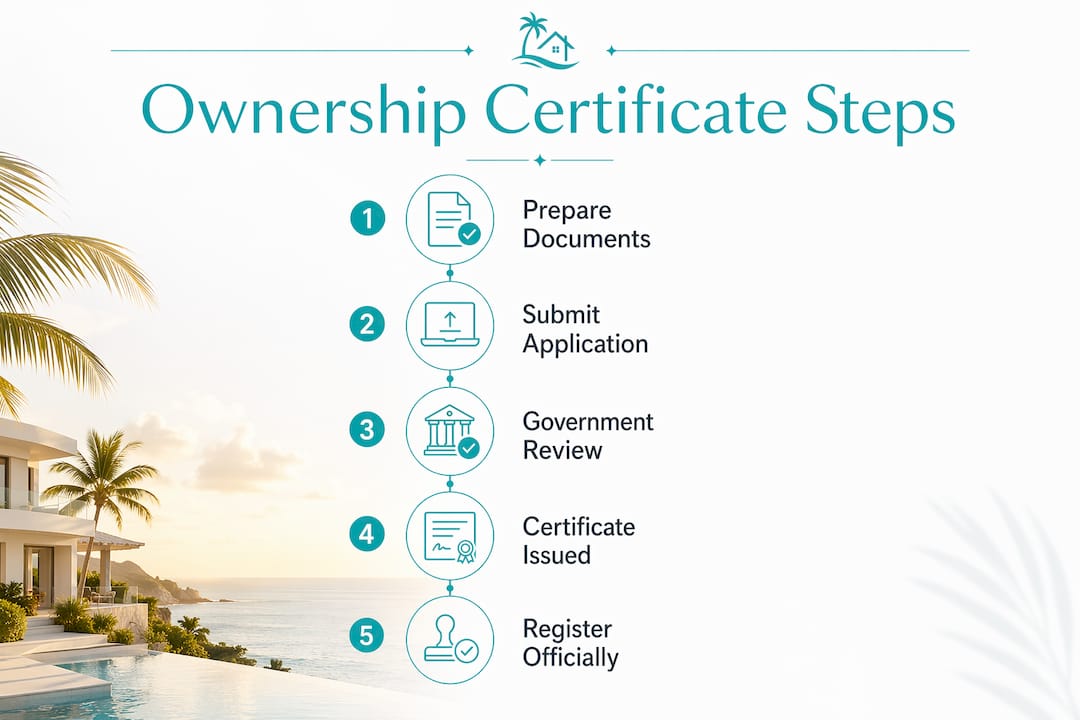
The numbered steps for a standard overseas registration process look like this:
- Obtain a local tax identification number (required in Turkey, Brazil, Spain, and most other markets).
- Instruct an independent local attorney to conduct a title search at the land registry.
- Sign the purchase contract and pay the agreed deposit.
- Complete the property valuation required by the registry.
- Pay all applicable transfer taxes and registry fees.
- Attend the deed signing at the notary or land registry office (or authorize a Power of Attorney representative).
- Receive the registered title deed or ownership certificate directly from the registry.
What ownership structures appear on certificates abroad
Not every ownership certificate grants the same rights. The type of ownership structure recorded on your certificate determines what you can do with the property, how you can sell it, and what happens to it when you die.
Freehold title is the most straightforward structure. You own the land and the building outright, indefinitely. Freehold is available to foreign buyers in Turkey, Morocco, Egypt, Portugal, and most of Europe. It is the structure that most closely matches what buyers from the UK or US expect.
Leasehold title grants ownership of the building for a fixed period, typically 30 to 99 years, while the land remains owned by another party. Thailand is the most prominent example. Thai leaseholds have renewal periods and impose ongoing administrative requirements that differ significantly from freehold expectations. When a leasehold expires without renewal, ownership of the structure reverts to the landowner.
Fideicomisos (bank trusts) are used in Mexico's restricted zones. The buyer holds beneficial ownership through a Mexican bank acting as trustee. Fideicomisos cost $500 to $1,500 to set up plus $500 to $700 in annual fees. The certificate names the bank as title holder, with the buyer listed as beneficiary. This structure is legally sound but requires buyers to understand that their name does not appear as the direct owner on the title.
Key implications of ownership structure for buyers:
- Exit strategy: Freehold titles are easier to sell and transfer than leaseholds or trust arrangements.
- Inheritance: Freehold titles pass through standard inheritance processes. Fideicomisos and leaseholds require additional legal steps to transfer to heirs.
- Financing: International lenders are far more willing to accept freehold titles as collateral.
- Residency: Owning property abroad does not automatically confer residency rights, regardless of the ownership structure recorded on the certificate.
Understanding which structure applies to your property before you sign anything is not optional. It shapes every financial and legal decision that follows.
How to verify ownership certificates and avoid fraud
Certificates provided directly by sellers are the single biggest source of documentation fraud in international real estate. A seller-supplied certificate may be outdated, altered, or refer to a different property entirely. Buyers must instruct their lawyer or notary to obtain a fresh official certificate directly from the government land registry, not from the seller or the selling agent.
"The safest rule in international property is simple: if you did not pull the certificate yourself from the official registry, treat it as unverified."
Red flags that indicate a certificate may be unreliable:
- The owner name on the certificate does not match the seller's identification documents.
- The certificate is older than 30 days and has not been refreshed from the registry.
- The property boundaries or plot number on the certificate differ from the sales listing.
- There are unexplained annotations, stamps, or corrections on the document.
- The seller is reluctant to allow independent legal verification before signing.
Appointing an independent bilingual attorney unaffiliated with the seller or agent is the most reliable way to conduct proper due diligence. That attorney should pull the certificate directly, check for liens and encumbrances, confirm the seller's legal authority to sell, and verify that no legal proceedings are attached to the property.
Pro Tip: In many countries, land registries now offer online verification portals. Ask your attorney for the official registry website and cross-check the certificate reference number yourself. This takes five minutes and adds a meaningful layer of protection.
A pre-purchase verification checklist for overseas property title deeds:
- Confirm the certificate was obtained directly from the official land registry within the last 30 days.
- Verify the registered owner's name matches the seller's legal identification.
- Check for any registered mortgages, liens, or legal disputes on the property.
- Confirm the plot number, boundaries, and building description match the property being sold.
- Verify that all previous ownership transfers were properly registered.
For a broader overview of the legal and financial preparation involved in overseas purchases, the 2026 buyer's guide from Padsabroad covers title clarity checks and due diligence in detail.
Key takeaways
Securing a valid, registered ownership certificate is the single most important step in any international real estate purchase, and no contract, payment, or agreement substitutes for it.
| Point | Details |
|---|---|
| Registration equals ownership | Only land registry registration creates legal ownership. A purchase contract alone does not. |
| Certificates expire quickly | Request a certificate no older than 30 days to reflect current liens and ownership status. |
| Structure affects your rights | Freehold, leasehold, and trust arrangements carry different rights, costs, and exit strategies. |
| Independent verification is required | Always have your own attorney pull the certificate directly from the official registry. |
| Budget beyond the purchase price | Total acquisition costs typically run 12% to 15% of the property price, including registry fees. |
What we have learned from watching buyers get this wrong
At Padsabroad, we have worked with international buyers across multiple markets, and the pattern of mistakes is remarkably consistent. Buyers who run into serious problems almost always made one of two errors: they trusted a seller-supplied document without independent verification, or they confused signing a contract with completing a purchase.
The second mistake is more common than most people expect. A buyer signs a contract, pays in full, and spends months furnishing a property they do not legally own yet because the registration process was delayed or never completed. In some cases, the seller's existing mortgage was never discharged, meaning the bank technically had a prior claim on the property the entire time.
What we recommend, based on direct experience, is this: treat the ownership certificate as the finish line, not the contract. Do not consider the purchase complete until your name is registered at the land registry and you hold a verified, current certificate. Everything before that point is a transaction in progress.
We also see buyers underestimate how much local legal support matters. An attorney who speaks the local language, knows the local registry system, and has no connection to the selling party is not a luxury. It is the most cost-effective protection you can buy. The fee for independent legal counsel is a fraction of what disputes cost to resolve.
Regulatory trends in 2026 are moving in a positive direction for buyers. Several countries, including Turkey and Portugal, have updated their digital registry systems to allow faster verification and online certificate access. That makes independent verification easier than it has ever been. Use it.
— PADSABROAD
How Padsabroad helps you secure your ownership certificate
Securing the right documentation when you buy property abroad is exactly where Padsabroad adds the most value for international buyers.
Padsabroad works with buyers purchasing property along Egypt's Red Sea coast, in areas including Hurghada, El Gouna, Sahl Hasheesh, Soma Bay, and Marsa Alam. The team manages ownership certificate checks, coordinates with local legal representatives, and guides buyers through official registration processes from start to finish. Whether you are purchasing remotely or planning to be present at signing, Padsabroad handles the due diligence so nothing is missed. Visit Padsabroad's overseas property specialists to speak with the team about your purchase and get the documentation process right from day one.
FAQ
What is an ownership certificate when buying property abroad?
An ownership certificate is the official government-issued title deed registered at the national land registry that legally confirms your ownership of a foreign property. It is the only document that creates binding legal ownership. A purchase contract alone does not.
How long does it take to get a title deed abroad?
Timelines vary by country. In Turkey, the TAPU transfer completes in 3 to 7 working days after documents are submitted. In Brazil and Mexico, the process typically takes 4 to 12 weeks depending on the registry workload and documentation completeness.
Can I buy property abroad without visiting in person?
Yes. Most countries allow buyers to authorize a local representative through a notarized Power of Attorney to handle registration and certificate retrieval on their behalf. This is a standard practice for remote international real estate purchases.
What is the difference between freehold and leasehold ownership abroad?
Freehold ownership means you own the land and building outright with no time limit. Leasehold ownership grants rights to the property for a fixed period, after which ownership may revert to the landowner. Thailand is a well-known example where foreign buyers are typically limited to leasehold arrangements.
How do I verify that an overseas ownership certificate is genuine?
Instruct an independent attorney to pull a fresh certificate directly from the official government land registry, not from the seller. Confirm the registered owner's name matches the seller's identification, check for liens or legal disputes, and verify the certificate is no older than 30 days.