
Egypt property ownership for tourists is defined as the legal right of foreign nationals to purchase and hold residential real estate in Egypt, subject to specific limits set by Egyptian law. Under Law No. 230 of 1996, foreigners can own up to two residential properties, each capped at 4,000 square meters. This framework covers tourists, expatriates, and international investors alike. The law also allows Prime Ministerial exceptions for special cases. Knowing these rules before you buy protects your investment and opens the door to residency benefits that most first-time buyers overlook.
What are the legal ownership limits for tourists buying property in Egypt?
Foreign buyers in Egypt operate under a clear legal framework. Law No. 230 of 1996 caps ownership at two residential properties per foreign individual, with each property limited to 4,000 square meters of land area. These limits apply regardless of nationality, so whether you are a British retiree or an American investor, the same rules govern your purchase.
The law is designed for personal residential use, not large-scale commercial land acquisition. Properties must primarily serve as a home or vacation residence, not as a vehicle for bulk land banking. The Prime Minister can grant exceptions to the standard limits in specific circumstances, but these are not routine approvals.
Key ownership conditions to understand before signing any contract:
- Two-property maximum: You cannot hold more than two residential properties in Egypt as a foreign national.
- 4,000 m² land cap: Each property's land area cannot exceed 4,000 square meters.
- Personal use requirement: Properties must be for personal residential or vacation use.
- Five-year resale restriction: Foreigners typically face a five-year holding period before reselling without special approval.
- Prime Ministerial exceptions: Exemptions from the resale restriction or size limits require formal government approval.
- Funds transfer documentation: Purchase funds must be transferred through official banking channels and documented.
Pro Tip: Review the second home purchase process in detail before committing to a developer. Understanding the registration timeline helps you plan around the five-year resale window from day one.
The five-year resale restriction catches many buyers off guard. It means your Egypt vacation home is a medium-term commitment, not a quick-flip asset. Plan your purchase with that holding period in mind.
How does property ownership connect to residency permits and visas?
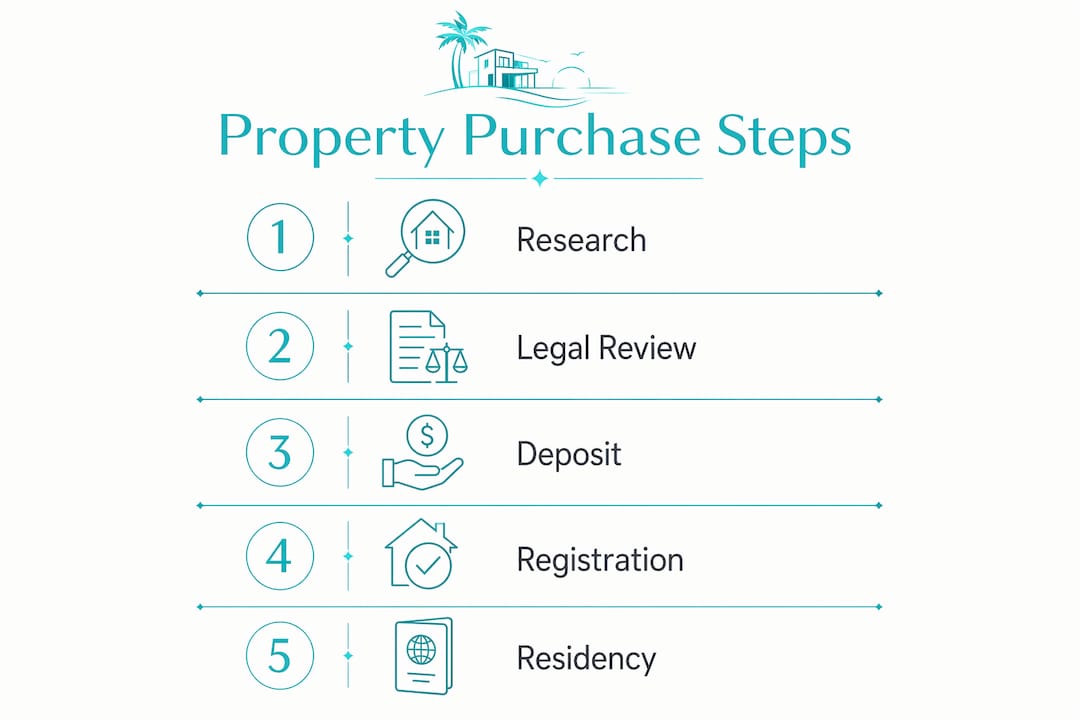
Buying property in Egypt can qualify you for a renewable residence permit. This is one of the most practical egypt holiday property ownership benefits that buyers frequently underestimate. The permit ties directly to the value of your investment, with three clear thresholds in 2026:
- USD 50,000 investment: Qualifies for a 1-year renewable residence permit.
- USD 100,000 investment: Qualifies for a 3-year renewable residence permit.
- USD 200,000 investment: Qualifies for a 5-year renewable residence permit.
These thresholds come from the residency-by-investment framework linked to property purchases. The permit remains valid as long as you continue to own the qualifying property. Selling before the permit expires can affect your residency status.
The practical benefit is significant. A residence permit linked to property simplifies re-entry to Egypt compared to renewing tourist visas repeatedly. You avoid the cost and uncertainty of visa runs. For buyers who spend extended time in Hurghada, El Gouna, or Sahl Hasheesh, this alone justifies the investment threshold.
Citizenship eligibility via property investment exists but follows a separate and more complex process. Documentation requirements include proof of funds transfer through an Egyptian bank account. Padsabroad recommends setting up your Egyptian bank account early in the purchase process to satisfy both the transaction and residency documentation requirements.
What regulations govern short-term tourist rentals in Egypt?
Legal property ownership does not automatically give you the right to rent your unit to tourists. This is the most common misunderstanding among foreign buyers. Owning a property and licensing it for tourist rentals are two entirely separate legal processes in Egypt.
The Egyptian Ministry of Tourism introduced a mandatory licensing framework in 2025 through Decrees No. 209 and No. 801. These decrees created a structured regime for short-term rentals, often called holiday homes. Every property offered for short-term tourist rental must hold a valid Holiday Home License, renewed annually.
The steps to operate a legal short-term rental in Egypt are:
- Obtain a Holiday Home License from the Ministry of Tourism under Decrees No. 209 and 801 of 2025.
- Register with the Egyptian Tourism Authority as a licensed tourist accommodation provider.
- Meet safety and facility standards required for tourist-grade accommodation.
- Register foreign guests with local security authorities within 24 hours of check-in.
- Renew the Holiday Home License annually to maintain legal operating status.
- Maintain guest records for compliance audits and tax reporting purposes.
The 24-hour guest registration requirement is non-negotiable. Failure to register foreign guests within that window can result in legal penalties. If you manage the property remotely, your property manager must have a reliable workflow to meet this deadline every time.
Pro Tip: When hiring a property manager to attract tourists to rent your Egypt apartment, confirm in writing that they handle guest registration with local authorities within the 24-hour window. This single operational detail carries the most legal risk for remote owners.
Egypt is actively formalizing the short-term rental market. The 2025 licensing framework signals a shift toward greater transparency and accountability. Buyers who get licensed early position themselves ahead of the compliance curve.
What tax rules apply to foreign owners earning rental income?
Tax treatment for short-term rental income in Egypt is based on economic reality, not ownership classification. The Egyptian tax authority focuses on whether rental activity is organized and recurring, not simply on whether the property is registered as residential.
This distinction matters. A foreign owner who rents their Red Sea apartment on Airbnb for eight months a year is conducting commercial activity in the eyes of the tax authority, regardless of the residential title on the property deed.
Key tax points for foreign rental property owners:
- Income tax applies when rental activity is organized, recurring, and profit-generating.
- VAT may apply depending on the nature of services provided and annual turnover thresholds.
- Residential ownership label does not exempt you from commercial tax treatment if rental activity is regular.
- Accurate record-keeping is required for income, expenses, and guest records.
- Separate tax treatment exists for basic property ownership versus active rental operations.
"Tax authorities focus on organized rental activity, requiring accurate income and expense records. Model your tax obligations as commercial activity from day one to avoid disputes."
Many foreign owners underestimate the tax implications of short-term rentals and face disputes without proper accounting. The safest approach is to treat rental income as commercial income from the start and maintain clean financial records. Consulting an Egyptian tax advisor before your first rental booking is a practical step, not an optional one.
Practical tips for buying and renting property in Egypt as a tourist
Preparation separates successful foreign buyers from those who encounter avoidable problems. The legal framework is clear, but the operational details require attention before and after purchase.
- Verify property type and licensing status before signing. Confirm the unit is eligible for a Holiday Home License if you plan to rent it short-term.
- Plan around the five-year resale restriction. If you may need to sell within five years, explore Prime Ministerial exemption options before committing.
- Choose your property manager carefully. Guest registration compliance within 24 hours is a legal obligation, not a courtesy.
- Model tax obligations conservatively. Assume commercial tax treatment applies to your rental income and budget accordingly.
- Transfer purchase funds through official banking channels. This is required for both the property transaction and residency permit documentation.
- Align your purchase value with your residency goal. If a 3-year permit is your target, confirm the property value meets the USD 100,000 threshold before negotiating.
Pro Tip: Review the real estate ROI data for Red Sea coastal areas before selecting a location. Hurghada, El Gouna, and Soma Bay each carry different rental yield profiles that affect your tax and income planning.
Types of tourist rental properties in Egypt range from studio apartments in Hurghada resort compounds to larger villas in Sahl Hasheesh and El Gouna. Each property type carries different licensing complexity and rental yield potential. Matching the property type to your usage plan, whether personal vacation use or active short-term rental, determines which compliance obligations apply from day one.
Key Takeaways
Egypt property ownership for tourists is legal, structured, and increasingly well-regulated, but it requires buyers to address ownership rules, rental licensing, and tax compliance as three separate obligations.
| Point | Details |
|---|---|
| Ownership is capped by law | Foreigners can own up to two residential properties, each limited to 4,000 m², under Law No. 230 of 1996. |
| Residency permits are tied to investment value | Property purchases of USD 50,000, 100,000, or 200,000 unlock 1-, 3-, or 5-year renewable residence permits. |
| Rental licensing is separate from ownership | A Holiday Home License under 2025 Ministry of Tourism decrees is required to legally rent to tourists. |
| Guest registration has a 24-hour deadline | Foreign guests must be registered with local security authorities within 24 hours of check-in. |
| Tax treatment follows economic reality | Recurring short-term rental income is treated as commercial activity, subject to income tax and potentially VAT. |
Padsabroad's view on buying property in Egypt as a foreign investor
The biggest mistake foreign buyers make is treating Egyptian property ownership as a single transaction with a single compliance checklist. It is not. Ownership, rental licensing, and tax obligations each carry their own rules, timelines, and risks. Buyers who conflate them end up with a legally owned property they cannot legally rent, or a rental operation they cannot legally tax-report.
Egypt's regulatory modernization is real and accelerating. The 2025 holiday home licensing decrees are not bureaucratic noise. They signal that Egypt is building a transparent, accountable short-term rental market. Buyers who engage with that framework now, rather than waiting to see how enforcement develops, are making the smarter long-term decision.
The residency-by-investment pathway is genuinely underused. Many buyers focus entirely on the property asset and miss the fact that a USD 100,000 purchase in Hurghada or El Gouna can eliminate the annual visa renewal cycle entirely. That quality-of-life benefit has real monetary value that rarely appears in ROI calculations.
Seek qualified Egyptian legal counsel before signing any contract. Padsabroad works with buyers at every stage, but no specialist replaces a licensed Egyptian attorney reviewing your specific title, location, and intended use before you commit.
— Padsabroad
How Padsabroad supports foreign buyers in Egypt
Padsabroad specializes in helping international buyers purchase, sell, and invest in real estate along Egypt's Red Sea coast, including Hurghada, El Gouna, Sahl Hasheesh, Soma Bay, Marsa Alam, and Port Ghalib.

The team guides buyers through legal ownership requirements, residency permit applications, banking setup, and rental compliance from the first inquiry to completed registration. Whether you are buying a vacation apartment or building a rental portfolio, Padsabroad provides the local knowledge and process support that foreign buyers need to move confidently. Visit Padsabroad to connect with a specialist and get clear answers about your specific property goals in Egypt.
FAQ
Can tourists legally own property in Egypt?
Yes. Foreign nationals, including tourists, can legally own up to two residential properties in Egypt under Law No. 230 of 1996, with each property capped at 4,000 square meters.
Does buying property in Egypt give you residency?
Yes. Property purchases meeting investment thresholds of USD 50,000, USD 100,000, or USD 200,000 qualify foreign buyers for 1-, 3-, or 5-year renewable residence permits respectively.
Do I need a license to rent my Egypt property to tourists?
Yes. The Egyptian Ministry of Tourism requires a Holiday Home License under Decrees No. 209 and 801 of 2025 for all short-term tourist rentals. Ownership alone does not authorize rental activity.
How soon can I resell property I buy in Egypt as a foreigner?
Foreigners typically face a five-year resale restriction after property registration. Selling before that period requires special Prime Ministerial approval.
Is rental income from Egyptian property taxable?
Yes. Short-term rental income is subject to Egyptian income tax and potentially VAT when the activity is organized and recurring, regardless of whether the property is classified as residential.