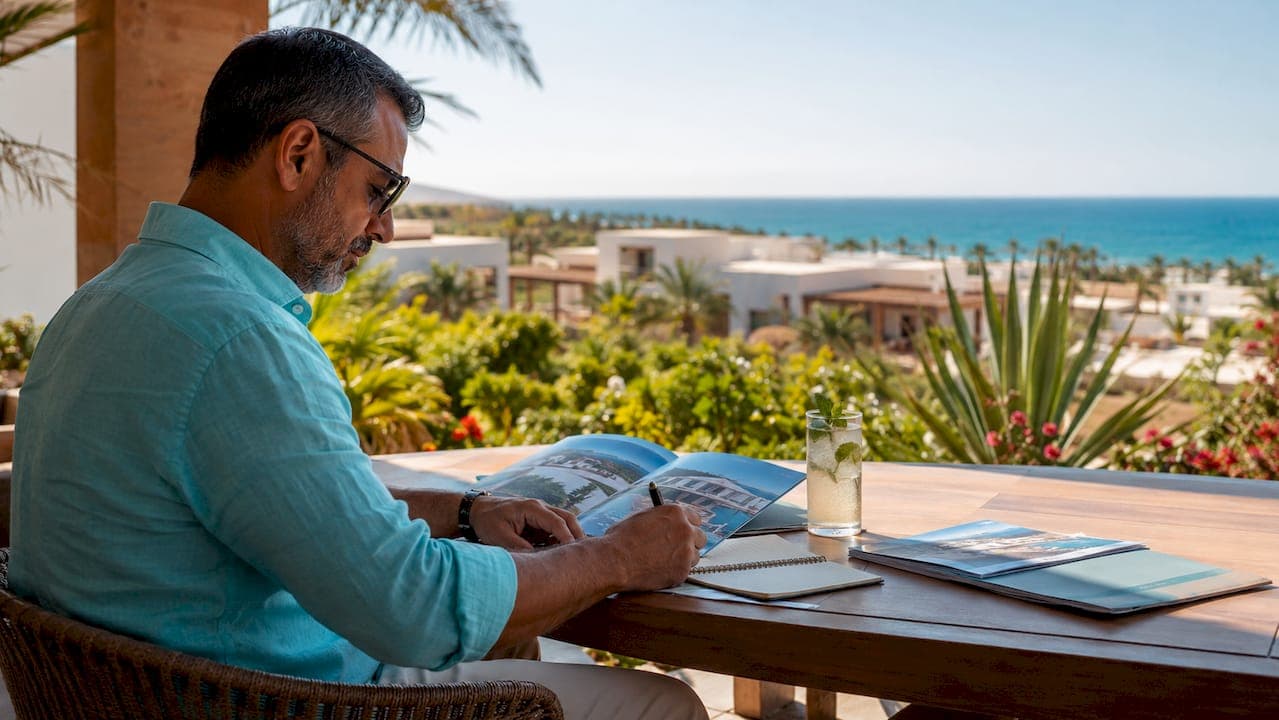
Holiday home investment in Egypt is defined as purchasing residential property in a leisure destination for both personal use and rental income generation. Egypt's coastal real estate market offers foreign buyers a rare combination: USD-denominated rental income that hedges against local currency risk, capital appreciation in emerging luxury markets, and government-backed residency incentives. Regions like the North Coast, Ain Sokhna, Hurghada, and El Gouna attract both lifestyle buyers and serious investors. The result is a market where personal enjoyment and financial return are not competing goals.
Why holiday home investment in Egypt stands out
Egypt's coastal property market is not a niche play. It is a government-supported, tourism-driven sector with structural advantages that most European or Southeast Asian alternatives cannot match.
The most significant financial benefit is currency protection. Licensed holiday homes earn in USD when accommodating foreign guests. That means your rental income holds its value even when the Egyptian pound fluctuates. For international buyers, this is a built-in hedge that most domestic property markets simply do not offer.

Egypt also offers a tiered residency program tied to property investment. Buying property grants renewable residency permits, and higher investment amounts denominated in USD can lead to citizenship. This makes Egypt one of the few markets where a beach apartment can open a legal pathway to long-term residency.
The lifestyle dimension matters too. Egypt is evolving from seasonal holiday homes into integrated lifestyle destinations, with gated compounds offering pools, restaurants, and private beaches. Buyers are not just purchasing a property. They are buying into a managed resort environment.
Key structural advantages for foreign investors include:
- USD rental income protecting against currency depreciation
- Government residency and citizenship incentives linked to investment size
- Low property entry prices compared to European coastal markets
- Year-round tourism demand across multiple coastal regions
- Professionally managed compounds reducing ownership complexity
"Egypt's holiday home market is one of the few places where lifestyle buyers and income investors are chasing the same asset." — Padsabroad
North Coast vs. Ain Sokhna: which region fits your investment goals?
Choosing between Egypt's top coastal regions is the most consequential decision a holiday home buyer makes. The North Coast and Ain Sokhna serve different investor profiles, and understanding the difference saves both money and disappointment.
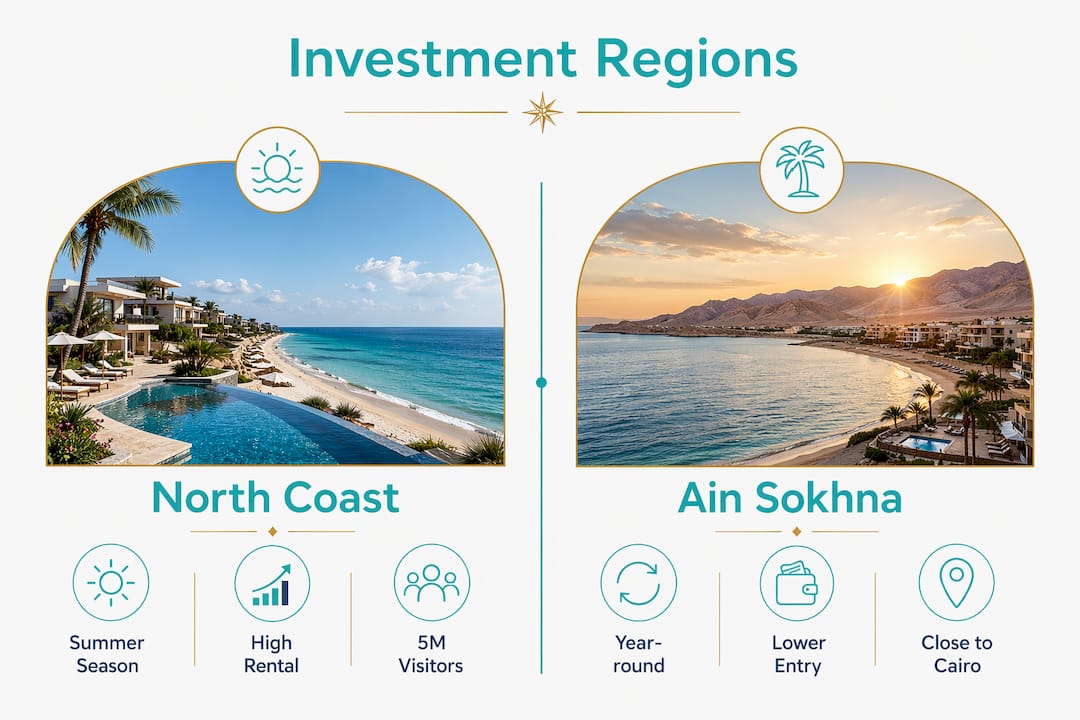
| Factor | North Coast | Ain Sokhna |
|---|---|---|
| Season length | Summer only (June–September) | Near year-round use |
| Entry price | From EGP 4 million | From EGP 1 million |
| Rental income pattern | High peak, low off-season | Steadier, moderate returns |
| Capital appreciation | High, demand grew 35% over 3 years | Consistent, moderate growth |
| Best for | Capital gains, prestige buyers | Steady income, frequent personal use |
| Distance from Cairo | 2–3 hours drive | 1–1.5 hours drive |
The North Coast draws over 5 million visitors each summer, and rental prices multiply 8–10 times during the July–August peak. That concentration of demand means a well-positioned unit can generate most of its annual income in just three months. The flip side is that off-season income is minimal, so cash flow planning is critical.
Ain Sokhna sits closer to Cairo and benefits from weekend traffic throughout the year. Entry prices are significantly lower, making it accessible for first-time investors. Returns are steadier but less dramatic. For buyers who want to use the property frequently and generate consistent income, Ain Sokhna is the more practical choice.
For buyers weighing the Red Sea coast more broadly, Hurghada's foreign buyer appeal adds another dimension. Hurghada offers year-round international tourism, a developed expat community, and strong short-term rental demand from European visitors.
Pro Tip: If you plan to use the property personally in summer, factor in the opportunity cost. A week in your own North Coast chalet during peak season is a week of high-rate rental income you are not earning.
Who buys holiday homes in Egypt and why?
Understanding the types of holiday home buyers in Egypt helps you identify where your own goals fit. The market is not one-size-fits-all, and each buyer type has a distinct strategy.
-
Lifestyle buyers. These buyers prioritize personal use. They want a family retreat within driving distance of Cairo or a Red Sea escape for regular weekends. Ain Sokhna and Hurghada are their primary targets. Financial return matters, but it is secondary to comfort and convenience.
-
Rental income investors. This group treats the property as a yield-generating asset. They target the North Coast for its explosive summer demand or Hurghada for its year-round international rental market. They invest in furnishing and professional management to maximize occupancy rates.
-
Capital appreciation buyers. These investors focus on emerging luxury zones where land values are rising. El Gouna, Sahl Hasheesh, and the North Coast's premium compounds attract this profile. They buy early in a development cycle and hold for medium to long-term price growth.
-
Residency-motivated buyers. Foreign nationals seeking a legal foothold in Egypt use property purchase as the entry point. Government incentives offer tiered residency based on investment amount, making this a practical immigration strategy for buyers from Europe, the Gulf, and beyond.
Most buyers combine two or more of these motivations. A lifestyle buyer who also earns summer rental income is the most common profile in Egypt's coastal market.
What practical factors determine holiday home investment success?
Buying the right property is only half the equation. How you manage it determines whether investing in holiday homes in Egypt delivers on its promise.
Property management is the single most critical operational factor. Poor management turns passive income into an active challenge. Investors who do not vet the management structure as carefully as the property itself consistently report regret. Prioritize compounds with on-site professional teams that handle bookings, maintenance, cleaning, and guest relations.
Seasonal income planning is equally important. North Coast rental peak runs from june to september, and the most successful investors plan their entire annual cash flow around that window. Summer earnings cover mortgage costs and maintenance. Winter rentals are treated as a bonus, not a baseline.
Practical considerations to address before purchase:
- Furnishing costs. Coastal properties need durable, weather-resistant furnishings. Budget for this upfront, not as an afterthought.
- Maintenance fees. Compound service charges vary widely. Confirm what is included before signing.
- Currency accounts. Foreign investors need a local bank account to receive rental income and pay expenses. Padsabroad's guide on opening a bank account in Egypt covers the process clearly.
- Off-season strategy. For North Coast properties, consider long-term winter lets to local tenants to generate some income during the quiet months.
Pro Tip: Ask the developer or compound management for actual occupancy data from previous summers before you buy. Projected figures are marketing. Historical data is evidence.
What does the purchase process look like for foreign buyers?
The legal framework for foreign property ownership in Egypt is clear and investor-friendly. Foreign nationals can own property outright in most designated areas, including all major coastal resort zones.
The purchase process follows a standard sequence: property selection, reservation deposit, sales contract signing, payment schedule completion, and title deed registration. Due diligence should include verifying the developer's track record, confirming the compound's legal status, and checking that the title is free of encumbrances. The second home purchase process in Egypt has specific steps for foreign buyers that differ from domestic transactions.
Residency permits are tied directly to investment amount. The tiered program links permit duration and renewal terms to the USD value of the property purchased. Citizenship is available at higher investment thresholds. Working with a local legal advisor and a specialist overseas property agent removes most of the friction from this process.
For a broader view of where coastal Egypt fits relative to Cairo, the coastal vs. Cairo investor guide from Padsabroad provides a useful framework for comparing the two markets.
Key Takeaways
Egypt's holiday home market delivers strong investment returns when buyers match their property choice to their income strategy, usage pattern, and residency goals.
| Point | Details |
|---|---|
| USD income hedge | Holiday homes earn in US dollars, protecting returns from local currency fluctuations. |
| Region selection matters | North Coast suits capital gains; Ain Sokhna suits steady income and frequent personal use. |
| Management is non-negotiable | Vetting property management is as critical as vetting the property itself. |
| Plan cash flow seasonally | Design your financial model around summer peak income; treat winter rentals as extra. |
| Residency is a real benefit | Tiered government incentives link property investment to renewable residency and citizenship. |
Padsabroad's perspective on getting Egypt holiday home investment right
The buyers who do best in Egypt's holiday home market are the ones who are honest about their primary goal before they buy. Lifestyle buyers who secretly hope for strong rental yields often end up frustrated when they use the property every summer and earn nothing. Income investors who buy without a management plan often discover that running a rental from abroad is harder than expected.
The residency angle is genuinely underrated. Most buyers treat it as a footnote. In practice, a renewable residency permit changes how you can use the property, how long you can stay, and what banking and financial services you can access in Egypt. For buyers from the UK, Europe, or the Gulf, this is a meaningful quality-of-life benefit that rarely gets priced into the investment decision.
Capital appreciation in the North Coast and Ain Sokhna is real, but it is not guaranteed. The developers and compounds with the strongest track records are the ones worth paying a premium for. Chasing the cheapest entry price in an unproven development is the most common mistake we see. Egypt's real estate ROI rewards quality and location over bargain hunting.
— Padsabroad
How Padsabroad helps you find the right holiday home in Egypt
Padsabroad specializes in helping international buyers find, purchase, and manage holiday home investments across Egypt's key coastal markets, from the North Coast to Hurghada, El Gouna, Sahl Hasheesh, and Marsa Alam.
The team at Padsabroad guides buyers through every stage: property selection, legal due diligence, financing options, residency applications, and connecting you with vetted on-site management. Whether you are a first-time buyer or adding to an existing portfolio, Padsabroad provides the local knowledge and international experience to make the process straightforward. Reach out to explore current listings and get tailored advice on which region and property type fits your investment goals.
FAQ
What makes Egypt a good place for holiday home investment?
Egypt offers USD-denominated rental income, low entry prices compared to European coastal markets, and government residency incentives tied to property purchase. These three factors together make it one of the most accessible and financially attractive holiday home markets for foreign buyers.
Is the North Coast or Ain Sokhna better for rental income?
The North Coast generates higher peak-season rental rates, with prices multiplying 8–10 times in July and august. Ain Sokhna provides steadier, year-round income at lower absolute rates, making it better suited for investors who want consistent cash flow.
Can foreigners own property in Egypt outright?
Foreign nationals can own property outright in Egypt's designated resort and coastal zones, including all major holiday home markets. The purchase process includes title deed registration and is supported by clear legal frameworks for international buyers.
What residency benefits come with buying property in Egypt?
Egypt's tiered residency program grants renewable permits based on the USD value of the property purchased. Higher investment amounts qualify for longer permits and, at the top tier, a pathway to citizenship.
How do I manage a holiday home in Egypt from abroad?
The most reliable approach is buying within a professionally managed compound that offers on-site booking, maintenance, and guest services. Investors who rely on informal arrangements consistently report more operational problems than those who prioritize management quality from the start.