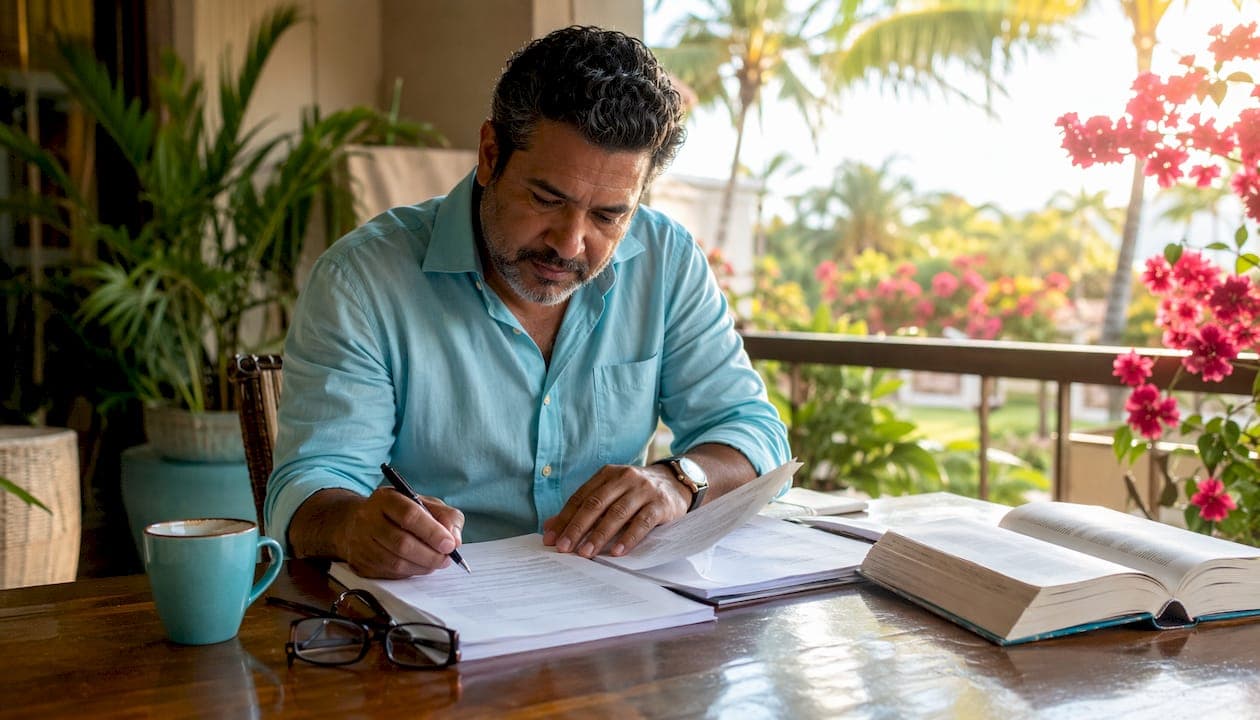
Egypt's Red Sea coast, the Dominican Republic, Portugal's Algarve, Dubai, and Panama are among the most reliably accessible examples of foreigner-friendly property markets for international buyers in 2026. If you're a U.S. buyer focused on resort residential or investment property, Egypt's Red Sea coast offers freehold and long-term ownership options, English-speaking specialist support, and entry prices that remain competitive compared to Caribbean and European alternatives.
- Markets to watch: Hurghada, El Gouna, Sahl Hasheesh, Soma Bay, Marsa Alam, Port Ghalib (Egypt Red Sea); Punta Cana (Dominican Republic); the Algarve (Portugal); Dubai (UAE); Panama City and Bocas del Toro (Panama).
- Recommended next step for U.S. buyers: Engage a specialist local agent such as Padsabroad and instruct an independent Egyptian lawyer before signing anything.
Run a title search and request verified deed documentation before committing to any deposit.
Table of Contents
- What does "foreigner-friendly" actually mean for property buyers?
- Short examples of foreigner-friendly coastal and resort markets
- Why Egypt's Red Sea coast deserves a place on your shortlist
- How to evaluate any foreign coastal market as a U.S. buyer
- Common pitfalls when buying coastal property abroad — and how to avoid them
- Concrete next steps for U.S. buyers ready to act on Red Sea coast opportunities
- Key Takeaways
- Why the Red Sea coast is where Padsabroad focuses its work
- How Padsabroad helps U.S. buyers get started on the Red Sea coast
- Useful sources and further reading
What does "foreigner-friendly" actually mean for property buyers?
A foreigner-friendly real estate market is one where non-residents can legally own property, access transparent title records, find local or international financing, and get English-language professional support throughout the transaction. That definition covers six practical dimensions:
- Ownership rights: Can foreigners hold freehold title, or only leasehold? Freehold gives you outright ownership with no expiry; leasehold (common in some Asian and Middle Eastern markets) typically runs 49–99 years.
- Financing access: Local non-resident mortgages are rare in many markets. Non-resident mortgages typically involve lower loan-to-value ratios where available, so plan for higher upfront cash.
- Title certainty: Is the land registry public and searchable? Can an independent lawyer verify the deed?
- Transaction taxes and costs: Transfer taxes, notary fees, and agent commissions vary widely by country.
- Residency pathways: Does property ownership unlock a visa or residency permit?
- English-language services: Are agents, lawyers, and property managers available in English?
A market can score well on ownership rights but poorly on financing, as Japan illustrates. Japanese banks typically offer mortgages only to residents with long-term visas, so most foreign buyers operate cash-only despite full legal ownership rights.
Pro Tip: To verify whether "foreigner-friendly" is marketing copy or reality, ask three questions: Can a non-resident get a local mortgage? Is there a public title registry you can search independently? Does the developer or seller offer escrow? If the answer to all three is no, proceed with extra caution.
Short examples of foreigner-friendly coastal and resort markets
These markets consistently appear in property-for-expats research because each removes at least one major barrier for non-resident buyers.
Punta Cana, Dominican Republic grants foreign buyers identical ownership rights to Dominican citizens, with USD-pegged currency and direct flights from most U.S. cities. Cap Cana has shown strong annual appreciation in its master-planned communities.

The Algarve, Portugal offers the cleanest European purchase process for non-residents, an established expat community, and steady appreciation in the Carvoeiro and Lagos corridors. It's the go-to pairing for buyers who want a mature, regulated market alongside a higher-yield resort play.
Dubai, UAE allows freehold ownership in designated zones such as Palm Jumeirah, Dubai Marina, and Business Bay. Zero local property tax and attractive gross yields make it appealing to yield-focused investors. Residency options are available through qualifying investment thresholds.
Panama offers one of the most explicit residency-by-investment programs in the Americas. The Qualified Investor visa has defined property investment thresholds, and foreigners have the same ownership rights as Panamanian citizens, with a straightforward legal process.
Costa Rica and Mexico (Tulum/Riviera Maya) are popular with U.S. buyers for proximity, low cost of living, and strong short-term rental demand. Tulum has posted some of the highest gross rental yields among resort markets, though title complexity in ejido land zones requires careful legal review.
Pro Tip: Seasonality directly affects rental viability. A market with strong summer occupancy but weak winter demand cuts your annual yield significantly. Check booking platform data for year-round occupancy rates, not just peak-season figures, before projecting rental income.
Why Egypt's Red Sea coast deserves a place on your shortlist
Egypt broadly permits foreigners to purchase residential and resort property, with freehold ownership available in most Red Sea coastal developments. Each location along the coast has a distinct profile.
- Hurghada is the most established market, with the widest range of resale apartments and new developments. It suits buyers who want liquidity, established property management, and sea-view resale options at accessible price points.
- El Gouna is a self-contained resort town with its own infrastructure, marina, and international airport access. It attracts a more premium buyer profile and has a strong track record for holiday rental occupancy.
- Sahl Hasheesh is a gated resort community south of Hurghada with a focus on luxury apartments and villas. Developer-led projects here typically include managed rental programs.
- Soma Bay is a peninsula resort with a single developer model, which simplifies due diligence but limits resale liquidity compared to Hurghada.
- Marsa Alam and Port Ghalib sit further south, offering quieter, more nature-focused environments. Port Ghalib has a marina and is suited to buyers seeking a long-stay or retirement base rather than a high-turnover rental.
For new-build purchases, developer warranties and escrow arrangements are the key protection. Resale properties offer faster entry and immediate rental potential, but require verified deed checks and a clear title history. Padsabroad provides specialist guidance for non-resident buyers across all six locations.
Pro Tip: Before signing any new-build contract, ask the developer for proof of land registration in their name, a copy of the building permit, and written confirmation of the escrow or payment-protection arrangement. An independent Egyptian lawyer should review all three.
How to evaluate any foreign coastal market as a U.S. buyer
Every market evaluation should cover the same eight dimensions before you commit funds.
- Ownership structure: Freehold or leasehold? What restrictions apply to non-residents?
- Title certainty: Can an independent lawyer run a title search at the local registry?
- Transaction costs: Transfer tax, notary fees, agent commission, and legal fees. Budget 5%–10% of purchase price as a general range, though this varies by country.
- Financing availability: Is a non-resident mortgage available, and at what LTV? 16 of 19 countries tracked by WhereNext offer some non-resident mortgage option, but terms differ significantly.
- Rental demand and yield: Check short-term rental platforms for occupancy data. Verify yield claims with at least two independent local property managers.
- Capital appreciation potential: Is the market mature (stable, liquid) or emerging (higher risk, higher upside)?
- Residency pathways: Does ownership qualify you for a visa or residency permit?
- Currency and exchange risk: Is the local currency pegged to USD or EUR? How do you transfer funds legally and cost-effectively from the U.S.?
| Dimension | What to check |
|---|---|
| Ownership rights | Freehold vs. leasehold; non-resident restrictions |
| Financing | Non-resident mortgage availability; typical LTV |
| Title certainty | Public registry access; independent lawyer search |
| Rental demand | Platform occupancy data; local manager references |
| Appreciation potential | Market maturity; recent comparable sales |
| Language and services | English-speaking agents, lawyers, managers |
| Residency pathways | Visa thresholds tied to property investment |
| Transaction costs | Transfer tax, notary, legal, agent fees |
For Egypt, the 2026 investment checklist published by Padsabroad covers each of these dimensions with country-specific figures and timelines.
Pro Tip: Never rely on a single rental yield figure from a developer or agent. Request occupancy data from two or three independent property managers and cross-check against Airbnb or Booking.com listings in the same area.
Common pitfalls when buying coastal property abroad — and how to avoid them
The most common, high-impact risks for foreign buyers of coastal resort property are title defects, developer insolvency, inflated rental-return guarantees, and currency transfer errors.
- Title defects: Always instruct an independent lawyer to run a title search before paying any deposit. A specialist agent can identify restricted inventory, but only a lawyer can verify clean title.
- Developer insolvency: Request proof of land registration, building permits, and an escrow or payment-protection arrangement. Never pay stage payments directly to a developer without escrow.
- Inflated rental guarantees: Specialist agents in multiple markets report that "foreigner-friendly" marketing often masks real barriers, including unrealistic rental return promises. Verify any guaranteed yield claim with an independent property manager.
- Currency transfer errors: Use a regulated international transfer service (such as Wise or a U.S.-licensed FX broker) rather than a bank wire at spot rate. Unregulated transfers can expose you to compliance issues under U.S. Treasury reporting rules.
- Lack of local legal representation: An independent Egyptian lawyer and notary are non-negotiable for Red Sea coast purchases. They verify deeds, review contracts, and protect your interests if a dispute arises.
Watch out for developer rental guarantees that promise fixed annual returns for 5–10 years. These are often built into the purchase price rather than generated by genuine rental income. Ask the developer to show you actual occupancy records from comparable completed units, and have your lawyer review the guarantee clause before you sign.
Concrete next steps for U.S. buyers ready to act on Red Sea coast opportunities
Start by engaging Padsabroad as your specialist local agent and instructing an independent Egyptian lawyer. Both steps should happen before you shortlist specific properties.
- Shortlist locations and property types based on your budget, intended use (holiday rental, second home, retirement), and preferred resort profile.
- Request title and warranty documents for any property you're seriously considering. Padsabroad can facilitate this with developers and resale vendors.
- Instruct an independent Egyptian lawyer to review title, building permits, and the sale contract before you sign or pay a deposit.
- Negotiate contract terms to include escrow for stage payments, a developer warranty, and a clear handover timeline.
- Plan your site visit and inspection before final payment. Property handover should be documented and witnessed.
Have your passport, proof of funds, and a U.S. bank reference letter ready for the initial consultation. For currency transfers, use a regulated FX service to move funds from the U.S. to Egypt. Keep records of all transfers for U.S. tax reporting purposes, as the IRS requires disclosure of certain foreign financial transactions.
Pro Tip: Lock in your exchange rate with a forward contract through a regulated FX provider once you've agreed on a purchase price. Egyptian pound fluctuations can affect your effective cost if you delay the transfer.
Key Takeaways
Egypt's Red Sea coast is one of the most accessible and competitively priced examples of foreigner-friendly property markets for U.S. buyers, provided you use specialist local representation and independent legal review.
| Point | Details |
|---|---|
| Define "foreigner-friendly" carefully | Check ownership rights, title certainty, financing access, and residency pathways — not just marketing claims. |
| Top coastal markets to compare | Punta Cana, the Algarve, Dubai, Panama, and Egypt's Red Sea coast each offer distinct ownership and yield profiles. |
| Egypt Red Sea ownership | Foreigners can hold freehold or long-term title across Hurghada, El Gouna, Sahl Hasheesh, Soma Bay, Marsa Alam, and Port Ghalib. |
| Due diligence essentials | Independent title search, escrow for stage payments, verified developer warranties, and an independent Egyptian lawyer are required. |
| Padsabroad for Red Sea buyers | Padsabroad provides specialist discovery, legal liaison, and property management introductions for non-resident buyers across the Red Sea coast. |
Why the Red Sea coast is where Padsabroad focuses its work
The Red Sea coast is not the most talked-about market in international property circles, and that's part of what makes it worth attention. Most of the markets that dominate the conversation, Dubai, Punta Cana, the Algarve, are well-covered and well-priced accordingly. The Red Sea coast still offers entry points and yield potential that those markets passed years ago.
What's often underestimated is how much the buying experience depends on who you work with locally. The legal framework in Egypt is workable for foreign buyers, but the process is not self-service. Title verification, developer checks, and contract negotiation all require someone who knows the local registry, the developers, and the lawyers. That's the gap Padsabroad fills. The firm works with buyers across Hurghada, El Gouna, Sahl Hasheesh, Soma Bay, Marsa Alam, and Port Ghalib, connecting them with vetted legal partners and property managers rather than leaving them to navigate an unfamiliar system alone. The buyers who do best are the ones who treat local specialist support as a requirement, not an optional extra.
How Padsabroad helps U.S. buyers get started on the Red Sea coast
Padsabroad offers U.S. buyers a direct route into Egypt's Red Sea property market: specialist property discovery across Hurghada, El Gouna, Sahl Hasheesh, Soma Bay, Marsa Alam, and Port Ghalib, plus introductions to independent Egyptian lawyers and vetted property management services for rental owners.
Whether you're looking at new developments and resale apartments or want to understand the full purchase process before committing, Padsabroad's team can walk you through options matched to your budget and goals. Download the First-Time Buyer Guide to Egypt Red Sea Property Investment to get a clear picture of the transaction steps, costs, and trust checks involved. When you're ready to shortlist properties, contact Padsabroad directly to book an introductory call and receive a curated property shortlist for your target locations and price range.
Useful sources and further reading
- How to buy property in Egypt as a foreigner — Padsabroad's step-by-step guide for non-resident buyers, covering the full purchase process.
- Buy property in Egypt safely — Trust checks, deed verification, and recommended steps for safe transactions.
- Property ownership in Hurghada: legal guide for foreign buyers — Legal considerations specific to Hurghada and the Red Sea coast.
- Buying property in Egypt: 14 important FAQs — Quick answers to the most common questions from foreign buyers.
- Egypt property ownership for tourists: 2026 guide — Ownership rights and residency implications for short-stay buyers.
- Expat permanent home ownership options: 2026 guide — External comparison of nations recognized as foreigner-friendly, with residency pathway context.
- Reliable property management services in Egypt — Holiday rental and management services for foreign owners on the Red Sea coast.
This article is general information for educational purposes and does not constitute legal, tax, or financial advice. Verify current ownership rules, tax obligations, and transaction requirements with an independent Egyptian lawyer and a qualified U.S. tax advisor before proceeding.