Insuring a property overseas means purchasing a locally admitted policy from a licensed provider in the country where the property is located. Your domestic home insurance policy does not extend to foreign real estate. Standard domestic policies exclude foreign property coverage entirely, which means buying in Egypt without local insurance leaves your asset legally unprotected. International property insurance, the recognized industry term for this coverage category, covers the building structure, contents, liability, and specialized perils specific to your location. This guide to insuring property overseas walks you through Egypt's local requirements, how to select the right coverage, and how to avoid the gaps that catch most buyers off guard.
What are the local insurance requirements for overseas properties in Egypt?
Egypt requires property owners to purchase policies from Egyptian licensed insurers. Foreign policies issued in the United States, the United Kingdom, or elsewhere are not legally valid for property located in Egypt. Local insurance in Egypt falls under Egyptian insurance law, which means policy language, claims processes, and tax treatment all follow Egyptian regulatory standards. You need to read your policy carefully and work with a local advisor who understands those rules.
Egyptian property insurance policies typically cover the following:
- Fire and explosion: Structural damage from fire is the baseline coverage in most Egyptian policies.
- Theft and burglary: Contents and fixtures are covered against theft, though limits vary by insurer.
- Natural disasters: Flooding and windstorm are commonly included, but earthquake coverage usually requires a separate rider.
- Third-party liability: Covers injury or damage to others on your property, though limits differ significantly between providers.
- Accidental damage: Some policies include accidental damage to the building or contents as an optional add-on.
Policies are typically issued for one year and must be renewed annually. You will need to provide property documentation, including your ownership certificate, to complete the application. Buyers purchasing along the Red Sea coast in areas like Hurghada, El Gouna, or Sahl Hasheesh should confirm that their insurer is licensed by the Egyptian Financial Regulatory Authority. Working with a local real estate specialist, such as Padsabroad, helps you identify reputable licensed insurers in these markets from the start of your purchase process in Egypt.
How to select the right overseas property insurance coverage
Choosing the right coverage is the most consequential decision in the entire insurance process. Two policy structures exist: named peril policies, which only cover risks specifically listed in the contract, and all-risk policies, which cover all perils except those explicitly excluded. All-risk sounds broader, but major risks like earthquakes or political violence still require separate riders and are not automatically included. Never assume all-risk means all perils.
Follow these steps to build the right coverage package for your Egyptian property:
- Start with building coverage at rebuild cost. Insure for the cost to rebuild, not the market price or what you paid. Local inflation, debris removal, and contractor fees all push rebuild costs higher than purchase price. Underinsuring the structure is the most common and most costly mistake buyers make.
- Add contents coverage. Furniture, appliances, and personal belongings need separate limits. Confirm whether the policy covers contents at replacement value or depreciated value.
- Purchase a vacancy endorsement if needed. Vacancy clauses suspend coverage if a property sits unoccupied for more than 30–60 days. If your Egyptian property will be empty for extended periods, you need an unoccupied home endorsement to keep coverage active.
- Add earthquake and political risk riders. Egypt sits in a seismically active region. Political risk coverage protects against civil unrest or government action affecting your property. Both require active purchase as separate riders.
- Confirm liability limits meet umbrella requirements. If you carry a U.S. umbrella policy, your local Egyptian policy must meet minimum liability thresholds to avoid a coverage gap.
Pro Tip: Choosing a higher deductible on your building coverage can reduce your annual premium by 20–30%, but only do this if you hold enough cash reserves to cover that deductible out of pocket after a loss.
Work with a local broker who specializes in international property insurance. They know which Egyptian insurers offer the riders you need and can negotiate policy language that holds up at claims time.
How to coordinate overseas property insurance with umbrella liability policies
Liability gaps are the most financially dangerous risk for international property owners. U.S. umbrella liability policies typically require the underlying local foreign policy to carry minimum liability limits of $300,000 to $500,000. If your Egyptian policy carries lower limits, the umbrella insurer may refuse to pay claims that fall in between. That gap can reach $250,000 or more in a serious liability event.
Careful coordination between local and umbrella policies is the only way to close this gap. Here is how to do it:
- Request a copy of your umbrella policy's underlying insurance schedule. This document lists the minimum limits your local policies must carry for the umbrella to respond.
- Compare your Egyptian policy's liability limit against that schedule. If the local limit falls short, contact your Egyptian insurer and request an endorsement to raise it.
- Align deductibles across policies. Mismatched deductibles can create uncovered amounts between what the local policy pays and what the umbrella picks up.
- Conduct a multi-policy review annually. Coverage needs change as property values rise, rental income grows, or you add properties to your portfolio.
- Notify your umbrella insurer of the foreign property. Many owners forget this step. Failing to disclose a foreign property can void umbrella coverage entirely.
Pro Tip: If you own multiple properties across different countries, ask your insurance advisor about a global master policy. This type of policy overlays local policies to provide uniform limits across your entire international portfolio.
Common mistakes in insuring overseas properties
The most expensive mistakes in overseas property coverage are the ones buyers do not realize they are making until a claim is denied. Understanding these pitfalls protects your investment before a problem occurs.
- Assuming domestic policies cover foreign real estate. They do not. Standard domestic policies exclude foreign property completely. Buying in Egypt without a local policy means you have no valid coverage at all.
- Missing vacancy endorsements. Vacancy clauses are the most common cause of claims denial for overseas properties. If your property sits empty for more than 30–60 days and you have not secured an unoccupied endorsement, your insurer can legally deny your claim.
- Insuring at market value instead of rebuild cost. Market value and rebuild cost are rarely the same number. Local construction costs, debris removal, and professional fees can push the actual rebuild cost well above what you paid. Insuring at purchase price leaves a shortfall at claims time.
- Ignoring tax and reporting requirements. Insurance premiums on rental properties are deductible as rental expenses on U.S. Schedule E under IRS Publication 527. However, foreign accounts paying premiums may trigger FBAR and FATCA reporting obligations. Missing these filings carries serious penalties.
- Failing to disclose rental use. A policy written for a personal residence does not cover rental activity. If you rent your Egyptian property to guests, your insurer must know. Undisclosed rental use is grounds for claim denial.
Buyers who want to avoid these traps before they purchase should read through the common pitfalls guide for overseas property ownership. Catching these issues early saves significant money and stress.
Step-by-step process to insure your property in Egypt
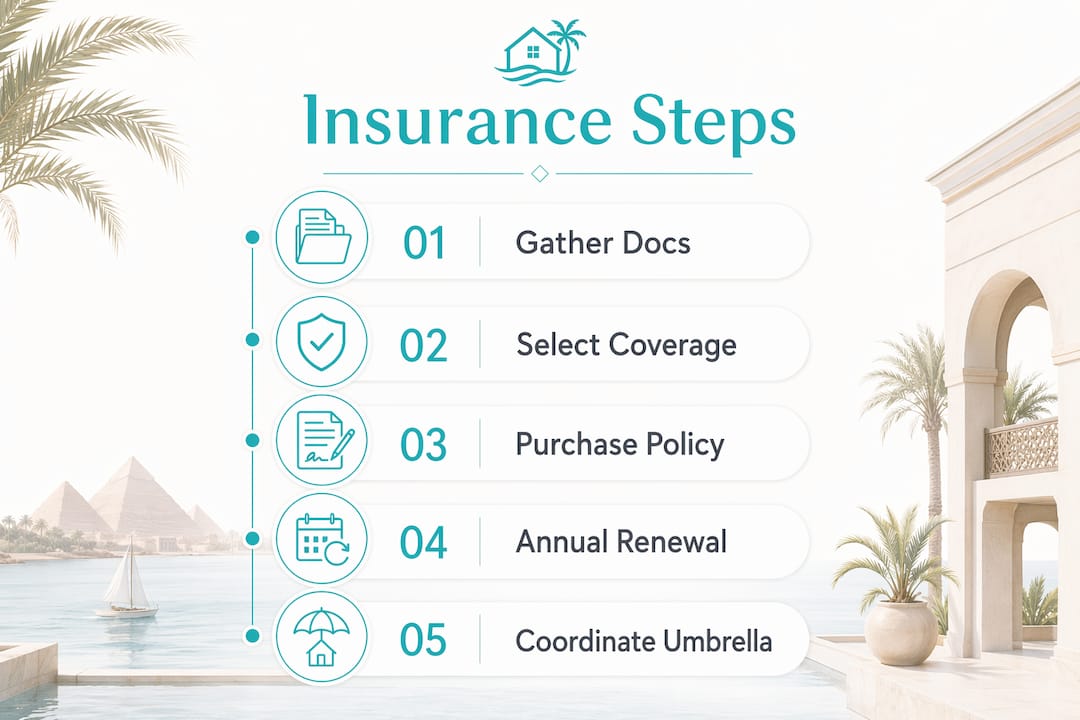
Getting insured in Egypt follows a clear sequence. Budget an additional 10–20% of the purchase price to cover taxes, legal fees, closing costs, and insurance. That overhead is real and should be planned for before you commit to a purchase.
| Step | Action |
|---|---|
| 1. Identify licensed insurers | Confirm providers are licensed by the Egyptian Financial Regulatory Authority |
| 2. Gather property documents | Collect ownership certificate, floor plans, and property valuation |
| 3. Request multiple quotes | Compare coverage terms, not just premium price |
| 4. Select coverage and riders | Add vacancy, earthquake, and liability endorsements as needed |
| 5. Confirm umbrella alignment | Verify local liability limits meet your umbrella policy's minimums |
| 6. Purchase and document | Keep policy documents in both English and Arabic if possible |
| 7. Renew annually | Set a calendar reminder 60 days before expiry to review and renew |
Follow these steps in order:
- Open a local Egyptian bank account to pay premiums directly. This simplifies the payment process and satisfies some insurer requirements. Padsabroad can guide you through opening a bank account in Egypt as part of the purchase process.
- Work with a local broker to identify the right policy structure for your property type and usage.
- Confirm all riders are active before you take possession of the property.
- Notify your U.S. umbrella insurer in writing that you have acquired a foreign property and provide the local policy details.
- Keep a cash reserve to cover your deductible. Natural disaster deductibles are often calculated as a percentage of the insured dwelling value, which can mean a large out-of-pocket amount after a major event.
- Review coverage every year. Property values, rental income, and local regulations all change, and your policy should reflect current conditions.
Key takeaways
Insuring property overseas in Egypt requires a locally admitted policy, the right riders, and active coordination with any U.S. umbrella liability coverage you carry.
| Point | Details |
|---|---|
| Local policy is mandatory | Domestic policies exclude foreign real estate; Egyptian law requires a locally licensed insurer. |
| Vacancy clauses are a real risk | Properties empty for more than 30–60 days need an unoccupied endorsement to maintain coverage. |
| Insure at rebuild cost | Market value and rebuild cost differ; insuring at purchase price creates a claims shortfall. |
| Umbrella coordination matters | Local liability limits must meet $300,000–$500,000 minimums to avoid gaps in umbrella coverage. |
| Tax reporting is required | Rental property premiums may be deductible, but foreign premium accounts can trigger FBAR and FATCA obligations. |
What Padsabroad has learned about insuring overseas properties
Buyers consistently underestimate how different overseas insurance is from what they know at home. The assumption that a U.S. or UK policy travels with you is the single most dangerous belief in international real estate. It does not. Every property in Egypt needs its own locally admitted policy, and that policy needs to be built correctly from day one.
The second thing most buyers get wrong is the vacancy clause. If you buy a holiday apartment in Hurghada and leave it empty for three months, a standard policy may treat that as a lapsed coverage event. The fix is simple: ask for the unoccupied endorsement before you need it, not after a claim is denied.
Deductible strategy is worth thinking about carefully. Raising your structural deductible to reduce premiums makes sense if you hold cash reserves. It does not make sense if a large loss would leave you unable to fund repairs while waiting on a partial payout. Be honest about your financial position before choosing a high-deductible structure.
Finally, review your coverage every year. Egyptian property markets in areas like El Gouna and Soma Bay have seen consistent demand from international buyers. Property values shift, and your insured rebuild cost should shift with them. A policy you set up at purchase may be significantly underinsured three years later if you have not revisited it.
— Padsabroad
Padsabroad helps you protect your overseas investment
Buying property in Egypt is a well-established path for international investors, and getting the insurance right is a core part of that process. Padsabroad works with buyers across Hurghada, El Gouna, Sahl Hasheesh, Soma Bay, Marsa Alam, and Port Ghalib to connect them with the right local professionals, including licensed insurers who understand the specific requirements for foreign-owned property.
Whether you are purchasing your first overseas property or adding to an existing portfolio, Padsabroad's team can help you understand local insurance requirements, identify the right coverage structure, and avoid the gaps that catch most buyers off guard. Visit Padsabroad's overseas property specialists to start a conversation about your Egyptian property purchase and protection plan.
FAQ
Does my U.S. home insurance cover property in Egypt?
No. Standard domestic policies exclude foreign real estate entirely. You must purchase a separate policy from an Egyptian licensed insurer.
What coverage does Egyptian property insurance typically include?
Most Egyptian policies cover fire, theft, natural disasters, and third-party liability. Earthquake and political risk coverage require separate riders and are not automatically included.
How much should I budget for insurance when buying in Egypt?
Budget an additional 10–20% of the purchase price to cover all closing costs, taxes, legal fees, and insurance combined. Insurance premiums represent a portion of that total.
What happens if my property in Egypt sits empty for months?
Vacancy clauses in most policies suspend coverage after 30–60 days of unoccupancy. You need an unoccupied home endorsement to keep your coverage active during extended vacant periods.
Are overseas property insurance premiums tax deductible in the U.S.?
Premiums on rental properties abroad are deductible as rental expenses under IRS Publication 527. However, foreign accounts used to pay those premiums may require FBAR and FATCA reporting to avoid penalties.