
Red Sea property infrastructure is defined as the integrated network of transportation hubs, resort clusters, utilities, and logistics systems that make luxury real estate investment viable in Saudi Arabia's Tabuk region. The Red Sea Project covers 28,000 square kilometers and targets 50 hotels, 8,000 rooms, and over 1,000 residential properties by 2030. That scale places it among the most ambitious tourism real estate programs in the world. Backed by Saudi Arabia's Public Investment Fund and governed under regenerative tourism principles, the project sets a clear standard for infrastructure-led property development. For investors and homebuyers evaluating the Red Sea property market, understanding what has been built, what is planned, and how it all connects is the foundation of any sound investment decision.
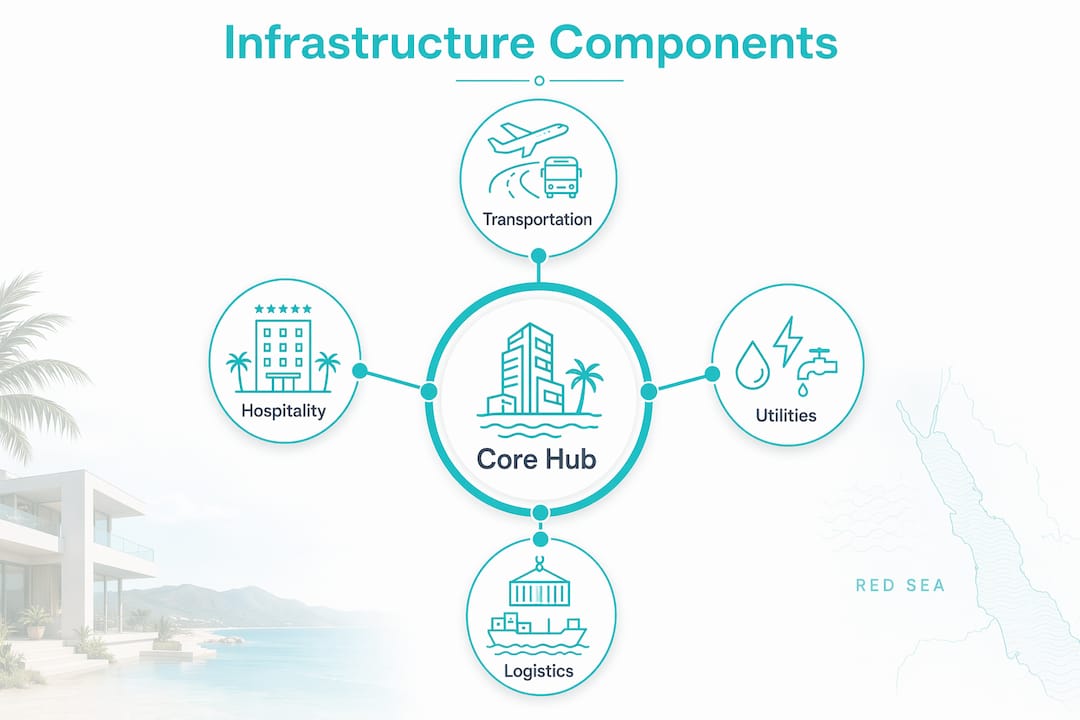
What are the key infrastructure components supporting Red Sea property development?
Red Sea property infrastructure explained in practical terms means four interconnected systems: transportation, hospitality clusters, utilities, and logistics. Each system directly affects property accessibility, occupancy rates, and long-term asset value.
Transportation and connectivity
Red Sea International Airport became operational for domestic flights in 2023 and opened to international routes in 2024. It handles up to 3 million passengers annually. That capacity is the primary gateway for resort guests and property owners arriving from international markets. Without reliable airlift, even the most well-built resort loses occupancy and rental income potential.
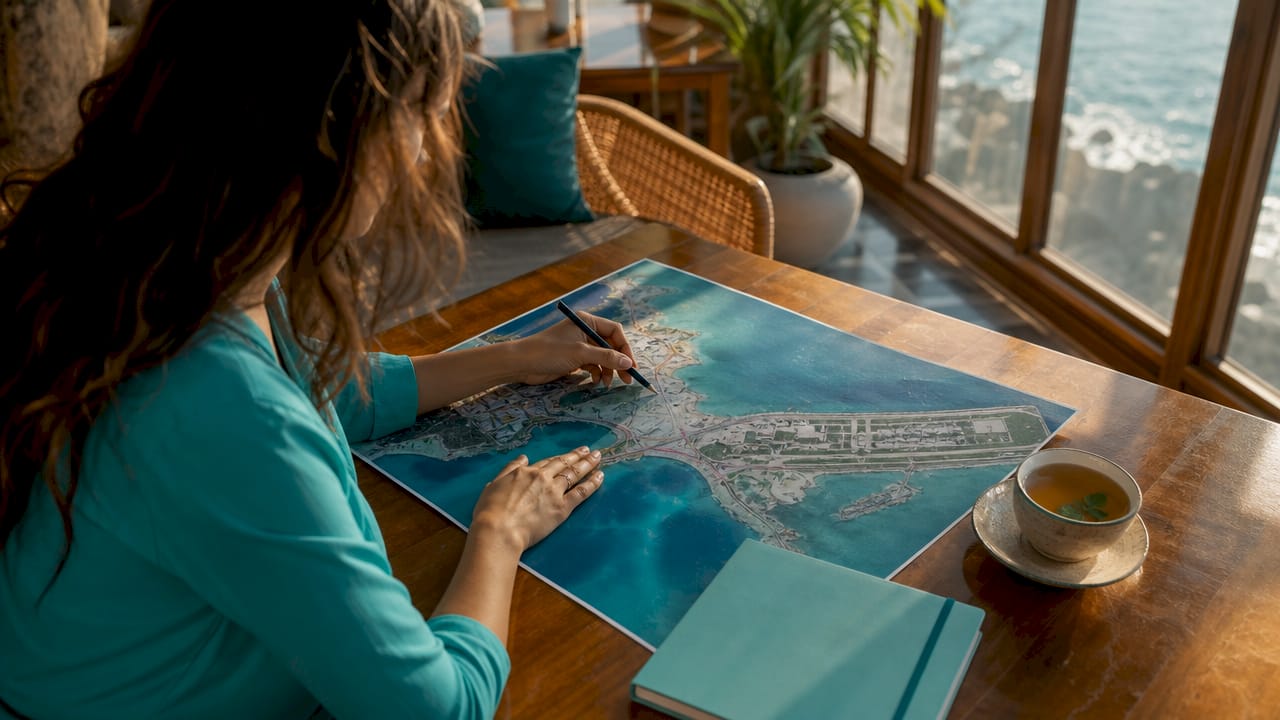
Shura Island serves as the project's main gateway hub. It hosts 11 hotels and connects to the mainland via Saudi Arabia's longest water bridge at 1.2 kilometers. That bridge is not just a landmark. It is the physical link that makes island property accessible for daily operations, supply deliveries, and guest arrivals.
Hospitality and residential clusters
The project uses a hub-and-spoke layout, spreading resort and residential assets across island hubs and inland sites. This design reduces congestion at any single location and creates distinct property zones with different price points and lifestyle profiles. Investors can choose between island-facing luxury units and quieter inland residential clusters depending on their goals.
Utilities and sustainability systems
The infrastructure includes a renewable energy microgrid designed to power the entire destination without relying on Saudi Arabia's national grid. This matters for property investors because energy reliability directly affects resort operations and maintenance costs. Sustainable utility systems also support the project's regenerative tourism certification, which protects long-term destination appeal.
Logistics and supply chain
The Red Sea Express maritime cargo service, launched by may 2026, connects Saudi Arabia, Egypt, and Jordan using vessels with 1,100 TEU capacity. It links the ports of Yanbu, Ain Sokhna, and Aqaba. That connection reduces construction and supply costs across the region, which benefits phased development timelines and keeps property delivery schedules on track.
| Infrastructure Element | Current Status | Investor Relevance |
|---|---|---|
| Red Sea International Airport | Operational (domestic 2023, international 2024) | Primary guest and owner access point |
| Shura Island water bridge | Operational (1.2 km) | Island property accessibility |
| Renewable energy microgrid | Active | Reduces operating costs, supports sustainability |
| Red Sea Express cargo link | Launched by may 2026 | Supports construction supply chain |
| Resort and residential clusters | Phased openings ongoing | Defines property zone options |
Pro Tip: When evaluating a specific property, check whether it sits within an operational resort cluster or a future-phase zone. Properties in active clusters carry lower occupancy risk from day one.
How does infrastructure influence investment potential in the Red Sea region?
Infrastructure quality is the single biggest driver of property value in emerging luxury destinations. The Red Sea region is no exception.
The hub-and-spoke layout creates natural scarcity. Island properties near Shura Island command premium pricing because access is physically limited by the water bridge and ferry systems. Inland sites offer more supply but less exclusivity. That difference shapes how you should price risk and expected returns across different asset types.
The capped visitor model of 1 million annual visitors is a deliberate policy choice, not a capacity limitation. It protects the destination's luxury positioning by preventing mass-market tourism from eroding the experience. For property investors, that cap means demand for accommodation stays concentrated among high-spending guests, which supports premium rental rates.
Private sector involvement is accelerating. The SAR 2.6 billion Four Seasons joint venture resort at Shura Island opened in may 2026, marking the project's shift from purely state-funded construction to multi-partner development. That shift signals growing institutional confidence in the destination's commercial viability.
Key investment signals to monitor:
- Airport flight schedules: Airlift capacity directly controls occupancy. Expanded international routes increase rental demand faster than any marketing campaign.
- Resort opening timelines: Each new resort opening adds amenities that raise property values across neighboring clusters.
- Visitor cap enforcement: Consistent enforcement of the 1 million visitor ceiling protects premium pricing for existing property owners.
- Private sector partnerships: New joint ventures signal that commercial operators see viable returns, which reduces investment risk for individual buyers.
The 25-year Public Investment Fund horizon means governance stability is built into the project's structure. Short-term political or budget changes are unlikely to derail infrastructure commitments at this scale. That long timeline reduces the volatility risk that typically affects emerging market real estate.
What regulatory and legal frameworks govern Red Sea property investment?
Foreign investment in Red Sea property operates under Saudi Arabia's specific ownership laws and requires strict compliance with official release processes. This is not a market where you can browse open listings and make an offer the same week.
The key regulatory steps for foreign investors are:
- Verify ownership eligibility. Saudi Arabia restricts foreign freehold ownership in certain zones. Investors must confirm whether a specific property falls under an approved foreign ownership category before proceeding.
- Monitor official property releases. Authorized developers release properties through official channels. Open market listings do not always reflect the full range of available options, and some listings may not carry the legal clearances required for foreign buyers.
- Engage approved legal counsel. Saudi property law requires transaction documentation in Arabic, and foreign buyers need locally licensed legal representation to complete purchases.
- Confirm investment compliance. Foreign investors must meet Saudi Arabia's investment regulations, which may include minimum investment thresholds or residency-linked conditions depending on the property type.
- Track governance updates. The Public Investment Fund's 25-year horizon means policies evolve. Staying current with official announcements from Red Sea Global protects buyers from compliance gaps.
Understanding overseas property ownership rules before committing capital is the most practical step any international buyer can take. The legal framework is manageable, but it requires preparation.
Pro Tip: Do not rely solely on developer marketing materials to confirm ownership rights. Request the official title deed classification and cross-check it against Saudi Arabia's Foreign Investment Law before signing any agreement.
What practical considerations should investors know about Red Sea infrastructure today?
Several resorts and Red Sea International Airport are currently operational as of 2026, with phased expansions continuing. That means the destination is generating real revenue and real occupancy data, not just projections. Investors can now evaluate actual performance metrics rather than relying entirely on feasibility studies.
Current operational realities to factor into your decision:
- Airport route expansion is ongoing. International routes launched in 2024, but the full schedule is still building. Limited flight options from key source markets remain a short-term constraint on occupancy growth.
- Phased resort openings create uneven infrastructure maturity. Properties near early-phase resorts benefit from established amenities. Properties in later phases may wait years before surrounding infrastructure reaches full capacity.
- The Red Sea Express cargo link reduces construction delays. Faster supply chain connections between Saudi Arabia, Egypt, and Jordan mean future development phases are less exposed to material shortages.
- Rental income projections depend on airlift. Any property marketed as a rental investment should be stress-tested against current flight schedules, not projected future routes.
Investors exploring the broader Red Sea coastal corridor, including areas along Egypt's coast such as Hurghada and Sahl Hasheesh, will find that Red Sea property affordability varies significantly by location and infrastructure maturity. Egypt's Red Sea coast offers a more established tourism infrastructure with decades of operational history, which changes the risk profile considerably compared to Saudi Arabia's newer developments.
The most common investment mistake in this market is buying based on projected infrastructure rather than confirmed delivery. Phased projects always carry timeline risk. Matching your investment horizon to the infrastructure delivery schedule is the clearest way to manage that risk.
Key Takeaways
Red Sea property infrastructure is the defining factor in investment viability, and buyers who understand its current state and delivery timeline make significantly better decisions than those who rely on marketing projections alone.
| Point | Details |
|---|---|
| Project scale | 28,000 sq km, 50 hotels, 8,000 rooms, and 1,000+ residential units targeted by 2030. |
| Airport access | Red Sea International Airport handles 3 million passengers annually and is the primary investment gateway. |
| Visitor cap protects value | A 1 million annual visitor ceiling maintains luxury positioning and supports premium rental rates. |
| Regulatory compliance | Foreign buyers must track official property releases and comply with Saudi ownership laws before purchasing. |
| Infrastructure timing risk | Match your investment horizon to confirmed infrastructure delivery, not projected completion dates. |
Padsabroad's perspective on Red Sea infrastructure and long-term investment
The Red Sea project is genuinely different from most emerging luxury destinations. The infrastructure investment is real, the governance is backed by sovereign capital, and the sustainability model is more than marketing language. Those are meaningful advantages for long-term property investors.
That said, airlift remains the variable that most investors underestimate. A destination with 3 million passenger capacity at its airport means nothing if international airlines have not committed to regular routes from your target rental market. Occupancy follows flights, not resort openings. Investors who track airline route announcements as closely as they track resort launches will be better positioned to time their entry.
The shift toward private sector joint ventures, evidenced by the Four Seasons opening at Shura Island, is the clearest signal that the destination has crossed from aspiration to commercial reality. When global hospitality brands commit SAR 2.6 billion to a joint venture, they have done the due diligence. That validation matters.
For buyers considering the broader Red Sea corridor, including Egypt's established coastal markets, the infrastructure story is equally important but plays out differently. Egypt's Red Sea coast has decades of operational tourism infrastructure, which reduces delivery risk while offering a different price-to-yield profile. Understanding both markets gives you a stronger basis for comparison.
— Padsabroad
Padsabroad can help you navigate Red Sea property opportunities
Red Sea property investment requires current market knowledge, legal clarity, and access to listings that do not always appear on open platforms. Padsabroad specializes in helping international buyers purchase and invest in real estate across the Red Sea coastal corridor, including Egypt's established resort towns of Hurghada, El Gouna, Sahl Hasheesh, Soma Bay, and Marsa Alam.
Whether you are evaluating your first overseas purchase or adding a Red Sea asset to an existing portfolio, the team at Padsabroad provides direct access to verified listings, legal guidance, and on-the-ground market insight. The Red Sea property market rewards buyers who move with accurate information. Padsabroad gives you exactly that.
FAQ
What is Red Sea property infrastructure?
Red Sea property infrastructure refers to the transportation, hospitality, utilities, and logistics systems that support luxury real estate development in Saudi Arabia's Tabuk region. It includes Red Sea International Airport, resort clusters, a renewable energy microgrid, and maritime cargo links.
Is Red Sea International Airport fully operational?
Red Sea International Airport has been operational for domestic flights since 2023 and international flights since 2024, with a capacity of up to 3 million passengers annually.
Can foreigners buy property in the Red Sea project?
Foreign buyers can invest in Red Sea project properties, but must comply with Saudi Arabia's specific ownership laws and purchase only through official property releases from authorized developers.
How does the visitor cap affect property investment?
The Red Sea destination enforces a cap of 1 million annual visitors to maintain its luxury positioning. That limit concentrates demand among high-spending guests, which supports premium rental rates and property values.
What is the investment timeline for the Red Sea project?
The Red Sea Project operates under a 25-year investment horizon backed by Saudi Arabia's Public Investment Fund, with 50 hotels and over 1,000 residential properties targeted for completion by 2030.