Cairo's real estate market is expanding due to three converging forces: government-led urban restructuring, large-scale foreign direct investment from Gulf Cooperation Council countries, and rising housing demand that outpaces existing supply. The Egyptian government is actively relocating administrative functions to new satellite cities, while the UAE alone accounts for 68.7% of inward FDI to Egypt in FY 2023/24. Understanding why Cairo real estate is expanding requires looking at all three drivers together, not in isolation. The market entered a correction phase in Q1 2026, but that signals maturation, not decline.
Why is Cairo real estate expanding so rapidly right now?
Cairo's property market growth is rooted in a deliberate government strategy to redistribute population and economic activity across multiple urban centers. Egypt currently has $120 billion worth of projects under development, with $50.8 billion in active construction. That scale of investment does not happen by accident. It reflects a national policy decision to build new cities rather than patch an overcrowded historic core.
The new administrative capital, located east of Cairo, is designed to house 6.5 million residents and relocate more than 30 government ministries. This relocation reduces pressure on central Cairo's aging infrastructure and creates entirely new demand corridors in the east. Investors who recognized this shift early have seen strong capital appreciation in areas that were farmland a decade ago.
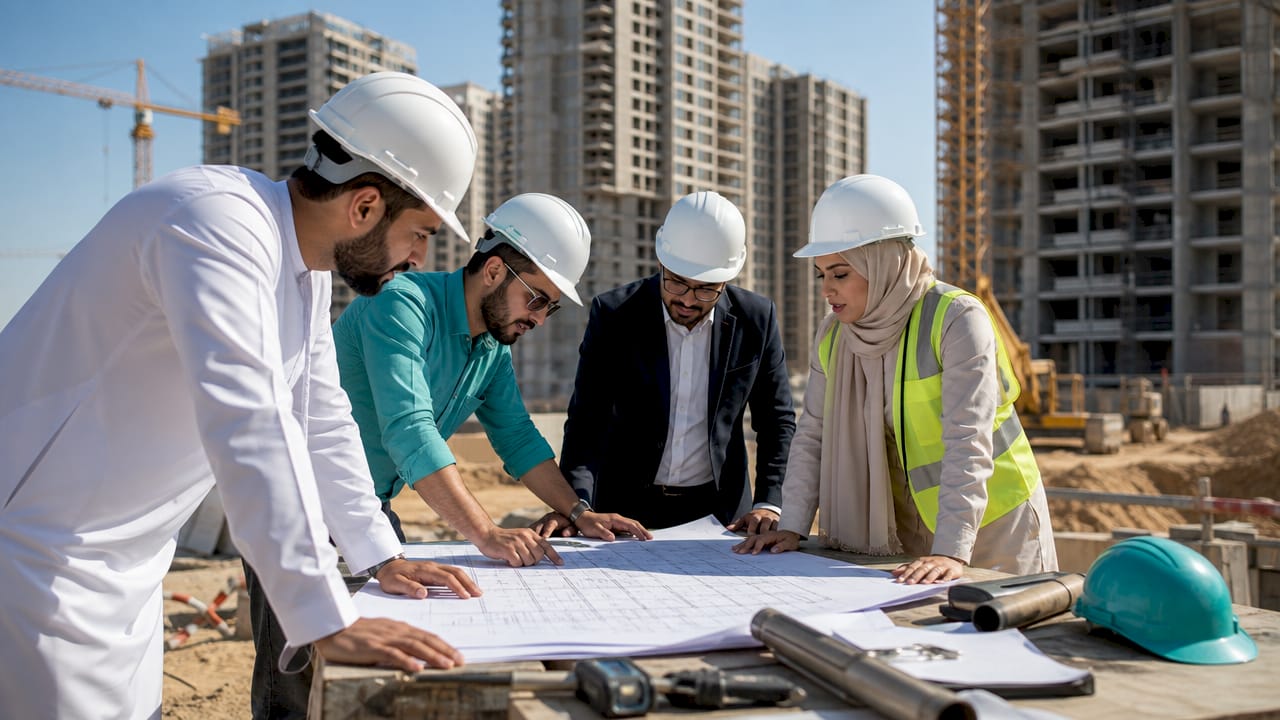
Analysts describe Cairo's multi-center urban strategy as a long-term value creation mechanism. By spreading population and commerce across several nodes, the government avoids the bottleneck that has historically suppressed Cairo's productivity. For investors, each new urban node represents a fresh demand cycle.
Key urban development projects reshaping demand
- New Administrative Capital: Designed for 6.5 million residents, housing 30+ ministries, and anchoring the eastern expansion corridor
- New Cairo satellite districts: Mixed-use communities combining residential, retail, and office space in planned environments
- North Coast development zones: Government-backed coastal infrastructure supporting second-home and resort-style residential demand
- Road and transit upgrades: Highway expansions connecting new cities to Cairo's core, making peripheral locations viable for daily commuters
Pro Tip: When evaluating property in new urban corridors, check whether government ministries or anchor employers have already relocated nearby. Confirmed institutional presence accelerates residential demand faster than any marketing campaign.
How does foreign investment shape Cairo's property market growth?
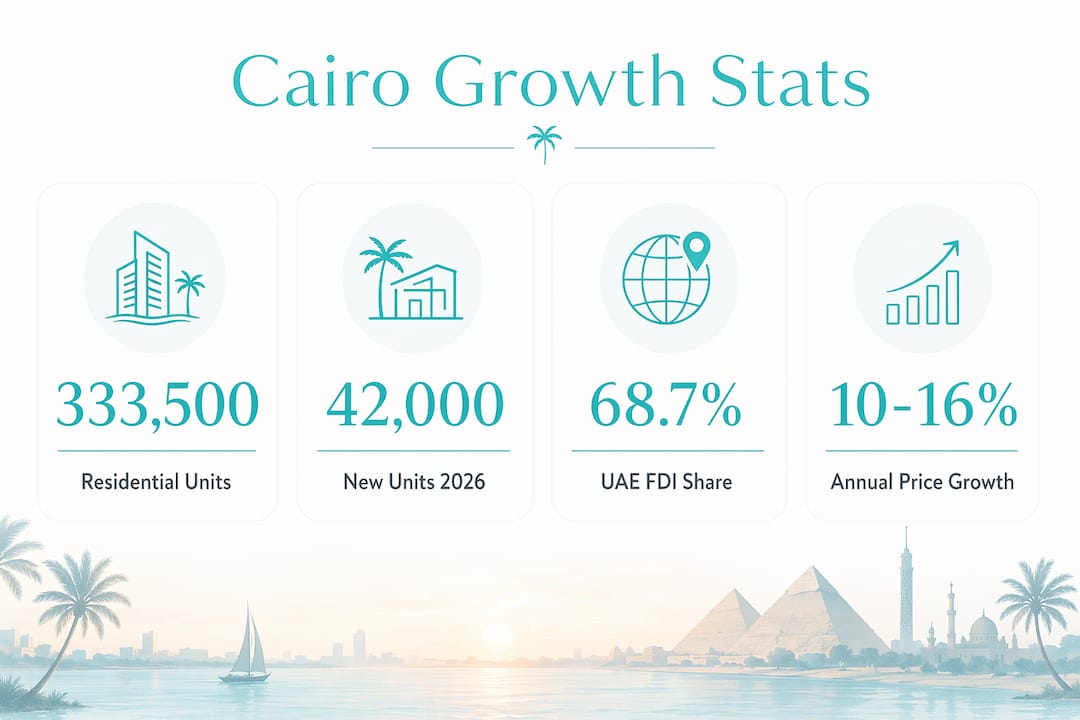
GCC capital is the single largest external driver of Cairo real estate trends. The UAE's 68.7% share of Egypt's inward FDI in FY 2023/24 is not a marginal contribution. It is the dominant force shaping which projects get built, at what price point, and with what amenities.
This capital flows primarily into branded luxury residences and integrated communities. These are large-scale developments that bundle housing with schools, hospitals, retail, and leisure facilities inside a single master plan. The appeal to Gulf investors is clear: they recognize the format from Abu Dhabi and Dubai, and they trust the model. For Egyptian buyers with the means to participate, these communities offer a lifestyle upgrade that older Cairo neighborhoods cannot match.
The sustainability concern is real, however. Only about 7% of local households can afford annual tuition fees of EGP 65,000 or more, which are often bundled into the premium community model. That gap between luxury supply and local purchasing power is the market's most significant structural risk. Developers who ignore it are building for a narrow slice of the population.
Regulatory approvals for GCC-backed projects have accelerated in recent years. Egypt has simplified foreign ownership rules and fast-tracked permits for large-scale developments. That efficiency attracts more capital, which in turn funds more projects. The cycle reinforces itself, but it also concentrates risk in the premium segment.
Pro Tip: If you are evaluating a GCC-backed integrated community, assess the affordability of its bundled services independently. A beautiful development with unaffordable schools and clinics will struggle to retain residents long-term, which affects resale values.
What market trends and challenges define Cairo real estate in 2026?
Cairo's property market entered a correction phase in Q1 2026, and that is actually good news for long-term investors. Egypt's top developers recorded EGP 271 billion in contracted sales during Q1 2026, a 6.5% year-over-year decline. Sales volume fell, but prices did not. Annual price growth is projected at 10%–16%, which means the market is consolidating rather than collapsing.
This distinction matters. A correction that reduces speculative flipping while maintaining price growth is a sign of market maturation. Developers are now competing on quality and delivery track record rather than on who can launch the most units fastest. That shift benefits buyers and long-term investors who prioritize stability over short-term gains.
Currency volatility and inflation have forced developers to adjust pricing and leasing strategies after the Egyptian pound's depreciation. Some developers now price units in US dollars or link payment plans to dollar benchmarks. This protects developer margins but adds complexity for local buyers. For international investors, dollar-linked pricing can actually reduce currency risk.
Cairo real estate market snapshot: Q1 2026
| Metric | Value |
|---|---|
| Residential stock | 333,500 units |
| New units expected in 2026 | ~42,000 |
| Top developer contracted sales | EGP 271 billion |
| Year-over-year sales change | -6.5% |
| Projected annual price growth | 10%–16% |
| Flexible office space growth (2025) | 300% |
Flexible office solutions grew by 300% in 2025, reflecting a structural shift in how businesses use commercial space. Traditional long-term office leases are losing ground to co-working and short-term arrangements. Investors in commercial real estate need to account for this shift when assessing office-heavy mixed-use developments.
Egypt's residential stock reached 333,500 units in Q1 2026, with roughly 42,000 new units expected to enter supply by year's end. That pipeline is substantial, but demand from Cairo's growing population continues to absorb new supply. The housing demand increase is structural, not cyclical.
Which neighborhoods and segments are growing fastest?
New Cairo and the eastern expansion corridor are the primary growth hubs. These areas sit closest to the new administrative capital and benefit directly from government relocation activity. Demand here comes from civil servants, private sector employees following institutional clients, and investors anticipating long-term appreciation.
The North Coast and Ras El Hekma represent a different but equally strong growth story. North Coast and Eastern Cairo developments have generated cumulative sales exceeding EGP 180 billion, driven by holiday home demand and resort-style integrated communities. For a comparison of how Cairo's growth compares to Egypt's coastal markets, Padsabroad's Cairo vs. coastal Egypt guide breaks down the regional distinctions clearly.
The fastest-growing property segments share common characteristics:
- Integrated master-planned communities: Offer self-contained amenities that attract premium buyers and corporate tenants
- Holiday and second-home developments: Coastal projects near Ras El Hekma and the North Coast benefit from both domestic and international demand
- Mixed-use hospitality projects: Combine branded hotel components with residential units, generating rental income alongside capital appreciation
- Mid-market residential in new corridors: Positioned to capture demand from the large segment of Cairo's population that cannot afford premium projects but needs modern housing near employment centers
How can investors capitalize on Cairo's real estate opportunities in 2026?
Investor success in 2026 increasingly depends on selecting developers with proven balance sheets and conservative growth strategies. The correction phase has separated financially sound developers from those who relied on speculative presales to fund construction. Choosing the wrong developer in a maturing market carries real delivery risk.
Currency volatility requires a clear pricing strategy before you commit. Dollar-linked payment plans protect against further Egyptian pound depreciation but require foreign currency access. If you are investing from the UK, Europe, or the Gulf, dollar-linked pricing may actually work in your favor. For a detailed breakdown of return expectations, Padsabroad's Egypt real estate ROI guide covers the key metrics investors should track.
Key considerations for informed investment decisions:
- Developer track record: Prioritize developers who have delivered completed projects on schedule, especially post-2022 when currency pressures tested balance sheets
- Pricing currency: Clarify whether the contract price is in Egyptian pounds or US dollars, and understand the implications for your total cost
- Community completeness: Assess whether promised amenities are already built or still planned. Delivered infrastructure commands a premium and carries less risk
- Affordability of the surrounding market: Projects in areas where local buyers can participate in the resale market are more liquid than ultra-premium developments with a narrow buyer pool
- Portfolio diversification: Combining a Cairo urban asset with a coastal property, such as a Red Sea apartment, spreads risk across different demand drivers
Pro Tip: Ask developers for a list of completed projects and visit at least one before signing. A developer who has delivered before is far more likely to deliver again than one whose portfolio is entirely off-plan.
For investors new to Egypt's market, Padsabroad's Egypt market entry strategy guide provides a structured framework for evaluating entry timing and risk.
Key Takeaways
Cairo's real estate market is expanding because government urban restructuring, GCC foreign investment, and structural housing demand are all accelerating simultaneously, making 2026 a pivotal year for informed investors.
| Point | Details |
|---|---|
| Urban restructuring drives demand | The new administrative capital and satellite cities create fresh demand corridors outside historic Cairo. |
| GCC investment shapes supply | UAE-led FDI dominates new luxury and integrated community development, but affordability gaps remain. |
| Market correction signals maturity | A 6.5% sales decline with 10%–16% price growth means consolidation, not collapse. |
| Fastest growth in east and coast | New Cairo, the North Coast, and Ras El Hekma lead in sales volume and capital appreciation. |
| Developer selection is critical | In a maturing market, proven delivery track records matter more than launch prices or marketing. |
Padsabroad's view on Cairo's long-term market direction
Cairo's multi-center strategy is one of the most ambitious urban restructuring programs in the Middle East and North Africa region. Having worked with international buyers entering Egypt's market, I see the long-term logic clearly. Spreading population and economic activity across multiple urban nodes reduces the single-point-of-failure risk that has historically made Cairo's infrastructure fragile. That is a genuine structural improvement, not just a marketing narrative.
The correction phase does not concern me. Markets that grow without correction tend to build up fragility. A 6.5% sales decline while prices still rise 10%–16% annually is exactly the kind of healthy adjustment that separates sustainable growth from a bubble. The developers who survive this phase will be the ones worth backing in the next cycle.
My honest concern is the affordability gap. A market where only 7% of local households can access the premium segment is not a stable market. It is a market that depends entirely on foreign buyers and high-net-worth locals. That concentration of demand is a risk, and investors should price it into their expectations. The mid-market segment, which is currently underserved, represents the most durable long-term opportunity.
For international investors, the combination of dollar-linked pricing, strong price growth, and a government committed to infrastructure investment makes Cairo genuinely attractive. The key is patience and selectivity. Buy from developers who have delivered. Choose locations with confirmed institutional anchors. And do not ignore the coastal market as a complement to any Cairo position.
— Padsabroad
Padsabroad can help you invest in Egypt with confidence
Cairo's expanding property market offers real opportunities, but navigating developer quality, pricing structures, and legal requirements from abroad takes specialist knowledge. Padsabroad works with international buyers at every stage of the Egypt property purchase process, from initial market research through to completion and beyond.

Whether you are looking at Cairo's new urban corridors or considering a coastal property alongside your investment, Padsabroad's team provides clear, practical guidance tailored to your situation. The buy property in Egypt safely resource covers the legal framework, developer due diligence, and payment structures you need to understand before committing. If you are new to Egypt's market, the first-time buyer guide is the right starting point.
FAQ
Why is Cairo's real estate market growing in 2026?
Cairo's market is growing due to government-led urban restructuring, GCC foreign direct investment, and structural housing demand. Egypt has $120 billion in active development projects, anchored by the new administrative capital east of Cairo.
Is Cairo real estate a good investment right now?
The market is in a correction phase with a 6.5% sales decline in Q1 2026, but annual price growth of 10%–16% continues. Long-term investors who select financially sound developers stand to benefit from sustained appreciation.
Which areas of Cairo are growing fastest?
New Cairo and the eastern expansion corridor are the primary growth hubs, driven by proximity to the new administrative capital. The North Coast and Ras El Hekma also show strong sales, particularly for holiday homes and integrated resort communities.
How does GCC investment affect Cairo's property market?
The UAE accounts for 68.7% of Egypt's inward FDI, funding branded luxury residences and integrated communities. This capital raises supply quality but also creates an affordability gap, since only a small share of local households can access premium developments.
What risks should investors watch in Cairo's real estate market?
The main risks are developer delivery risk in a consolidating market, currency volatility affecting pricing, and the affordability gap between luxury supply and local purchasing power. Selecting developers with completed project track records reduces the most significant of these risks.