
An exit strategy for overseas real estate investment is a formal, pre-planned approach designed to maximize profit and minimize risk when selling foreign property. Most investors focus heavily on the purchase decision and neglect the exit entirely. That gap costs real money. Selling overseas property is a financial strategy incorporating tax, legal, and currency aspects, not just a simple transaction. Markets like Egypt's Red Sea coast, Dubai, and coastal Spain each have distinct buyer pools, tax regimes, and seasonal demand patterns that shape how and when you exit. Getting the plan right before you buy is the single most effective thing you can do to protect your returns.
What components are essential in a formal exit strategy for international property?
A formal written exit strategy created at property reservation should include buyer profiles, pricing targets, tax mapping, and documentation audits. Starting at reservation, not at the point of sale, gives you time to fix problems before they freeze a deal.
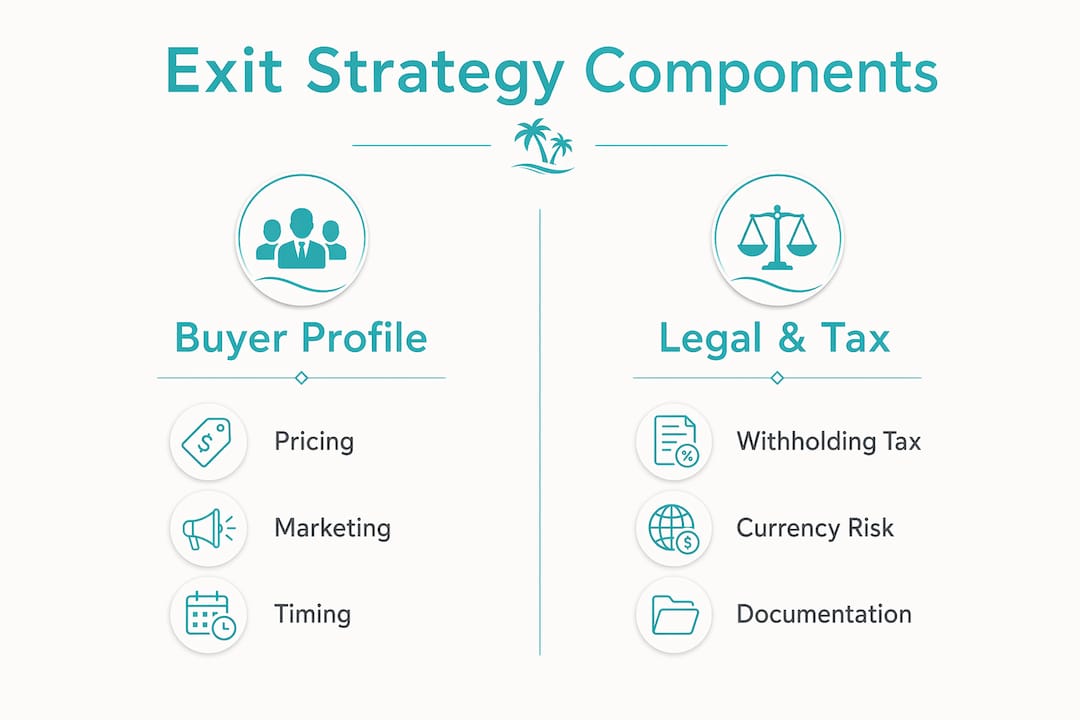
Every exit plan needs these core components:
- Buyer profile: Identify who will buy from you. In Egypt's Red Sea resorts, your buyers are typically European tourists, expats working in the Gulf, or retirees seeking warm-weather second homes. Knowing your buyer shapes your pricing, marketing channel, and listing timing.
- Pricing scenarios: Build three cases. A base case reflects current market value. A downside case accounts for a forced or fast sale. An upside case captures peak demand pricing. Having all three written down prevents panic decisions.
- Tax mapping: Identify capital gains tax rates, withholding tax obligations, and any available exemptions at the property location before you buy. Tax obligations do not disappear because you live abroad.
- Documentation audit: Confirm title registration, seller authority, and banking documentation are clean. Pre-listing exit assessments that address title cleanup and banking documentation preemptively remove the administrative risks that delay closings.
- Regulatory compliance: Verify land registry alignment and any local transfer restrictions. In Egypt, foreign ownership rules and land registry procedures require specific documentation that must be prepared well in advance.
Pro Tip: Request a formal exit assessment from a local attorney before you list. This one step catches title gaps, missing seller authority documents, and banking compliance issues that routinely delay or kill sales.
| Component | Why it matters |
|---|---|
| Buyer profile | Shapes pricing, marketing channel, and listing window |
| Three-scenario pricing | Prevents reactive decisions under market pressure |
| Tax mapping | Avoids surprise withholding or capital gains liabilities |
| Documentation audit | Removes title and banking issues before listing |
| Regulatory compliance | Confirms land registry alignment and transfer eligibility |
How do tax implications and currency management affect overseas real estate exits?
Tax and currency management are the two areas where international investors lose the most money on exit. Both require active planning, not reactive fixes.

Understanding withholding taxes
Foreign withholding taxes legally freeze a portion of sale proceeds until tax filings reconcile the amounts. Australia's Foreign Resident Capital Gains Withholding regime applies a 15% withholding on all property sales regardless of price, and sellers must obtain a variation certificate before settlement or face that withholding at closing. The United States applies a similar mechanism through FIRPTA. These regimes exist to ensure foreign sellers pay local tax. Failing to prepare the right documentation in advance means your funds are frozen at settlement, sometimes for months.
Double taxation and treaty limitations
Tax treaties do not guarantee equal double-tax relief. Some countries ignore cost basis or exit taxes already paid, making comprehensive tax records essential. Most treaties give the property location country primary taxation rights. Your country of residence may then apply its own rules on top, with varying credit or exemption outcomes. The practical implication is clear: never assume a treaty protects you fully. Maintain detailed filings, fair market valuations, and all purchase cost documentation from day one.
A critical misconception trips up many investors:
Many investors mistakenly believe tax-neutral residency exempts them from home-country capital gains taxes. Immovable property tax applies where the property is located, regardless of owner residence. Repatriating funds to a low-tax jurisdiction like Dubai does not eliminate the tax liability at the property location.
Currency risk on exit
Poor exchange rate planning can erode net proceeds significantly. Currency exchange is not an afterthought. If you sell an Egyptian property priced in Egyptian pounds and repatriate proceeds to British pounds or euros, the exchange rate at conversion directly affects your real return. Holding proceeds and timing conversion strategically, or using forward contracts through a specialist FX provider, protects value. For guidance on cross-border money movement, Padsabroad's currency transfer guide covers the key mechanics in detail.
When is the best time to execute an exit in overseas property markets?
Timing a foreign investment liquidation correctly can add months of rental income or tens of thousands in sale price. Getting it wrong adds months to your time on market.
- Align with peak buyer seasons. On the Costa del Sol, peak buyer activity runs february through june and september through november. Misaligned listing times can add months to a sale. Egypt's Red Sea coast follows a similar pattern, with European buyer interest peaking in the cooler months from october through april when tourist traffic is highest.
- Capture off-plan appreciation windows. Dubai investors often exit off-plan properties 12–18 months before completion to capture 10–20% price appreciation and avoid long-term landlord responsibilities. Similar off-plan assignment opportunities exist in Egyptian resort developments, where early buyers can assign contracts before handover.
- Assess micro-market liquidity. Not all areas within a market move together. In Egypt, Hurghada and El Gouna attract different buyer profiles than Marsa Alam or Port Ghalib. Liquidity, pricing, and time on market vary significantly between these locations. Understanding your specific micro-market is as important as understanding the national trend.
- Prepare the property before listing. Presentation quality directly affects time to sale. Furnished, well-photographed properties in resort markets sell faster and at higher prices than bare units. This is especially true for buyers purchasing remotely.
- Monitor currency windows alongside market timing. The best sale price in local currency can still produce a poor return if you convert at an unfavorable rate. Coordinate your sale timing with your FX strategy.
Pro Tip: For Egypt-specific timing, review the coastal vs. Cairo market dynamics before setting your listing date. Coastal resort markets and urban markets operate on different seasonal cycles.
Which exit methods suit different overseas investment goals?
The right exit method depends on your investment timeline, risk tolerance, and the type of property you hold. There is no single best approach.
Standard resale
Standard resale is the most common method. You list the property, find a buyer, and complete a transfer of title. This works well for completed properties with clean title and strong local demand. In Egypt's resort markets, working with a specialist agency that has an active international buyer database shortens time on market considerably.
Off-plan assignment
Off-plan assignment lets you sell your purchase contract before the property completes. This method suits investors who want to capture early appreciation without waiting for handover or managing a rental. It requires the developer's formal approval and is governed by the original purchase contract terms.
Refinancing and lease options
Refinancing extracts equity without triggering a sale, preserving the asset while releasing capital. Lease options give a tenant the right to purchase at a set price within a defined period, providing income while a buyer commits. Both methods suit investors who want to delay a full exit or test buyer interest before committing to a sale.
Syndicate exits
Closing a sale in overseas property syndicates typically takes 60–90 days. Pre-emption rights and rigid deed structures require formal processes rather than informal negotiations. Investors in shared ownership vehicles should plan their exit timeline well in advance and confirm contractual exit terms before assuming a quick sale is possible.
| Exit method | Best suited for | Key constraint |
|---|---|---|
| Standard resale | Completed properties, strong local demand | Requires clean title and marketing lead time |
| Off-plan assignment | Early-stage investors seeking capital gains | Requires developer approval |
| Refinancing | Equity release without triggering tax event | Depends on local lending availability |
| Lease option | Generating income while securing a buyer | Requires careful contract drafting |
| Syndicate exit | Shared ownership vehicles | 60–90 day process, pre-emption rights apply |
For a fuller picture of how entry decisions shape exit options in Egypt, Padsabroad's Egypt market entry guide explains the investment lifecycle from purchase to divestment.
Key takeaways
A successful exit strategy for overseas real estate investment requires formal planning at purchase, active tax and currency management, and an exit method matched to your investment goals and timeline.
| Point | Details |
|---|---|
| Plan at purchase, not at sale | A formal exit plan created at reservation prevents costly delays and missed timing windows. |
| Map taxes before you buy | Withholding taxes, capital gains rules, and treaty limitations vary by country and must be understood in advance. |
| Currency risk is a return risk | Poor FX timing can erode net proceeds as significantly as a price reduction. |
| Match exit method to your goals | Resale, assignment, refinancing, and syndicate exits each suit different timelines and risk profiles. |
| Timing drives price and speed | Listing in peak buyer seasons and preparing the property well shortens time on market and supports pricing. |
What Padsabroad has learned about exits that most guides skip
After working with international buyers and sellers across Egypt's Red Sea coast, the pattern is consistent: the investors who exit well are the ones who treated the exit as part of the purchase decision, not as a separate event years later.
The most underestimated risk is not the market. It is the paperwork. Title gaps, missing seller authority documents, and unresolved land registry issues surface at the worst possible moment, when a buyer is ready and a deadline is approaching. Fixing these issues takes weeks or months. Starting clean avoids the problem entirely.
Currency risk gets dismissed until it becomes real. An investor who sells at a good price in Egyptian pounds but converts at a poor rate can end up with less than expected in their home currency. Coordinating the sale with a specialist FX provider is not optional for serious investors.
Egypt's resort markets have genuine seasonal rhythms. Listing a Red Sea property in the summer, when European buyer activity drops, extends time on market unnecessarily. The cooler months bring the buyers. Aligning your listing with that window is one of the simplest and most effective things you can do. Padsabroad's Egypt ROI analysis shows how timing affects realized returns in these markets.
The investors who avoid the common pitfalls are the ones who stay flexible. Tax laws change. Currency rates shift. Buyer profiles evolve. A plan written at purchase needs to be reviewed annually, not filed away.
— Padsabroad
Padsabroad's role in your overseas exit plan
Padsabroad works with international investors at every stage of the property lifecycle in Egypt, from purchase through to sale. The team has direct experience in Egypt's Red Sea resort markets, including Hurghada, El Gouna, Sahl Hasheesh, Soma Bay, Marsa Alam, and Port Ghalib.

For investors planning a real estate divestment, Padsabroad provides local market insight, connections to vetted legal and tax professionals, and guidance on listing timing and buyer targeting. Whether you are planning an exit years ahead or need to move quickly, the team can help you avoid the common pitfalls that delay sales and reduce net proceeds. Visit Padsabroad to speak with a specialist about your overseas property exit.
FAQ
What is an exit strategy in overseas real estate investment?
An exit strategy is a formal plan created at the time of purchase that defines how, when, and at what price you will sell a foreign property. It covers buyer profiling, pricing scenarios, tax obligations, and documentation requirements.
When should I start planning my overseas property exit?
The best time to plan your exit is at property reservation, before you complete the purchase. Early planning gives you time to resolve title issues, map tax obligations, and identify the right buyer pool before you need to sell.
How do withholding taxes affect selling overseas property?
Withholding taxes freeze a percentage of sale proceeds at settlement until tax filings are reconciled. Australia applies a 15% withholding on all foreign seller transactions, and the United States applies FIRPTA. Obtaining the required certificates before settlement prevents funds from being withheld.
Does living in a tax-neutral country protect me from capital gains tax abroad?
No. Capital gains tax on immovable property applies where the property is located, regardless of where the owner lives. Residency in a low-tax jurisdiction does not eliminate the tax liability at the property location.
How long does it take to exit an overseas property syndicate?
Exiting a property syndicate typically takes 60–90 days due to pre-emption rights and formal deed requirements. Investors in shared ownership vehicles should review their contractual exit terms well before they plan to sell.