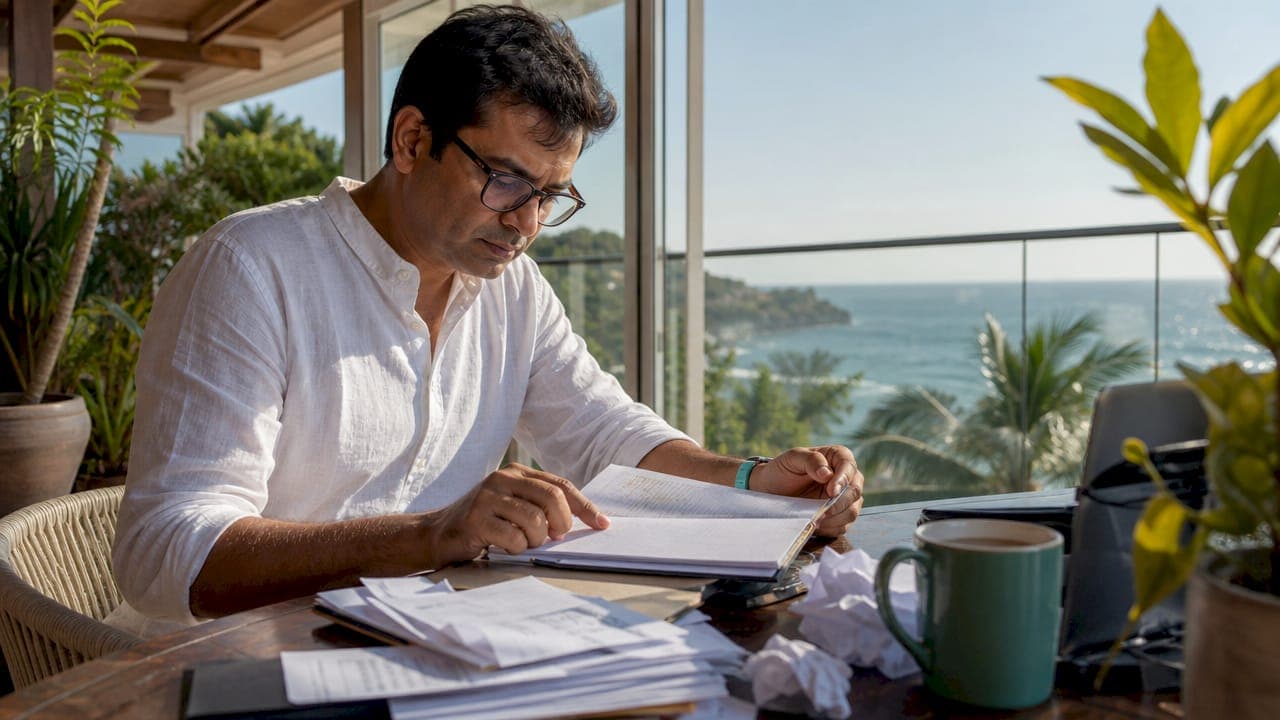
Buying property abroad is defined by one financial reality: the listed price covers only part of what you will actually pay. Transaction fees alone typically add 8–15% to the final purchase price, meaning a €150,000 property can cost €165,000–€168,000 by closing day. Property abroad buying costs explained properly must account for transfer taxes, notary charges, agent commissions, non-resident financing requirements, annual carrying costs, and currency risk. The Association of International Property Professionals tracks these expenses closely, and buyers in Egypt and the Red Sea region face the same full cost picture as anywhere else in the world. Getting the numbers right before you commit protects your budget and your investment.
What are the common transaction costs when buying property abroad?
Transaction costs are the fees you pay to complete the legal transfer of ownership. They sit on top of the purchase price and are non-negotiable in most countries.
The main categories are:
- Transfer tax or stamp duty: Ranges from 1% to 10% depending on the country and property type.
- Notary and registration fees: Typically 1%–3% of the purchase price, required to register the title legally.
- Agent commissions: Usually 2%–5%, sometimes split between buyer and seller, sometimes paid entirely by the buyer.
- Legal fees: Title insurance and local attorney representation commonly add €2,000–€5,000 to closing costs. That upfront cost is far cheaper than resolving a disputed title later.
- International transfer fees: Sending large sums across borders through a traditional bank adds hidden costs. Specialized currency brokers can reduce transfer fees by 1%–4% compared to high-street banks, saving buyers thousands on deposit payments alone.
| Country | Typical transaction cost range |
|---|---|
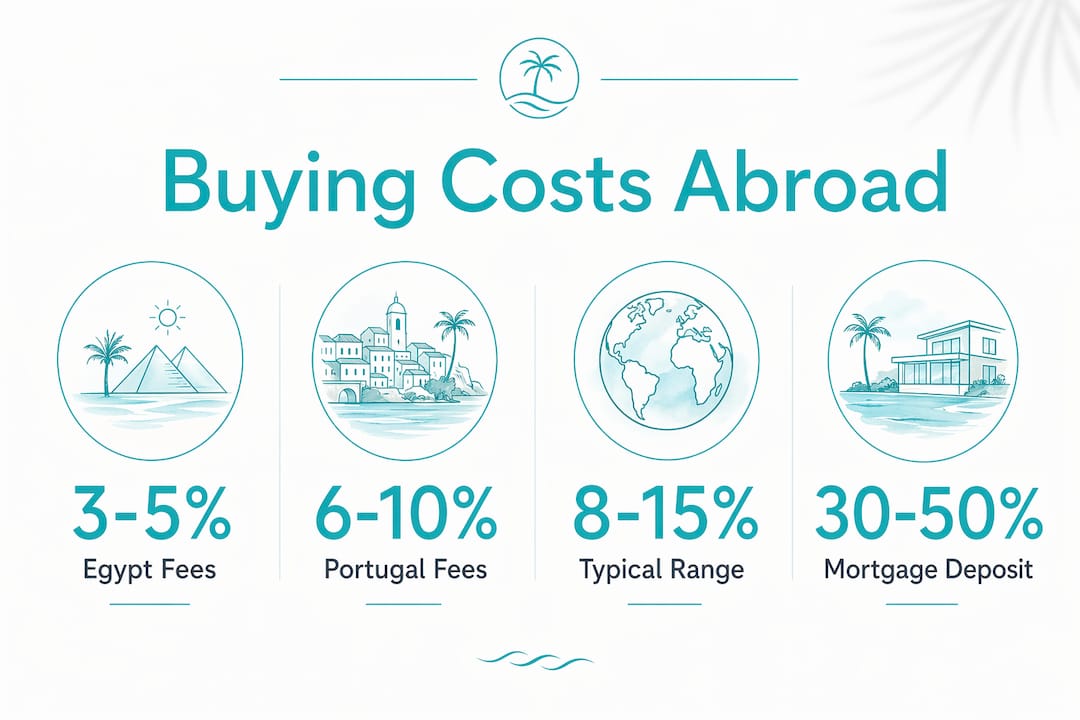
| Egypt | 3%–5% (registration, notary, agent) |
| Portugal | 6%–10% |
| Spain | 8%–12% |
| France | 7%–10% |
| Turkey | 5%–8% |
Egypt and the Red Sea region sit at the lower end of the global range. That makes destinations like Hurghada, Sahl Hasheesh, and El Gouna genuinely cost-effective entry points for international buyers when compared to Western European markets.
Pro Tip: Always request a full cost breakdown from your property agent abroad before signing any reservation agreement. Surprises at closing are avoidable.
How does financing property abroad differ for foreign buyers?
Foreign buyers face stricter lending conditions than local residents in almost every market. Understanding the property abroad financing options list before you apply saves time and prevents costly mistakes.
- Higher deposit requirements. Non-resident deposits typically run 30%–50%, with some markets requiring even more. Local buyers in the same country may qualify with 10%–20% down.
- Higher interest rates. Lenders charge a premium for non-resident risk. Rates for foreign buyers are often 0.5%–2% above the standard local rate.
- Shorter loan terms. Many overseas lenders cap non-resident mortgages at 15–20 years rather than the 25–30 years available to citizens.
- Additional insurance requirements. Life insurance and property insurance linked to the mortgage add to the annual cost of ownership.
- Currency mismatch risk. If your income is in US dollars or British pounds but your mortgage is in Egyptian pounds or euros, exchange rate moves directly affect your monthly payment in real terms.
Developer financing is worth exploring in emerging markets. Vendor take-back mortgages offered by developers can provide an alternative when traditional bank criteria are too restrictive. In Egypt, several Red Sea developers offer phased payment plans that spread costs over the construction period without requiring a local mortgage at all.
Pro Tip: Match your mortgage currency to your primary income currency wherever possible. An overseas property mortgage in a currency you do not earn in creates compounding exposure over the life of the loan.
What are the ongoing costs after buying property abroad?
The purchase closes, the keys arrive, and the annual bills begin. Annual carrying costs including maintenance, utilities, taxes, and property management fees typically amount to 1%–3% of the property value each year. On a €150,000 property, that is €1,500–€4,500 per year before any unexpected repairs.
The main ongoing expense categories include:
- Property tax: Egypt levies a real estate tax on registered properties, calculated on the rental value. Rates are low compared to European markets, which is a genuine advantage for Red Sea buyers.
- Utilities: Water, electricity, and internet costs in Hurghada and Marsa Alam are affordable by international standards, but they add up across a full year.
- Property management fees: If you rent your property or live abroad, a local management company typically charges 10%–20% of rental income or a fixed monthly fee.
- Building service charges: Gated communities in Sahl Hasheesh, Soma Bay, and El Gouna charge annual maintenance fees for shared facilities, pools, and security.
- Insurance: Buildings and contents insurance is a recurring annual cost that varies by property size and location.
Pro Tip: Budget a separate reserve fund of at least 1% of the property value per year for unplanned repairs. Appliances, plumbing, and air conditioning units in coastal climates wear faster than in temperate regions.
For a full breakdown of yearly ownership expenses, including tax obligations in both your home country and Egypt, review the detailed ownership guide from Padsabroad.
What hidden costs should buyers watch out for abroad?
The Association of International Property Professionals reports that over 20% of overseas property owners faced stealth costs not originally budgeted for in their first year of ownership. That statistic reflects a consistent pattern: buyers focus on the purchase price and underestimate everything else.
The most common hidden costs include:
- Renovation overruns. Overseas buyers often underestimate renovation costs. Bringing older properties up to Western standards can double the initial investment budget. A property listed at €80,000 may need €40,000–€80,000 in structural work before it is livable.
- Structural survey costs. A pre-deposit structural survey gives you the leverage to renegotiate or walk away before you are financially committed. Skipping this step is the single most expensive mistake buyers make.
- Capital gains and inheritance tax. Local inheritance laws and capital gains tax rules in the purchase country affect the long-term financial outcome significantly. Egypt has its own rules, and your home country may also tax foreign property gains. Get legal advice on both sides before you sign.
- Tax reporting obligations. Many buyers do not realize they must report foreign property ownership and rental income to their home country tax authority. Penalties for non-compliance can exceed the tax owed.
- Snagging and defect costs. New-build properties in any country can have defects that the developer is slow to fix. Budget time and money for the snagging process.
Pro Tip: Commission a structural survey and instruct a local attorney before paying any deposit. The combined cost of €1,000–€2,000 is the cheapest insurance you will ever buy on a property transaction.
How can buyers manage currency and exchange rate risks?
Currency risk is the cost that most buyers ignore until it hurts them. A 10% unfavorable move in the exchange rate can add thousands to your total ownership cost over a fixed mortgage term. Experts recommend holding reserves covering 6–12 months of mortgage payments to buffer against exchange rate swings.
Practical steps to reduce currency exposure:
- Use a specialized currency broker rather than a high-street bank for large transfers. The rate difference of 1%–4% translates directly into savings on your deposit and ongoing payments.
- Consider a forward contract to lock in today's exchange rate for a future payment. This removes uncertainty from your purchase timeline.
- Match income and expenses in the same currency wherever possible. If you earn rental income in Egyptian pounds, use that income to cover local property costs before converting.
- Maintain a reserve fund in the property currency to cover 6–12 months of carrying costs without needing to convert at a bad rate.
Understanding how currency fluctuation affects your overseas property returns is a core part of managing the real cost of ownership. Many expat borrowers face challenges because their income, mortgage, and rental yield operate in three different currencies simultaneously.
Pro Tip: Read the full guide on transferring money abroad before you move any funds. The difference between a bank rate and a broker rate on a €100,000 transfer can be €2,000–€4,000.
Key Takeaways
The true cost of buying property abroad consistently runs 8–15% above the listed price in transaction fees alone, before financing, ongoing expenses, and currency risk are factored in.
| Point | Details |
|---|---|
| Transaction fees add 8–15% | Budget for transfer tax, notary, agent, and legal fees on top of the purchase price. |
| Foreign buyers need larger deposits | Non-resident mortgage deposits typically run 30%–50%, far above local buyer requirements. |
| Annual carrying costs reach 1–3% | Maintenance, taxes, insurance, and management fees recur every year after purchase. |
| Hidden costs catch over 20% of buyers | Commission a structural survey and instruct a local attorney before paying any deposit. |
| Currency risk requires active management | Hold a 6–12 month reserve fund and use a currency broker to reduce transfer costs. |
What Padsabroad has learned from advising overseas buyers
After working with international buyers across the Egypt and Red Sea market, the pattern is consistent: the buyers who budget well are the ones who treat the purchase price as a starting point, not a final number. The ones who run into trouble almost always skipped one of three things: a structural survey, independent legal advice, or a realistic currency plan.
Renovation costs are the biggest surprise. Buyers see a low listing price and assume the savings cover any work needed. They rarely do. In coastal markets like Hurghada and Port Ghalib, salt air accelerates wear on buildings, and bringing an older unit up to a comfortable standard costs more than buyers expect.
The other consistent gap is tax planning. Capital gains obligations in both the purchase country and the buyer's home country need to be mapped out before the contract is signed, not after. The tax implications for U.S. buyers purchasing abroad are particularly detailed and require specialist advice.
The buyers who succeed treat the full cost picture as a planning tool, not a deterrent. Egypt and the Red Sea region offer genuinely low transaction costs and affordable carrying costs compared to most European markets. That advantage is real. Use it by going in with accurate numbers from day one.
— Padsabroad
Padsabroad's resources for Red Sea property buyers
Padsabroad specializes in helping international buyers purchase property safely along Egypt's Red Sea coast, covering Hurghada, El Gouna, Sahl Hasheesh, Soma Bay, Marsa Alam, and Port Ghalib. The team provides local market knowledge, legal compliance guidance, and transparent cost breakdowns so buyers know exactly what they are committing to before any money changes hands.

The first-time buyer guide covers the full purchase cost picture specific to Egypt and the Red Sea region, from transaction fees to annual ownership expenses. Buyers who want to purchase property in Egypt safely can also access Padsabroad's step-by-step process guide, which walks through every stage from reservation to title registration. Contact the Padsabroad team directly for a personalized cost estimate on any listed property.
FAQ
What fees are included in property abroad buying costs?
Transaction fees typically include transfer tax, notary fees, registration charges, agent commissions, and legal costs. Together these add 8–15% to the final purchase price in most international markets.
How much deposit do foreign buyers need for an overseas mortgage?
Non-resident buyers typically need a deposit of 30%–50% of the property value, significantly higher than the 10%–20% required from local residents in the same market.
What are the hidden costs of buying property abroad?
The most common hidden costs are renovation overruns, structural defects, capital gains tax obligations, and currency transfer fees. Over 20% of overseas buyers face unbudgeted expenses in their first year of ownership.
How do I reduce currency risk when buying property abroad?
Use a specialized currency broker instead of a bank for large transfers, consider a forward contract to lock in exchange rates, and hold a reserve fund covering 6–12 months of mortgage payments in the property currency.
Are buying costs lower in Egypt than in Europe?
Yes. Egypt's transaction costs typically run 3%–5%, compared to 7%–12% in most Western European markets. Annual property taxes are also lower, making the Red Sea region a cost-effective destination for international buyers.