
Buying property abroad in 2026 is defined as purchasing residential or commercial real estate in a foreign country for investment, lifestyle, or residency purposes. This form of international real estate investment has grown significantly, with over 750,000 Britons now owning property overseas and approximately £45 billion invested internationally. The core reasons to buy property abroad in 2026 are clear: higher rental yields than domestic markets, portfolio diversification, residency pathways through programs like Golden Visas, and the ability to own a lifestyle asset that also generates income. This guide covers the financial case, the real risks, the best markets, and the practical steps you need to make a confident decision.
What are the financial benefits of buying property abroad in 2026?
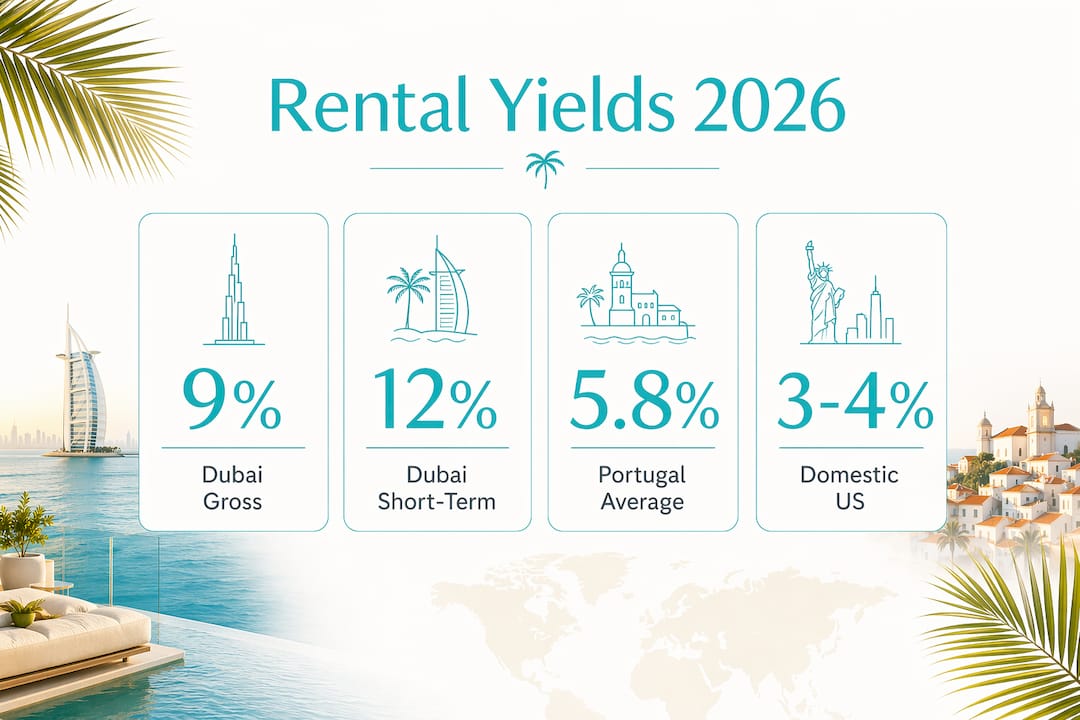
The financial case for overseas property investment is grounded in yield. Dubai delivers gross rental yields of 6.5%–9%, Portugal averages 5.8%, while UK domestic markets typically return just 3%–4%. That gap is significant for any investor building a long-term income portfolio.

Short-term rental strategies push returns even further. Short-term rental yields in Dubai can reach up to 12% in high-demand periods. That figure reflects the city's year-round tourism, its large expat workforce, and a regulatory environment that supports short-let operations.
Currency exposure adds another layer of opportunity. When your home currency weakens against the currency of your target market, your property's value and rental income both increase in relative terms. The reverse is also true, which is why currency fluctuation affects overseas returns in ways many buyers underestimate at the point of purchase.
Tax incentives are a third financial driver. Portugal's non-habitual resident (NHR) regime offers reduced tax rates for 10 years to qualifying foreign buyers. Greece's Golden Visa program provides residency from entry points of €250,000 to €800,000, depending on the region. These programs reduce the effective cost of ownership while opening residency rights.
Pro Tip: Model your net yield, not your gross yield. Subtract management fees, local taxes, insurance, and currency conversion costs before comparing any overseas market to your domestic options.
Here is a quick comparison of key yield and entry data across leading markets:
| Market | Gross Rental Yield | Notable Incentive |
|---|---|---|
| Dubai | 6.5%–9% (up to 12% short-term) | No income tax on rental income |
| Portugal | 5.8% | NHR tax regime for 10 years |
| Greece | Varies by location | Golden Visa from €250,000 |
| UK (domestic) | 3%–4% | No residency benefit |
Geographic arbitrage also plays a role. Buying in a market where property prices are lower relative to rental demand means your capital works harder. Egypt's Red Sea coast, for example, offers entry prices well below comparable Mediterranean markets while delivering strong seasonal rental demand.
What are the key risks of buying property abroad?
Overseas property investment carries real risks. Buyers who ignore them often find that headline yields shrink considerably once all costs are factored in. Inexperienced buyers consistently underestimate management fees, local taxes, insurance premiums, and currency conversion costs.
The most common risks include:
- Legal and title risk. Property law varies widely by country. Title verification processes that take weeks in the UK can take months in other jurisdictions, and enforcement of buyer rights is not always reliable.
- Currency risk. Exchange rate changes can add or subtract 5%–10% from your final acquisition cost depending on when you convert funds and pay your deposit.
- Management complexity. Managing a property from another country requires a trusted local agent. Poor management erodes yields and creates tenant disputes that are difficult to resolve remotely.
- Exit risk. Resale markets in some overseas locations are thin. If local demand drops or the market matures, selling quickly at a fair price becomes difficult.
- Hidden costs. Stamp duty equivalents, notary fees, agent commissions, and annual property taxes vary by country and can add 8%–12% to your total acquisition cost.
Pro Tip: Before committing to any overseas purchase, get a written cost breakdown that includes all transaction fees, annual running costs, and a realistic vacancy rate. Then recalculate your yield.
Emerging markets offer higher headline yields but come with greater operational and legal risks. Legal enforcement is slower, management quality varies significantly, and resale liquidity is often limited. Balancing yield against risk requires honest assessment of each market's maturity.
Which countries are the most attractive for property investment in 2026?
The best countries to buy property abroad in 2026 combine strong rental yields, clear legal frameworks, and residency incentives. Each market suits a different buyer profile.
Dubai leads on pure yield. Its 0% income tax on rental earnings, large international tenant pool, and well-regulated property market make it the top choice for yield-focused investors. The short-term rental market is particularly active, supported by year-round tourism and major business events.
Portugal suits buyers who want yield plus lifestyle plus tax efficiency. The NHR regime, a stable legal system, and strong demand from digital nomads and retirees make Lisbon, Porto, and the Algarve consistently attractive. Digital nomad and Golden Visa programs have stabilized demand across Portugal, Spain, and Italy by attracting remote workers with long-term residency intentions.
Greece offers the lowest Golden Visa entry point in Europe at €250,000 in many regions, though popular areas like Athens and Mykonos now require €800,000. The tourism sector drives strong short-term rental demand across the islands.
Spain remains a top lifestyle destination with solid long-term rental demand in cities like Madrid and Barcelona. Regulatory changes around short-term rentals in some Spanish cities require careful due diligence before committing to a holiday-let strategy.
Egypt's Red Sea coast, including Hurghada, El Gouna, Sahl Hasheesh, and Soma Bay, offers entry prices that are among the most competitive in any international market. Egypt property yields are attractive relative to purchase price, and the region's growing tourism infrastructure supports both short-term rental income and long-term capital growth.
Pro Tip: Match the market to your primary objective. If yield is your goal, Dubai and Egypt lead. If residency is the priority, Portugal and Greece offer the clearest pathways. If lifestyle matters most, Spain and Portugal offer the best balance.
Cross-border investment is increasingly motivated by residency planning and the desire to hedge against economic or political uncertainty at home. Buyers are no longer just chasing returns. They are building optionality into their lives.
How to approach buying property abroad as a 2026 investor
A structured approach separates buyers who profit from those who regret. Follow these steps before committing capital to any overseas market.
- Define your objective clearly. Three core motivations drive overseas purchases: yield, capital growth, and lifestyle. Each requires a different market, property type, and risk tolerance. Mixing all three without prioritizing one leads to poor decisions.
- Verify legal title and local ownership laws. Due diligence on local title and legal enforcement is the most critical step before committing capital internationally. Use a local lawyer, not just the developer's recommended solicitor.
- Plan your currency strategy early. Timing deposits and currency exchange is a frequently overlooked risk. Use a specialist currency broker to lock in exchange rates at the point of reservation, not at completion.
- Understand local financing options. Mortgages for foreign buyers are available in some markets but not all. Overseas property mortgage options vary significantly by country, and domestic lenders rarely finance foreign purchases.
- Model your exit before you buy. Setting exit triggers before purchase is the mark of a disciplined investor. Know at what price, yield drop, or life event you will sell, and check that the local resale market can support that exit.
- Account for all costs in your financial model. Include purchase taxes, legal fees, management fees, insurance, maintenance, and currency conversion. Net yield is the only number that matters.
Pro Tip: Avoid making overseas property decisions while on vacation. The emotional pull of a beautiful location is real, but it clouds financial judgment. Always review the numbers at home, in your own currency, before signing anything.
Key Takeaways
Buying property abroad in 2026 delivers superior yields, residency options, and portfolio diversification that domestic real estate markets cannot match, provided buyers manage legal, currency, and cost risks with discipline.
| Point | Details |
|---|---|
| Yield advantage is real | Dubai yields 6.5%–9% and Portugal 5.8%, versus 3%–4% in the UK domestic market. |
| Hidden costs erode returns | Management fees, taxes, and currency conversion can significantly reduce net yield from headline figures. |
| Residency programs add value | Golden Visa schemes in Greece and Portugal link property purchase directly to residency rights. |
| Currency risk is often underestimated | Exchange rate moves of 5%–10% can materially change your total acquisition cost. |
| Exit planning must come first | Define your exit triggers before purchase to protect capital and avoid illiquid positions. |
What Padsabroad has learned from watching buyers get this right and wrong
Most buyers who struggle with overseas property share one trait: they treated the purchase as a property decision rather than an investment decision. They fell in love with a view, skipped the financial modeling, and discovered the true cost of ownership 12 months later.
The buyers who do well approach it differently. They define a clear objective before they look at a single listing. They know whether they want yield, capital growth, or a lifestyle asset, and they choose the market accordingly. They also treat currency risk as seriously as they treat price negotiation.
Egypt's Red Sea coast is a market Padsabroad knows in detail. Entry prices are genuinely competitive by international standards, rental demand from tourism is growing, and the legal framework for foreign buyers is clearer than many buyers expect. That combination is rare. But even in a market with strong fundamentals, buyers who skip due diligence or ignore running costs will underperform.
The honest truth about overseas property investment is that it rewards preparation and punishes impulse. The financial case for diversifying into overseas property in 2026 is strong. The execution requires discipline.
— Padsabroad
Padsabroad's approach to safe property investment in Egypt
Padsabroad works with international buyers at every stage of the purchase process, from initial market research through to legal completion and property management. The focus is on Egypt's Red Sea coast, covering Hurghada, El Gouna, Sahl Hasheesh, Soma Bay, Marsa Alam, and Port Ghalib.

For buyers considering their first overseas purchase, the first-time buyer guide to Egypt's Red Sea covers entry costs, legal steps, and realistic yield expectations in plain language. For those ready to review active listings, all properties for sale in Hurghada are available with full pricing and location details. Padsabroad's team is available to answer questions, arrange viewings, and connect buyers with verified local legal support. Contact Padsabroad directly to discuss your investment objectives and get a clear picture of what the Red Sea market offers in 2026.
FAQ
What is the main reason to buy property abroad in 2026?
The primary reason is higher rental yields. Dubai offers 6.5%–9% gross yields and Portugal averages 5.8%, compared to 3%–4% in the UK domestic market.
Is buying property abroad worth it for UK investors?
Yes, for buyers who model all costs carefully. Over 750,000 Britons already own property abroad with around £45 billion invested, driven by yield, diversification, and residency benefits.
Which country offers the best Golden Visa for property buyers?
Greece offers the lowest European entry point at €250,000 in many regions, while Portugal's Golden Visa combines residency rights with a 10-year reduced tax regime for qualifying buyers.
How does currency risk affect overseas property purchases?
Exchange rate movements can add or subtract 5%–10% from your total acquisition cost. Using a specialist currency broker to lock in rates at reservation reduces this risk significantly.
How do I start buying property abroad safely?
Define your investment objective first, then verify legal title with an independent local lawyer, model all costs including taxes and management fees, and plan your exit strategy before signing any agreement.